Certification guide ·
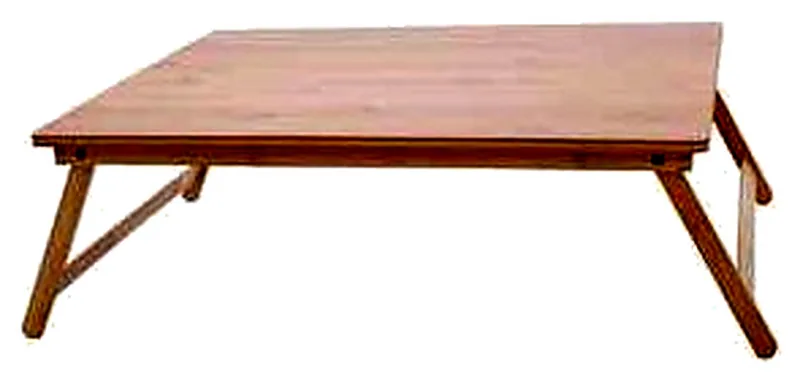
Bamboo Bed & Laptop Table, Folding (TVD-5736): Canadian Certification and Compliance
A folding bamboo lap table looks like it needs no paperwork. It does: coatings, panel glues, any padded part and textile labelling can all matter. Here is what to ask for, and what we have on file for TVD-5736.
Where TVD-5736 stands today
The Bamboo Bed & Laptop Table – Folding (TVD-5736) has no certification on file. We therefore do not call it certified, tested, listed or compliant with anything. What follows is the list of requirements a Canadian buyer should check, and the documents we request from the factory and confirm on the quote before any order is placed. As bamboo furniture it falls under the general furniture rules, and if the version you order has a padded part, Textile Labelling Act labelling applies to that part as well, which is the unusual part.
The four rule areas that apply
1. General consumer product safety
Because a lap table is a consumer product, the Canada Consumer Product Safety Act applies. It prohibits products that are a danger to human health or safety, requires incident reporting and allows recalls, and Health Canada enforces it. A folding table has an obvious hazard: legs that give way with a hot drink or a laptop on top. A lock that holds is not an optional feature.
2. Coatings on furniture
The Surface Coating Materials Regulations limit lead (90 mg/kg) and mercury in paints and coatings on furniture. A natural bamboo finish is normally a clear coat, and we ask the factory for a test report on it. If the top is printed, stained or tinted, ask for the report on that colour too.
3. Composite wood
The Formaldehyde Emissions from Composite Wood Products Regulations cover hardwood plywood, particleboard, MDF and laminated products. They require third-party certification and labelling. Whether the flat top of TVD-5736 is a solid bamboo piece or a laminated panel is not stated in the listed points, so it is a key question; if laminated, we request the TSCA Title VI or Canadian compliance certificate.
4. Padded and stuffed parts: textile labelling
A padded or stuffed part counts as a consumer textile article, so the Textile Labelling Act asks for fibre content and dealer identity on its label; Quebec's old stuffing permit label was repealed in December 2021. Our product listing does not mention padding, so we confirm in writing whether any cushioning or stuffing is fitted. If none is, say so on your own file; if some is, we need the filling declaration and label details to quote the labelling.
Document checklist
| Document | Why you need it | Who issues it |
|---|---|---|
| Coating test report (lead, mercury) | Shows the finish stays within the furniture coating limits | Accredited testing laboratory, via the factory |
| Formaldehyde certificate, if panels are used | Required for laminated or composite wood parts | Approved third-party certifier |
| Filling and label declaration | Needed if any padded or stuffed part exists; fibre-content label and French text for Quebec | Factory, plus the dealer name that goes on the label |
| Leg load and stability report | Backs up the safety of a table used on soft surfaces | Factory test or independent laboratory |
| French label and instruction sheet | Quebec retailers and the Charter of the French language | Factory or our team, approved before print |
| Bilingual retail packaging details | Consumer Packaging and Labelling Act for prepackaged goods | Importer of record and packaging designer |
| HS code and origin documents | Duty and tax calculation at the border | Our customs broker |
CE marks and foreign certificates
If a factory sends a CE declaration, treat it as background only. Canada does not recognise the European CE mark as proof of compliance for consumer products. A European or US test report may still help as evidence, but the Canadian requirements above stand on their own. Because TVD-5736 is not an electrical product, there is no CSA, cUL or cETL mark to look for; if you sell it bundled with a powered accessory, that accessory needs its own Canadian electrical certification (see CSA, cUL and cETL marks explained).
Provincial differences
Most of the rules above are federal and apply everywhere. The main provincial difference is Quebec: labels, instructions and warranty documents must be available in French. The stuffing permit label that once applied there was repealed in December 2021. Retailers in Quebec will ask for both before they stock a product. Outside Quebec, ask your own retailer or insurer what they require, since some contract buyers also request flammability reports for anything with upholstery.
What happens if a document is missing
Consequences are practical rather than dramatic. A retailer may refuse to list the product, an insurer may ask questions after a claim, a Quebec shipment may be held by a buyer until labels are correct, and a product found to be a danger can be recalled under the Act. Fixing a missing French label after goods land is slow and costs money. Fixing it at quote stage is a one-line request.
How we handle it
Every quote states certification status and lists the documents that come with it. For TVD-5736 we ask about the top material, the leg lock, any padding and the coating, then hold the quote until the answers are on file. Freight, duty and provincial tax are quoted to your address; see the sales tax guide. Our customs broker confirms the tariff classification before we give a delivered cost. Get the buyer-focused view of the same product in its wholesale guide, then request a quote. Rules change; confirm with the authority, your inspector or your customs broker. This is not legal advice. A free account shows full specifications on the product page, and the Bamboo Home Office line page lists neighbouring products.