Certification guide ·
Bamboo Cabinets and Sideboards in Canada: Import Rules, Composite Wood and Paperwork
The rules that attach to a bamboo cabinet are about panels, coatings and cushioning, not the plant. Here is what to ask for before you import.
Bamboo storage furniture looks simple: a cabinet, a few shelves, some slatted doors. For a Canadian importer or contract buyer the paperwork is less simple, because the rules attach to what the pieces are made of and how they are finished, not to the word bamboo. This guide covers the Bamboo Cabinets & Sideboards line: what a retailer, spa, hotel or property manager should ask for, and what we do before a quote leaves our desk. No mark or test report is on file for any piece in the line today, so nothing below says a product is certified.
Where Canadian rules touch a bamboo cabinet
Free-standing and wall-mounted cabinets are consumer products as far as Canadian law is concerned, so the Canada Consumer Product Safety Act sits behind everything: it prohibits products that are a danger to human health or safety, requires incident reporting and allows recalls, with Health Canada enforcing it. Beyond that general duty, three topics come up again and again in this line: panel materials, coatings, and the few pieces with cushioning. Nothing in this line is electrical, so the electrical mark rules in our guide to CSA, cUL and cETL marks do not apply to a plain cabinet.
Panel materials and the formaldehyde rule
Canada's formaldehyde regulation for composite wood products has been in force since 2023. It requires hardwood plywood, particleboard, MDF and laminated products to meet emission limits, to be certified by an approved third-party certifier and to be labelled, and it also matters for furniture built from those panels. In this line the question is construction. A piece described by its listed points as natural bamboo may still hide a particleboard carcass, a plywood back panel or a laminated shelf. The frame, top, shelf and back-panel materials are therefore the first thing we ask the factory to state, piece by piece, and the answer decides whether a composite wood certificate is needed. Where one is needed, we ask for the TSCA Title VI or Canadian compliance certificate, which are aligned.
Coatings, white-wash and black frames
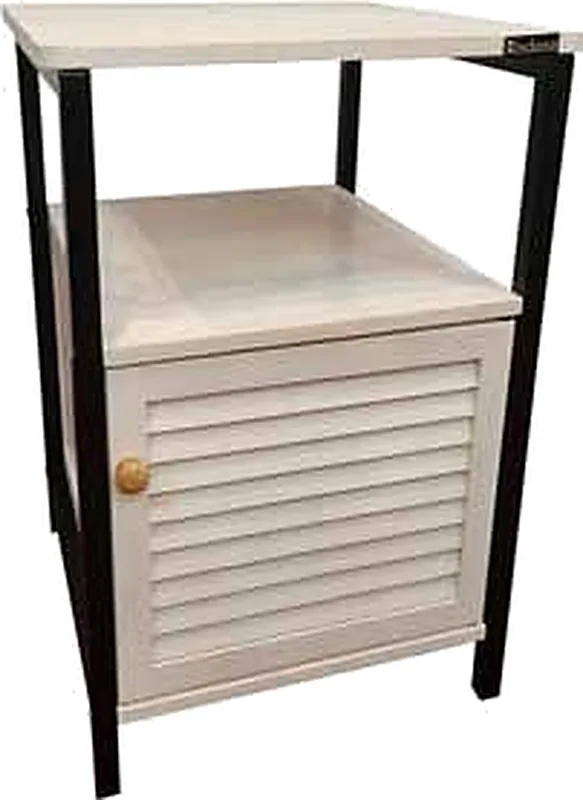
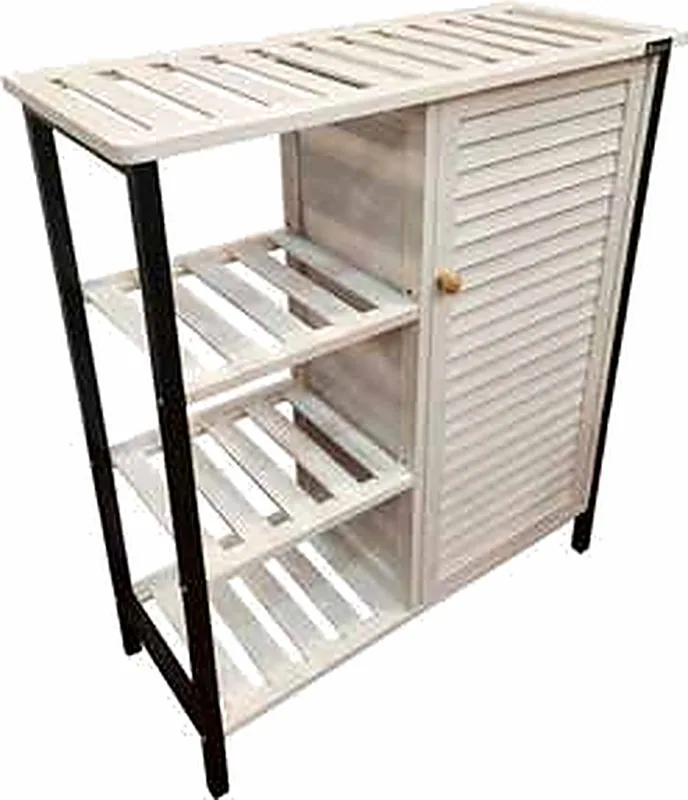
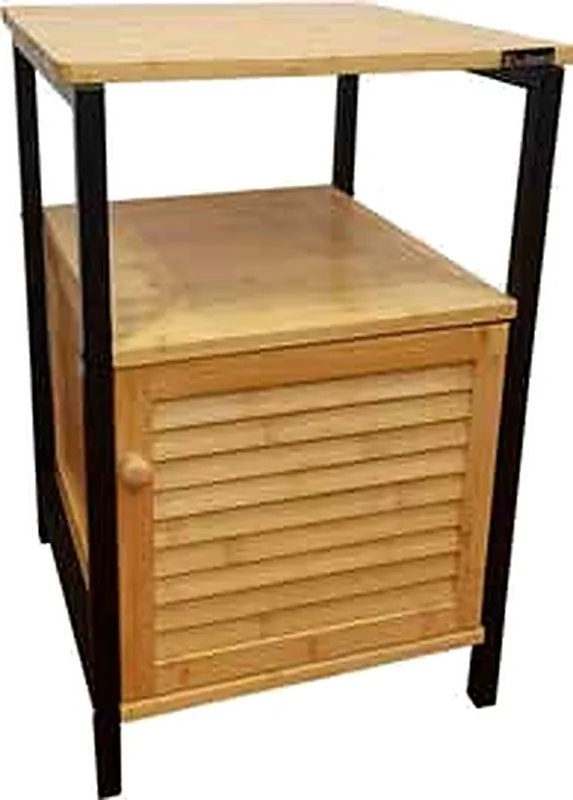
The Surface Coating Materials Regulations limit lead (90 mg/kg) and mercury in paints and coatings on furniture. Most of the line is a natural bamboo finish, but several cabinets add colour: Side Cabinet – White Louvre, Black Frame (TVD-5694) has a white-washed louvre door and a black metal frame, Cabinet – White Louvre Door, Open Shelves (TVD-5697) adds slatted open shelves to the same white door, and Bamboo Side Cabinet – Black Frame (TVD-5693) is a bamboo top with a black frame and a louvre door. Painted or lacquered surfaces are where a coating test report earns its place, and a report for a clear finish is worth asking for as well.
The one cushioned piece: fibre content labels
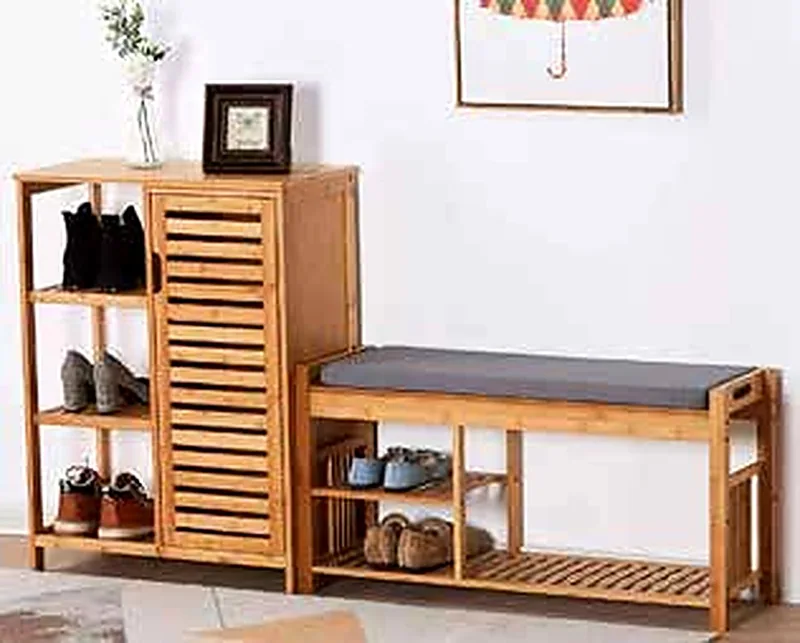
Most of the line has no upholstery. The exception is Bamboo Hall Cabinet with Shoe Bench (TVD-5755), a louvre door cabinet with a cushioned bench and a shoe shelf. Quebec repealed its stuffing permit and label law on 9 December 2021, so no province asks for a permit number on a bench cushion any more. The Textile Labelling Act can apply to the fabric as a consumer textile, and a Quebec retailer will expect French-language labels and documents. Hotels and spas that specify flammability reports for cushioning should name the standard in their tender.
CE marks and other foreign paperwork
Canada does not recognise the European CE mark as proof of compliance for consumer products. A factory that supplies a CE declaration, an EU test summary or a US-only report has given you useful evidence, but a Canadian buyer still needs the Canadian requirements above. For the formaldehyde rule, a US certificate is useful only when it is the aligned TSCA Title VI one and the certifier is an approved third party.
Document checklist for the line
| Document | Why you ask for it | Who issues it |
|---|---|---|
| Construction statement for frame, top, shelves and back panel | Decides whether the composite wood rule applies to that piece | Factory, checked by our team |
| Composite wood emission certificate and label proof | Needed where plywood, particleboard, MDF or laminated panels are used | Approved third-party certifier |
| Coating test report (lead and mercury) | Covers white-wash, black frame and any lacquered surface | Accredited test laboratory |
| Fibre-content label for the cushion fabric | Cushioned bench cabinet, any province | Us or the factory, confirmed before quote |
| Fibre-content details for fabric | Textile Labelling Act labelling on cushions | Factory and dealer |
| Bilingual labels and French instructions | Quebec Charter of the French language; Consumer Packaging and Labelling Act for retail packs | Our team with the factory |
| Assembly instructions with wall-fixing details | Retail and hospitality buyers ask for them on tall and wall-mounted units | Factory |
Product-by-product: where the questions differ
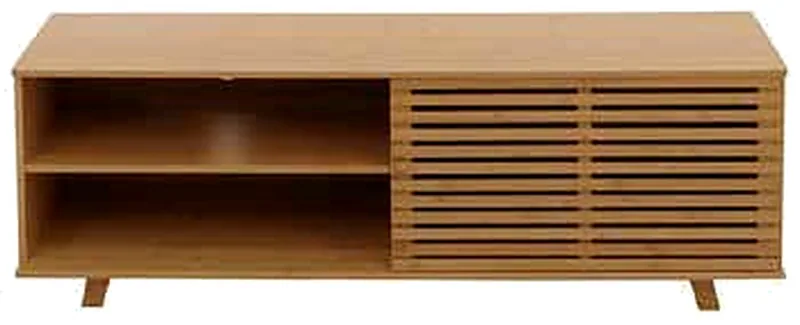
- Bamboo TV Stand with Slatted Doors (TVD-5669) and its sibling TV stands: ask for the screen size and weight the top carries and for an anti-tip fixing; these are buying specifications, not a certification, and our TV stand guide shows how we write them up.
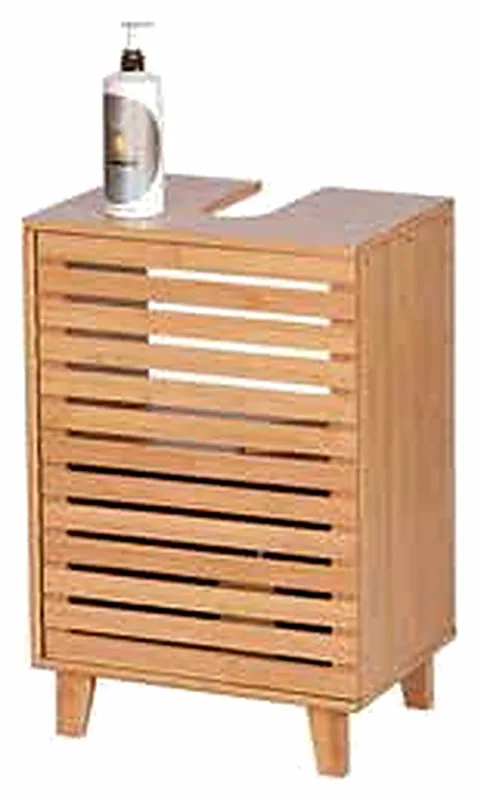
- Bamboo Under-Sink Cabinet – Slatted (TVD-5683) and the other under-sink cabinets: a cut-out for plumbing means wet-room use, so ask about the finish on edges and the base.
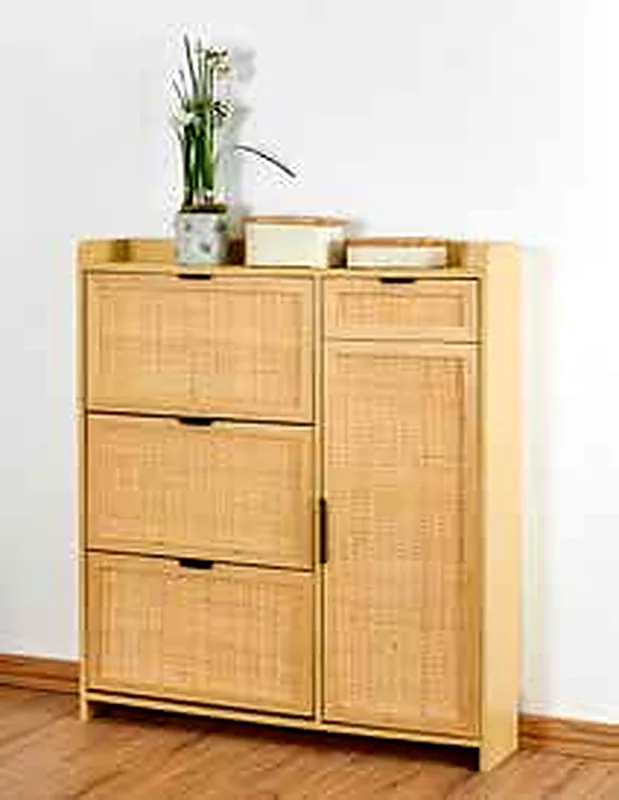
- Cabinet – 3 Drawers & Door, Rattan Front (TVD-5743) and the rattan-style drawer cabinets: ask what the woven-look fronts are made from, since a different material means different test evidence.
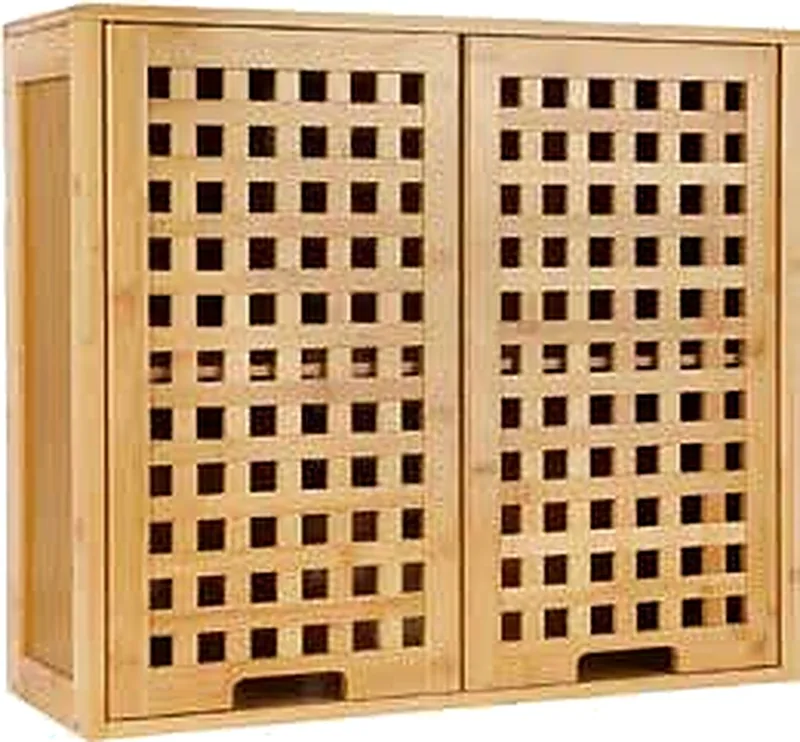
- Bamboo Wall Cabinet – Lattice Doors (TVD-5838) and the other wall cabinets: ask what hanging hardware is included and what wall type it suits; fixing to the building is the installer's call.
What happens when documents are missing
The consequences are practical. A retail chain may refuse to list a cabinet without its composite wood label evidence, a Quebec retailer may refuse a cushioned item without French-language labelling, and a hotel group may reject a delivery that does not match the specification in its tender. If a product is found to be a danger, recall and incident reporting duties under the CCPSA follow. Sorting this out after the container lands costs far more than asking before you order.
How we handle compliance on a quote
We confirm certification status and supply the documents with the quote before you order. For each piece you ask about, our written quote states the panel construction, the finish, the label language and which documents exist. Where a report does not exist yet we say so and, if you need it, price the testing as part of the order rather than hiding the gap. Duties and taxes depend on tariff classification and origin, and our customs broker confirms classification before we quote a delivered cost; see the sales tax by province guide and landed cost calculator for the tax side. Rules change, and none of this is legal advice, so confirm requirements with your provincial authority, your inspector, your insurer or your customs broker.
To start, send the codes you want through a quote request, or read how ordering works first. The full range sits in the Bamboo Cabinets & Sideboards line within Home & Hospitality Furniture, and the wholesale guide lists how we work with importers. Delivery runs across Canada; see the Canada delivery hub.
Related reading: TVD-5669 TV stand with slatted doors, TVD-5681 open-shelf TV stand and TVD-5673 shelf cabinet with slatted sides each look at one product in the line, and the wider home and hospitality furniture in Canada page lists the category.