Certification guide ·
TV Stands and Media Cabinets in Canada: Which Rules Apply Before You Import
Steel, wood-look, glass-door and wall-hung cabinets do not share the same paperwork. This guide sorts the Canadian rules by construction and gives you the documents to ask for.
Why one rule set does not cover every TV stand
Our cabinets and TV stands line looks like one family of products, but the materials inside it vary a lot: steel cabinets, wood-look cabinets, cabinets with glass or acrylic-look doors, wall-hung units and retro carved furniture. Which Canadian rules matter depends on what a given model is made from, not on the fact that it holds a television. The thirty products covered here are the ones in the line where no certification, test report or approval mark is on file today, so none of them is described as certified, listed or compliant. For each, we confirm certification status and supply the documents with the quote before you order. A TV stand with no plug and no mattress is a lower-risk import than a lit fixture or a bed, but it is not rule-free, and the risks are specific.
The rules that touch this line
Composite wood and formaldehyde
Many wood-look stands are built from particleboard, MDF or laminated panels. Canada’s formaldehyde emissions rules for composite wood products require that hardwood plywood, particleboard, MDF and laminated products meet emission limits, be certified by an approved third-party certifier and be labelled. The rule also reaches furniture made from those panels. Ask for the TSCA Title VI or Canadian compliance certificate for the panel supplier. The oak, walnut and ribbed finishes in this line are the ones where this question is most likely to matter; a steel model should have no wood panel at all, which we confirm on the quote. A separate article covers the wood-look sideboards and highboards: see our separate compliance guide for the wood-look sideboards and highboards.
Paints, coatings and metallic detail
Black, white and beige painted finishes, and gold-tone handles, strips and edge trim, fall under the Surface Coating Materials Regulations, which limit lead (90 mg/kg) and mercury in paints and coatings on furniture and on children’s products. If a cabinet will be used in a child’s bedroom or a school, the lead rules for children’s products add to that. Ask for the coating test report with the quote.
Glass, acrylic and tip-over
Models with glass-look or glass doors raise a handling question more than a certificate question: what the door panel is made of, how the edges are finished and how the door is held. Ask whether the panel is glass or acrylic, and for the weight rating of the shelves behind it. Tall cabinets and highboards should be wall-anchored; ask what fixing hardware is supplied. Our listing does not state any of this, so it is confirmed in writing.
Electrical parts
None of the listed features in this line includes a powered part. If a version you order has LED lighting, a socket or a charging port, that part must carry a Canadian certification mark from a Standards Council of Canada accredited body, or a field evaluation label, and a US-only mark is not enough. Our CSA, cUL and cETL explainer sets out the difference. Canada also does not recognise the CE mark as proof of compliance.
Six products, six different questions
| Product | What the listing shows | Main compliance question |
|---|---|---|
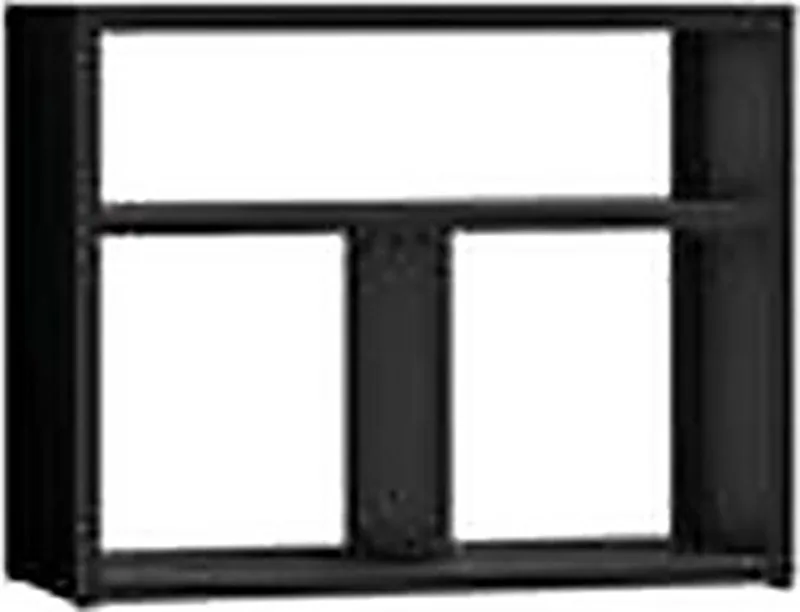
| Low Cube TV Shelf – Black (TVD-6399) | Black finish, mixed openings, W700, W1037 and W1374 mm | Board material and coating test; see its buying guide |
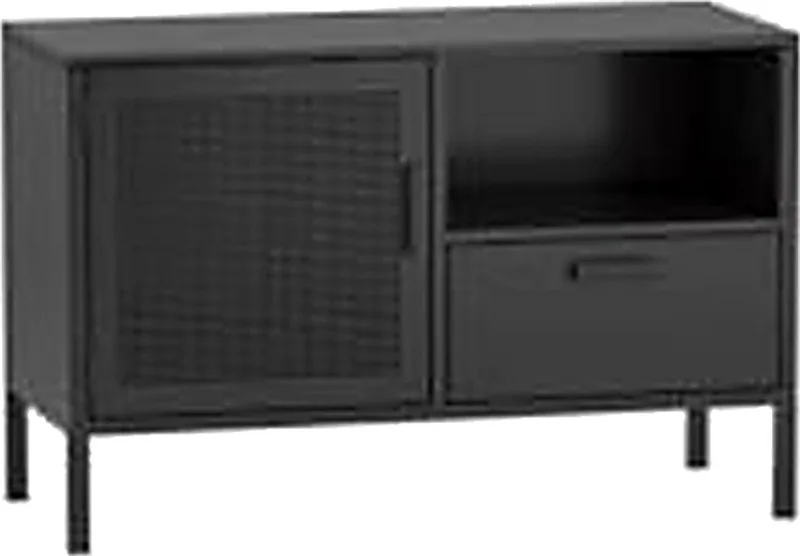
| Steel Media Cabinet – Mesh Door (TVD-6400) | Mesh door with open shelf; black or wood-top versions | Coating on steel; formaldehyde certificate only if the wood top is composite |
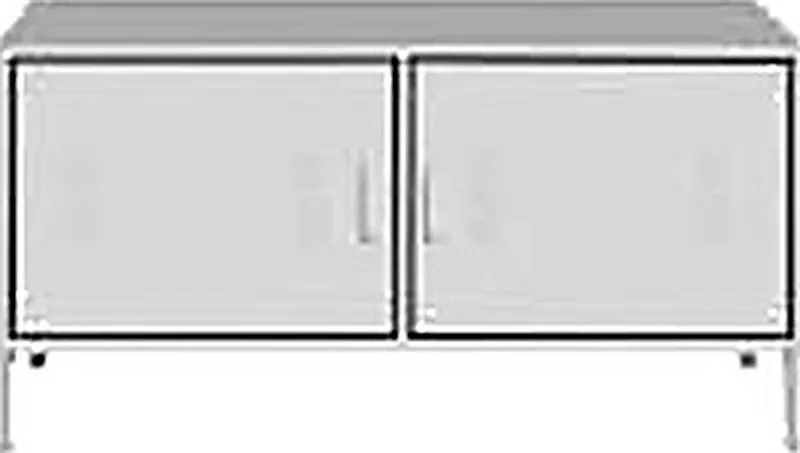
| Steel TV Cabinet – Low Profile (TVD-6408) | Widths 1190–1500 mm; white, black and cream | Coating test; light colours do not remove the lead and mercury limits |
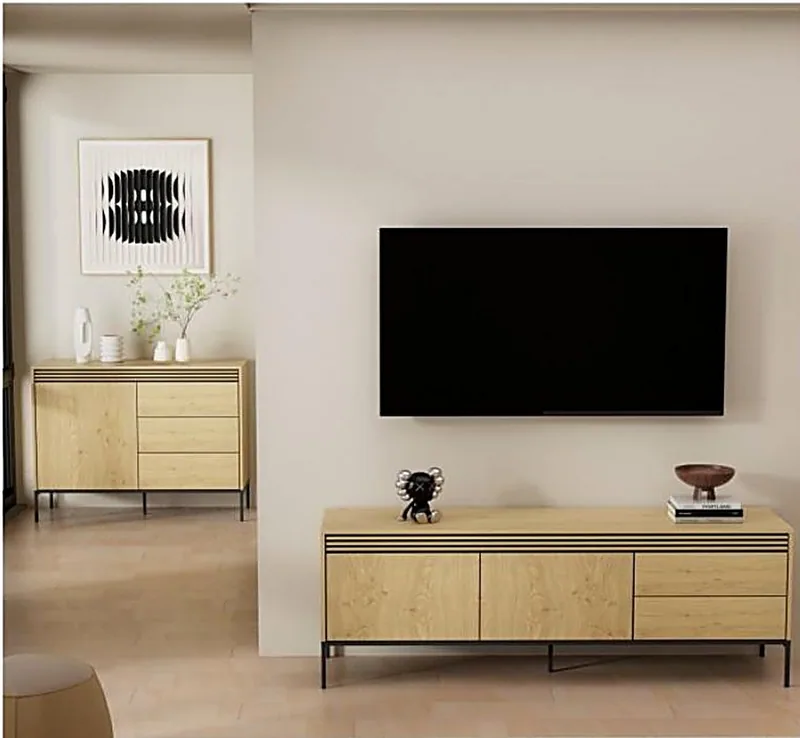
| Oak TV Stand – Doors & Drawers (TVD-6423) | Oak finish, black legs, two doors, three drawers | Formaldehyde certificate for the panels, drawer hardware |
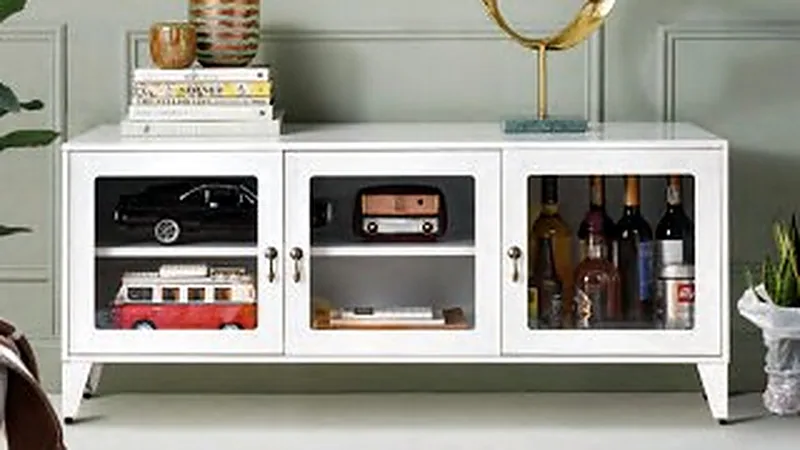
| Steel TV Stand – 3 Glass-Look Doors (TVD-9233) | Three acrylic swing doors, H515 x W1200 x D350 mm | Door panel material, edge finish, shelf rating |
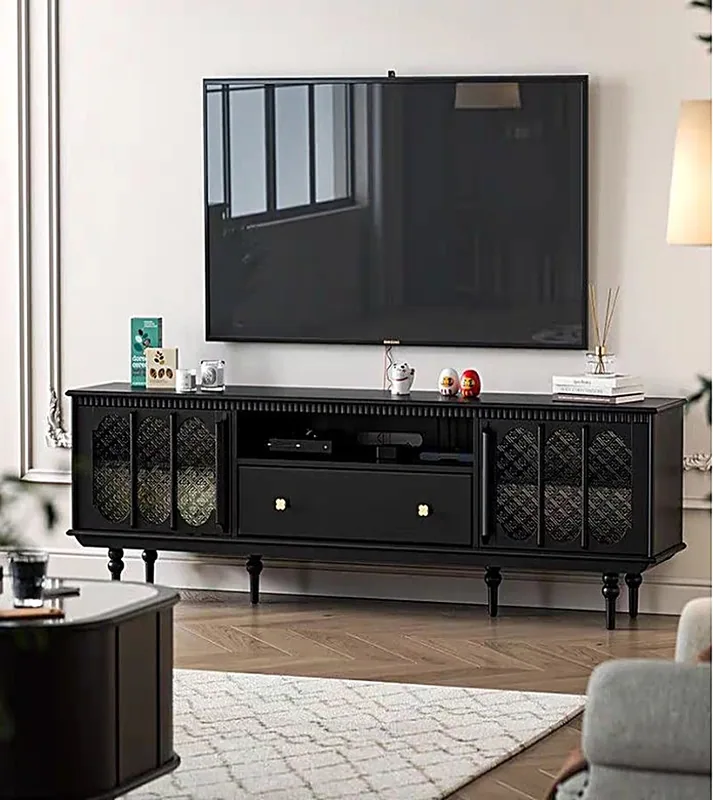
| Retro TV Cabinet with Glass Doors – Black (TVD-9769) | Retro carved front, drawers, dark wood finish | Wood or composite construction, lacquer coating, glass doors |
The retro range (TVD-9769, TVD-9770 and TVD-9778) shares a carved-front design and dark wood finish, so a tender or retailer that asks about solid wood versus veneer should get the same question answered for all three. The Wall-Hung Steel Cabinet – 80 cm (TVD-9232) is a different case again: mounted on a wall, its installation hardware and wall fixing matter more than its finish.
Document checklist
| Document | Why | Who issues it |
|---|---|---|
| Composite wood formaldehyde certificate | Required for panel-based furniture; retailers ask for it at listing | Approved third-party certifier, via the panel factory |
| Coating lead and mercury report | Surface Coating Materials Regulations on furniture and children’s products | Test laboratory |
| Material declaration (steel, board, glass or acrylic) | Decides which of the other documents apply | Factory, confirmed on our quote |
| Bilingual labelling and French instructions | Consumer Packaging and Labelling Act; Quebec Charter of the French language | Us with the factory |
| Electrical certification (only if a powered part is added) | Provincial electrical safety authorities enforce it | Accredited certification body |
| Customs classification and origin | Duty and tax depend on HS code and origin | Our customs broker |
Provincial and buyer differences
Quebec requires labels, instructions and warranty documents to be available in French, and Quebec retailers will ask for that. Quebec repealed its stuffing permit and label rule in 2021, so nothing of that kind applies to a plain cabinet; a cushioned bench or upholstered stool sold with a TV stand still follows the Textile Labelling Act for fibre content. Hotels, property managers and franchisors may write their own furniture specifications, such as flammability or test reports; those are buyer requirements rather than federal law, so confirm what your tender says. Rules change, so confirm with the relevant authority, your inspector or your customs broker. This is not legal advice.
What happens if a document is missing
A retailer may refuse to list the item, a landlord or a school may reject the delivery, and a product found to be a danger under the Canada Consumer Product Safety Act can be recalled, with the importer carrying the cost. Border delays can follow if classification or origin is questioned. Insurers may also ask about the paperwork after a claim.
How we handle it
Each quote states certification status and lists the documents that will accompany the goods. We ask factories for panel certificates and coating reports at the quote stage rather than after the deposit. Our customs broker confirms the tariff classification before we quote a delivered cost. Send your product codes and delivery address through the quote request, and see how ordering works for the payment and release terms. The wholesale guide to cabinets and TV stands and the Canada delivery page for home and hospitality furniture cover the commercial side.