Certification guide ·
Importing Coffee Tables to Canada: Composite Wood, Coatings and the Paperwork Behind Them
Most coffee tables with wood-look tops are built on engineered panel, and that is where the Canadian rules bite. Here is what to ask for, product by product, before a container is booked.
Why a coffee table is not exempt from the rules
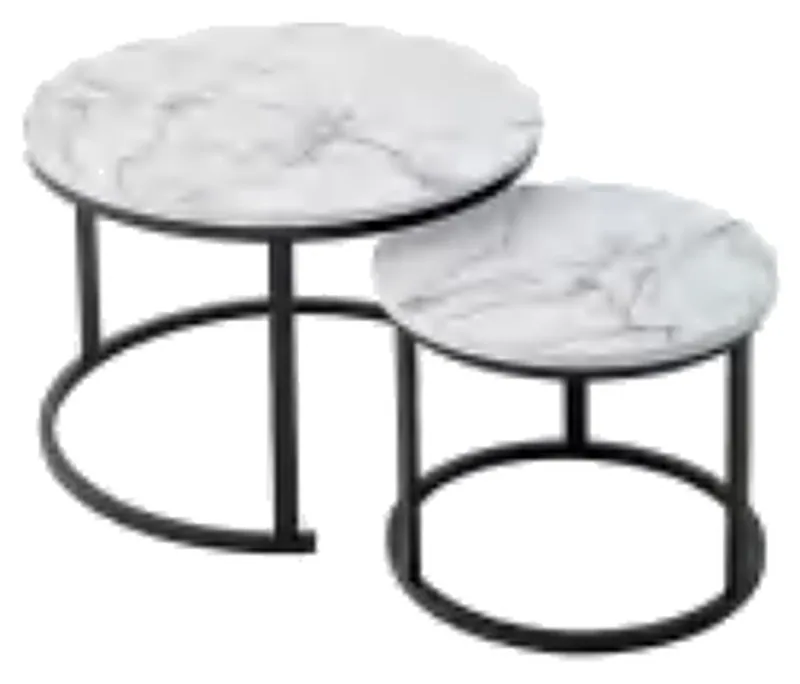
A coffee table looks like the simplest item in a furniture order: a top, a frame, four legs. In practice the top is often the part that matters most for Canadian compliance. Wood-look and rustic tops are commonly made from particleboard, MDF or another engineered panel with a laminate or veneer face, and Canadian rules treat those panels as regulated composite wood. Our coffee tables line covers round, oval, nesting, lift-top and wire-frame designs.
This guide walks through the rules that apply to the tables we list, shows which products raise which question, and gives you a document checklist. We do not claim any certification for these tables on this page. For each one we confirm the certification status and supply the documents with the quote, before you order. Rules change, so confirm the current position with the authority, your inspector or your customs broker. This is not legal advice.
Composite wood: the formaldehyde rule
Canada's Formaldehyde Emissions from Composite Wood Products Regulations have been in force since 2023. Hardwood plywood, particleboard, MDF and laminated products must meet emission limits, be certified by an approved third-party certifier and be labelled. The rule also reaches furniture made from those panels. For a coffee table, that means the tabletop, a lower shelf or a drawer base made from engineered board is in scope if the table is sold into Canada.
The practical request to the factory is a compliance certificate for the panel, in the form buyers commonly call a TSCA Title VI certificate, which is aligned with the Canadian requirement. Ask for the certificate number, the certifier named on it, and confirmation that it covers the panel actually used in your production run, not a sample board from a different batch. Where the listed features say only "wood-look", we cannot tell you from the listing whether the top is solid wood, veneer or laminate on board. We confirm that on your written quote.
Which of our tables raise the question
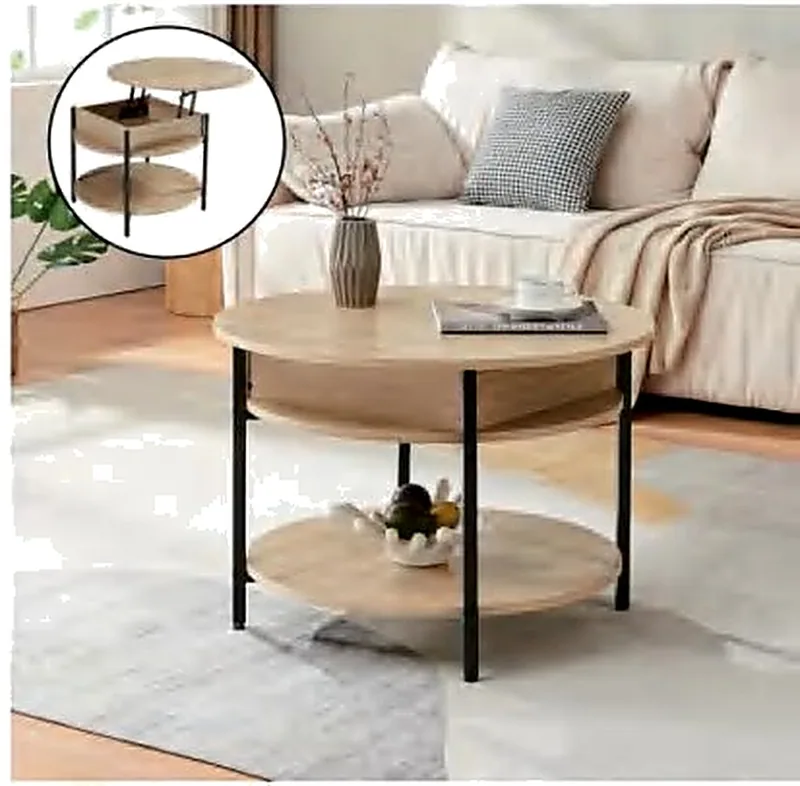
- Round Lift-Top Coffee Table (TVD-6340) has a lift-up top, a round top with a lower shelf and a black or wood-look finish. The top and the shelf are the panels to ask about, along with the lift mechanism, which is a hardware question rather than a wood one.
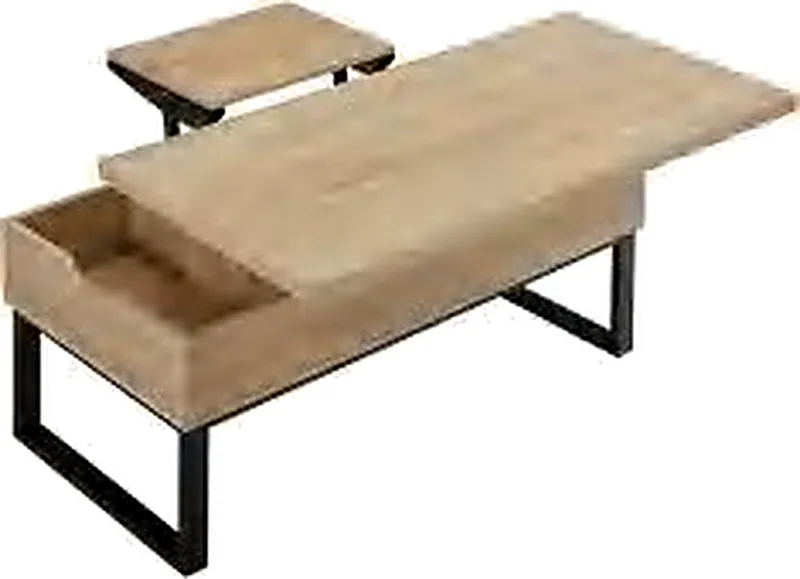
- Lift-Top Coffee Table – Rectangular (TVD-6341) comes wood-look or white marble-look on black steel legs. A marble-look top may be sintered stone, glass or laminate, so the wood rule applies only if the version you order has an engineered core.
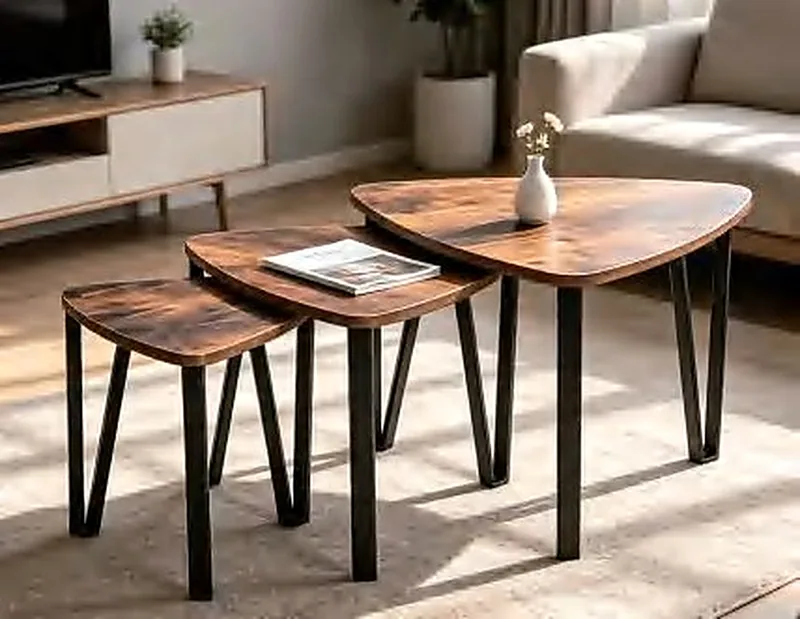
- Triangular Nesting Tables (TVD-6371) are a set of 3 with rustic wood-look tops on black hairpin legs. Three tops per set means three panels to certify.
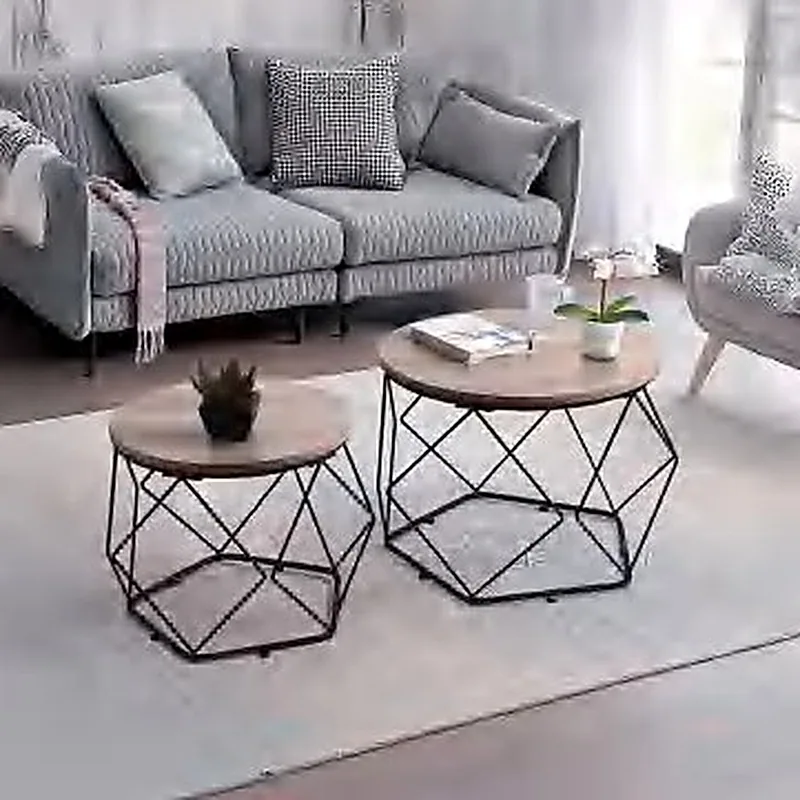
- Geometric Wire Coffee Tables (TVD-6372) are a set of 2 with wood-look round tops on a geometric metal frame. Only the tops are panel; the frame is metal.
- Coffee Tables, Side Tables & Vanities (TVD-4229) is a mixed range with nesting sets, a bar cart and 3 dressing-table vanities, wood-look tops and black steel frames. A vanity usually adds a drawer or a mirror surround, so list every panel part on the request.
If you want the product-level reading for a single table, we have separate buying guides for TVD-4229, the round lift-top table, the triangular nesting set and the geometric wire set.
Finishes and coatings
The Surface Coating Materials Regulations under the Canada Consumer Product Safety Act set limits on lead (90 mg/kg) and mercury in paints and coatings on furniture and on children's products. A black powder-coated or painted steel frame, a stained top and a lacquered edge all count as surface coatings. If a table may end up in a child's room, a daycare or a school waiting area, the lead rules for children's products also come into play. Ask the factory for a coating test report that names the finish on the frame and on the top, not a generic statement that the product is "lead free".
More broadly, the Canada Consumer Product Safety Act prohibits consumer products that are a danger to health or safety and requires incident reporting. For tables, the safety questions are physical: stability of a tall nest, sharp edges on metal frames, and the way a lift-top holds its raised position. Your insurer or your retail customer may ask how the lift mechanism was tested; we ask the factory and put the answer on the quote.
Stone-look tops and glass
Marble-look and stone-look tops need a different set of questions. The material may be sintered stone, glass or a printed laminate on board. Sintered stone and glass raise handling and freight questions (edge protection, carton strength, breakage claims), while a laminate on board brings you back to the formaldehyde rule. If a top is glass, ask about tempering and edge finishing. We do not assume any of this from a product name, and where the listing does not say, we confirm it in writing.
Document checklist for a coffee table order
| Document | Why you need it | Who issues it |
|---|---|---|
| Composite wood compliance certificate | Shows the panel in the top or shelf meets the emission limits | Panel maker, through an approved third-party certifier |
| Formaldehyde label evidence | Panels and furniture made from them must be labelled | Factory, shown in photos or artwork on the quote |
| Coating test report | Confirms lead and mercury limits for frame and top finishes | Accredited test laboratory, via the factory |
| Material declaration for the top | Identifies solid wood, veneer, laminate, sintered stone or glass | Factory, confirmed on the written quote |
| Tariff classification (HS code) | Sets import duty and the duties and taxes line | Our customs broker |
| Bilingual carton and product labelling | Needed for prepackaged consumer goods sold at retail | Factory artwork, checked by us before print |
Where tariff and tax enter the picture
Import duty depends on tariff classification and origin. Our customs broker confirms the classification before we quote a delivered cost, and GST, HST, PST or QST then apply as per the province of delivery. Our sales tax by province guide explains how that works, and the landed cost calculator helps you plan the structure of an order.
Retail and hospitality buyers ask different things
A furniture retailer will usually ask for the composite wood certificate and bilingual labelling, because the store lists products against those. A Quebec retailer will also expect French on labels, instructions and any warranty document under the Charter of the French language. Product pages and quotes are in English, with French support on request.
If a version you want includes a charging port, light strip or any plugged-in element, that part needs a Canadian certification mark from a Standards Council of Canada accredited body, and a CE mark is not a substitute. Our guide to CSA, cUL and cETL marks covers what to look for.
What happens if a document is missing
A missing composite wood certificate usually surfaces late: a retail buyer refuses the listing, a customs broker holds the entry, or a customer challenges a label. Fixing it after the goods have landed means retesting, relabelling or returning stock. That is the reason we ask for documents at quote stage. Order mechanics are set out in how ordering works: samples on most items, low trial minimums on many lines, 30% deposit and 70% before release, and delivery to your site, store or warehouse across Canada. You can start at the quote request form, or see the wider wholesale coffee tables guide and the home and hospitality furniture page for Canada.