Certification guide ·
Folding Saucer Chair with Headrest (TVD-6185): Canadian Certification and Compliance Checklist
The grey folding saucer chair with a headrest pillow is not an electrical product, so the Canadian questions are about padding, textile labels and Quebec. Here is the document checklist.
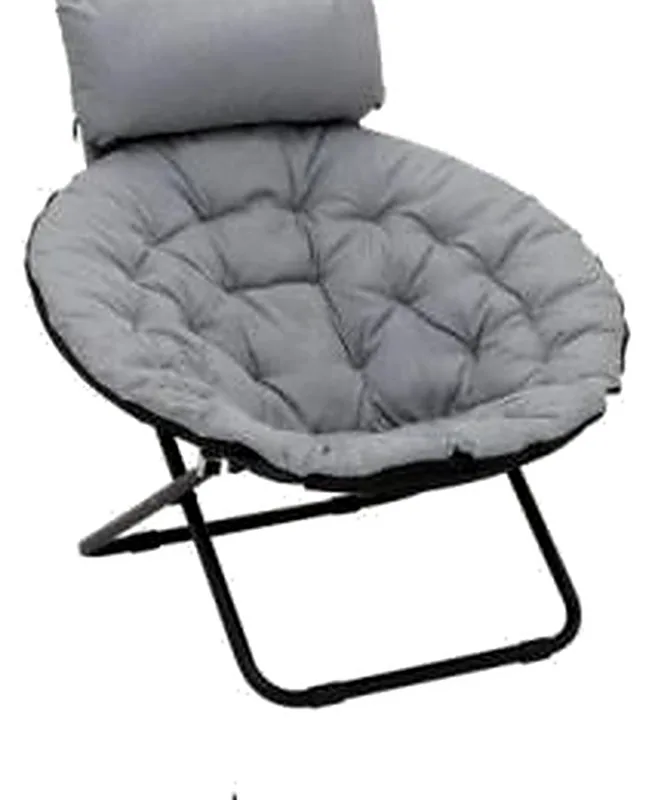
This guide covers what a Canadian buyer must check before bringing the Folding Saucer Chair – Grey, Headrest (TVD-6185) into the country and selling it. The chair is a folding seat with a steel tube frame, a headrest pillow and a listed size of 77 x 81 x 99 cm. It has no powered part, so the electrical marks that dominate other certification guides (CSA, cUL, cETL) do not come into play. What does matter is the pillow and padding: textile labelling, French-language labels for Quebec, and the flammability documents that contract buyers sometimes ask for.
Status on file: no certification mark or test report is on file for this chair. We confirm certification status and supply the documents with the quote before you order. Nothing below says the chair meets any standard.
Which Canadian rules apply to this chair
- Textile Labelling Act. Consumer textile articles such as cushions and pillows need fibre-content and dealer identity labelling. The headrest pillow is a cushion, so ask whether the pillow carries a label that meets this requirement, and whether the seat fabric is treated as an upholstery textile.
- Stuffing law repealed. Quebec repealed its stuffing permit and label law on 9 December 2021, so a headrest pillow needs no permit number or law label in Quebec or elsewhere. The Textile Labelling Act fibre-content and dealer label still applies to the pillow.
- Canada Consumer Product Safety Act. It prohibits consumer products that are a danger to human health or safety, requires incident reporting and allows recalls. Health Canada enforces it. A folding chair is a consumer product when it is sold to households.
- Consumer Packaging and Labelling Act. A prepackaged chair sold at retail needs bilingual product identity and net quantity, plus the dealer's name and place of business.
- Charter of the French language (Quebec). Labels, instructions, manuals and warranty documents must be available in French. Retailers in Quebec will ask for this.
- Surface coating limits. Under the Surface Coating Materials Regulations, paints and coatings on furniture and on children's products have limits for lead and mercury. If the steel frame has a painted or powder finish, ask for a coating report, and tell us if the chair will be sold for children.
Contract buyers: flammability and test reports
If you are supplying a hotel, rental company, school or office, the tender may call for a flammability test report on the upholstery, for example California TB117-2013 or the standard the tender names. That is a buyer specification rather than federal law, so check what the document asks for and send us the wording before we quote.
CE marking and Canadian marks
Factories often hold European paperwork. Canada does not recognise the European CE mark as proof of compliance for consumer products, so a CE-marked chair still has to meet the Canadian requirements above. The CSA, cUL and cETL marks are for electrical products; read our explainer on CSA, cUL and cETL marks if you sell lit or powered products alongside this chair.
Document checklist
| Document | Why you ask for it | Who issues it |
|---|---|---|
| Fibre-content and care label sample for pillow and seat | Textile Labelling Act labelling on the cushion | Factory, checked against our label requirements |
| Fibre-content and dealer label details | Needed for the headrest pillow under the Textile Labelling Act | The factory through us |
| Coating test report for frame finish | Lead and mercury limits on furniture coatings | Third-party laboratory |
| Flammability test report for the upholstery | Contract tenders, hotels, rentals | Third-party laboratory |
| French instruction sheet and packaging text | Quebec Charter and bilingual packaging | Factory or our team |
| Product safety summary and load rating | Consumer product safety duty and your insurer | Factory |
Provincial differences to plan for
Quebec is where most of the extra work sits: French on labels and instructions. The old stuffing permit and label law was repealed in Quebec in 2021 and in Ontario in 2019. In the Prairies, Atlantic Canada and BC, the main questions come from landlords, insurers and retail buyers rather than a provincial upholstery law, but confirm with the authority in your province because rules change.
What happens if the paperwork is missing
A retailer can refuse to list a padded chair without labels. A Quebec retailer can refuse it without French-language labelling. A contract buyer can reject a delivery that lacks the test reports named in the tender, and a chair that turns out to be a safety risk can be recalled under the Canada Consumer Product Safety Act. Fixing a label problem after the goods have landed means relabelling every carton, which costs more than asking at the quote stage.
How we handle it
When you request a quote on the quote page, tell us the provinces you sell in and whether the chair is for retail or a tender. We confirm certification status, ask the factory for labels and test reports, and supply the documents with the quote before you order. Duty depends on the tariff classification and origin, and our customs broker confirms it before we quote a delivered cost; see the sales tax guide for the provincial taxes. Pair this reading with the product guide for the grey headrest saucer chair, the line-wide folding chair compliance guide, and the other padded seats such as the quilted grey lounge chair. Rules change, so confirm with the authority, your inspector or your customs broker. This is not legal advice. See also how ordering works.