Certification guide ·
Importing Gaming Chairs to Canada: The Documents, Duties and Labels to Check First
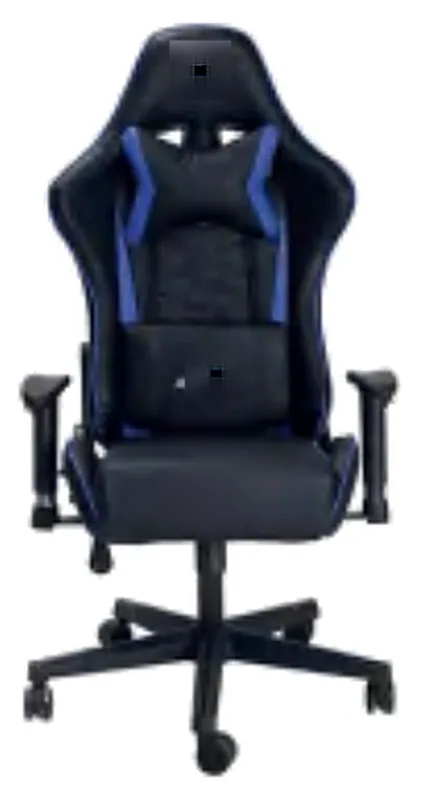
TVD-756 is an upholstered gaming chair with a reclining backrest. No certification mark is on file for it, so this guide sets out what a Canadian buyer should ask for before ordering.
Seating is one of the product groups where import paperwork can matter as much as the chair. Gaming Chairs (TVD-756) are described on the product page as having a reclining backrest, a lumbar pillow and multiple colourways, aimed at retail and e-commerce sellers. This page is about the rules around that chair, not the chair itself. The practical question for a Canadian reseller is simple: what do you need in hand before you list, ship or install it?
Status for TVD-756: what we hold today
No certification mark or test report is on file for TVD-756. We do not describe it as certified, approved or tested to any named standard. What we do is confirm the certification status and supply the documents with the written quote before you order. If a document you need does not exist for the version you want, we tell you at that point, not after the container lands.
Which Canadian rules touch an upholstered chair
- Canada Consumer Product Safety Act (CCPSA). It applies to consumer products. It prohibits products that are a danger to human health or safety, requires incident reporting and allows recalls. Health Canada enforces it, and a reseller who sells a chair to the public takes on those duties.
- Consumer Packaging and Labelling Act. Prepackaged consumer products need bilingual English and French product identity and net quantity, plus the dealer's name and place of business. If you sell the chair in its carton, the carton is part of the job.
- Textile Labelling Act. A product that contains textile content means you should expect fibre-content and dealer identity labelling questions for the cover and cushioning where they are sold as textile articles.
- Surface Coating Materials Regulations. Limits apply to lead and mercury in paints and coatings on furniture, including painted or coated frame parts.
- Quebec. Product labels, instructions, manuals and warranty documents must be available in French. Quebec no longer has a separate rule on upholstered and stuffed articles: that permit and label law was repealed on 9 December 2021, so upholstered chairs sold there follow the federal Textile Labelling Act and the CCPSA.
The CE mark is not recognised in Canada as proof of compliance for consumer products. A chair that carries a CE mark elsewhere still needs to meet the Canadian items above.
Duty on leather and reclining seating
Customs duty depends on the tariff classification and origin, and taxes follow the province of delivery. One point deserves its own heading for this product. Certain upholstered seating from China, where the chair has leather or a motion or reclining mechanism, can attract very high anti-dumping duty plus countervailing duty, often more than the value of the goods. Fabric-only stationary seating is excluded. TVD-756 has a reclining backrest, and so this issue applies to it. Our customs broker confirms the classification and any duty before we quote a delivered cost, and we may source from another origin where that is the better route.
Document checklist for chair buyers
| Document | Why you ask for it | Who issues it |
|---|---|---|
| Upholstery flammability test report | Offices, hotels and tenders often name a standard such as California TB117-2013; this is a buyer specification, not federal law | Accredited test laboratory, via the factory |
| ANSI/BIFMA test report (for example BIFMA X5.1 for office chairs) | Contract buyers use it to judge strength and durability where the tender asks for it | Test laboratory |
| Coating lead and mercury test | Supports the limits on paints and coatings on furniture | Test laboratory |
| Fibre-content details for cover and filling | Needed for textile labelling on consumer articles | Factory, confirmed in the quote |
| Bilingual carton and manual text | Consumer Packaging and Labelling Act and Quebec French rules | You or us, agreed before production |
| Tariff classification and duty confirmation | Avoids a surprise at the border, especially for leather or reclining models | Our customs broker |
| Textile Labelling Act fibre-content label on upholstered chairs | Applies to consumer textile articles such as padded seats, in every province | Factory label, with dealer identity added by the seller and agreed with you |
What happens when something is missing
A tender evaluator or facilities manager can reject a chair that arrives without the test report their specification named. A retailer can refuse to list a product that lacks bilingual labelling. A product found to be a danger can be recalled under the CCPSA, and sellers have reporting duties. At the border, a duty assumption that proves wrong can change the whole cost of the order. None of these is dramatic, and all of them are simpler to settle at the quote stage.
Gaming chairs versus the rest of the line
The same product line includes desks such as the L-Shaped Gaming Desk with Shelves (TVD-757) and the Folding Computer Desk (TVD-10630). Desks bring different questions, for example composite wood panels and formaldehyde rules, so we treat them separately from chairs. If a model in the range ever adds a plug-in or battery-powered feature, electrical certification applies as well. Our guide to CSA, cUL and cETL marks explains what those marks mean.
How we handle it for you
Send the quantity, the delivery province and any tender wording through the quote request. We reply with the specification, the certification status, the documents we can supply and the delivered cost. Where an item needs a document the factory does not hold, we say so. You can read the buying side in our TVD-756 product guide and the Ontario angle in the Ontario office seating guide. The ordering page explains deposits and release.
Rules change, so confirm requirements with Health Canada, your customs broker, your insurer and any provincial authority that applies. This page is general information and not legal advice.