Certification guide ·
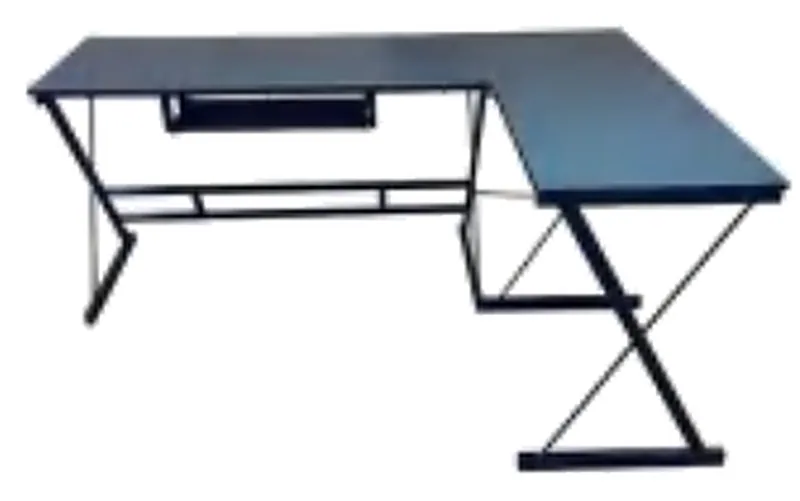
TVD-10640 L-Shaped Desk with Keyboard Tray: Canadian Certification and Document Checklist
A desk has no plug and no gas line, yet buyers still ask for paperwork. This guide sets out the documents that matter for the L-Shaped Desk with Keyboard Tray and what to do if one is missing.
Where this desk stands
L-Shaped Desk with Keyboard Tray (TVD-10640) has no certification on file with us. We are not saying it is certified, listed or approved to anything. What we do is confirm the certification status and supply the documents with your written quote before you order. The listed features are Z- and K-frame steel, carbon-look tops, and use in home offices and retail. A desk of this kind raises four questions for a Canadian buyer: the panel material, the surface coating, any padded part, and the labelling for the province you sell into.
Rule 1: the panel under the carbon-look top
The top is described by its look, not its material. If the version you order uses hardwood plywood, particleboard, MDF or a laminated board, then Canada's formaldehyde emission rules for composite wood products must be met. In force since 2023, they require the panels to meet emission limits, to be certified by an approved third-party certifier and to be labelled. This also matters to the furniture made from those panels, not only to flooring. The document to ask for is the TSCA Title VI or Canadian compliance certificate; the two are aligned. If the top is not made from composite wood, ask the factory to say so in writing, so that your file shows why no certificate exists.
Rule 2: coatings on the metal and the top
The Surface Coating Materials Regulations under the Canada Consumer Product Safety Act limit lead (90 mg/kg) and mercury in paints and coatings on furniture and on children's products. A painted steel frame and a printed or lacquered top both raise the question. A coating test report is the clean answer. It matters more if the desk will be sold as a student or teen desk, where the lead rules for children's products also come into play.
Rule 3: padded or upholstered parts
Our listing does not show any padding, so we do not assume the desk is an upholstered article. If the version you order includes a padded wrist rest, a cushioned tray or fabric panels, then two things follow. The Textile Labelling Act covers the fibre content of any fabric, and no stuffing permit or law label is needed, since Quebec repealed that law on 9 December 2021 and Ontario repealed its similar rule in 2019. Public or institutional buyers may also ask for a flammability report for upholstery. Confirm the requirement in your tender or lease.
Rule 4: buyer test reports for office furniture
Large offices, colleges and government tenders often ask for ANSI/BIFMA test reports on office furniture. These are buyer specifications, not federal law. If your tender names a test report for desks, send us the wording before you place an order so that we can ask the factory whether one exists. Do not assume a report exists because the desk looks like another that has one.
Document checklist
| Document | Why you need it | Who issues it |
|---|---|---|
| Composite wood formaldehyde certificate | Shows the panels meet Canadian emission limits and are labelled | Panel maker through an approved third-party certifier |
| Coating lead and mercury test report | Shows paints and finishes stay within the Surface Coating Materials Regulations | Accredited testing laboratory, via the factory |
| Office furniture test report (ANSI/BIFMA, where your tender asks) | Satisfies a tender or facilities specification | Testing laboratory, via the factory |
| Fibre-content label if any part is fabric-covered | Textile Labelling Act, any province | Dealer named on the label; applied to the article |
| French labels, instructions and warranty | Quebec retailers expect them | Prepared with the factory and checked on the quote |
| Bilingual packaging identity and net quantity, if sold prepackaged to consumers | Required for prepackaged consumer products | Dealer or packer |
Provincial differences
Quebec is the province where labelling decides the sale. The Charter of the French language expects French labels, manuals and warranty documents, with French at least as prominent as any other language. A Quebec retailer will ask for it before listing a desk. Outside Quebec the practical questions are the retailer's own and your tender's. Whatever the province, GST, HST, PST or QST follows the delivery address; see our sales tax guide.
What happens when a document is missing
- A retailer's compliance team may refuse to list the item until the certificate arrives.
- A buyer's facilities department may refuse delivery on a tender job.
- If a product is found to be a danger to health or safety, the Canada Consumer Product Safety Act allows recalls and requires incident reporting. Health Canada enforces it.
The easiest moment to fix a gap is before the container is packed, which is why we raise these points at quote stage.
How we handle it
When you send the quote request, tell us the province of delivery, whether the desk is going to consumers, a retailer or a tender, and which documents are mandatory. We confirm certification status and supply the available documents with the quote before you order. Payment is 30% deposit and 70% before release, so you can review documents before most of the money moves. The how ordering works page sets out the steps, and the product buying guide for TVD-10640 covers sizes, finishes and ordering. Rules change; confirm with the authority, your inspector or your customs broker. This is not legal advice.