Certification guide ·
Storage Bags and Bins Certification in Canada: Moving Bags, Zip-Lid Bags and Bamboo Rack
Five storage products, two very different compliance profiles. See which rules touch the clear carry bags and which touch the bamboo rack before you import.
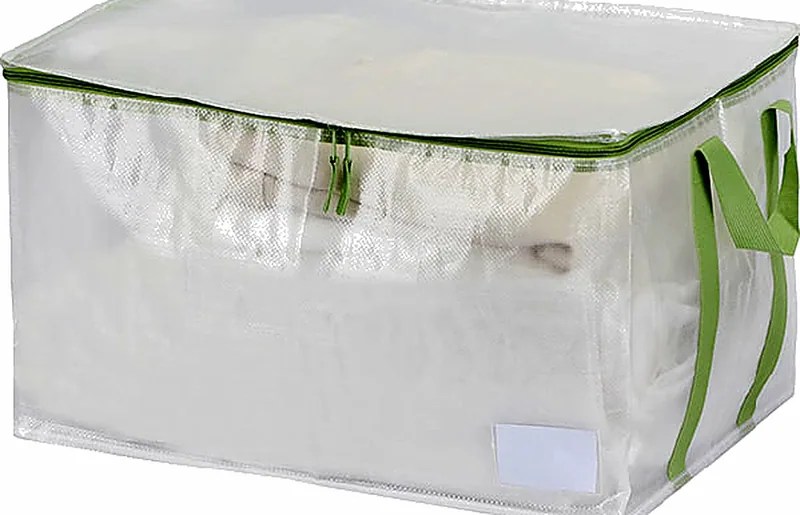
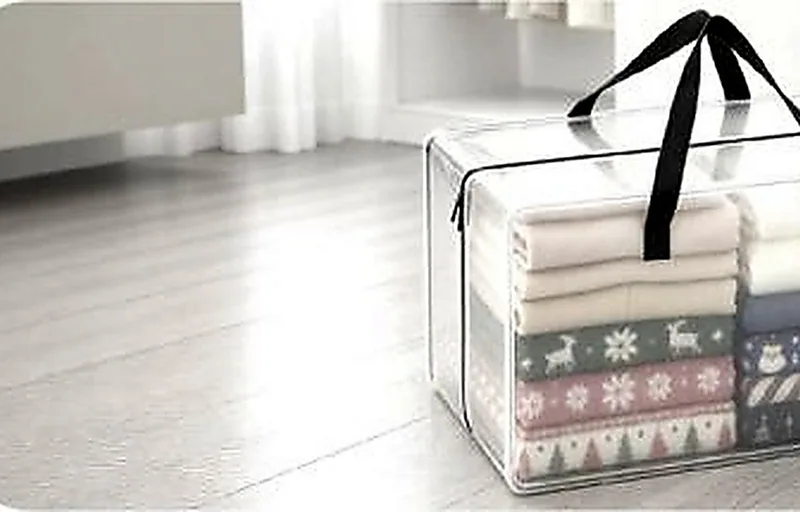
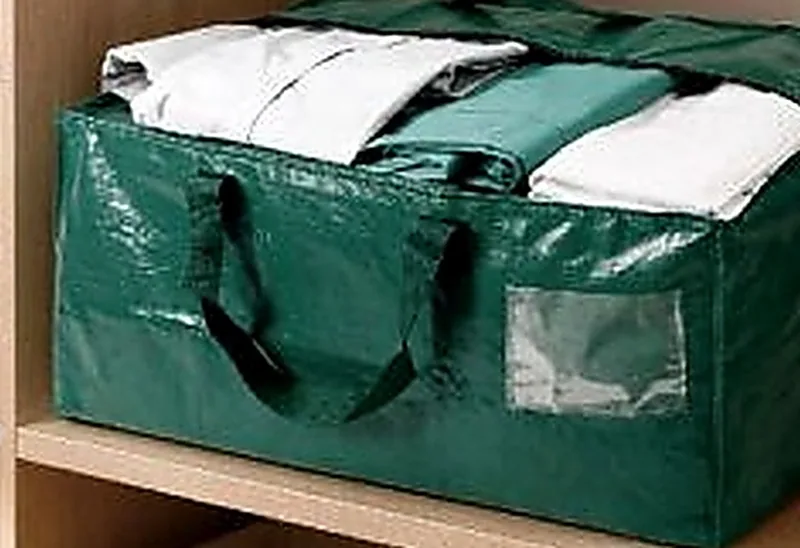
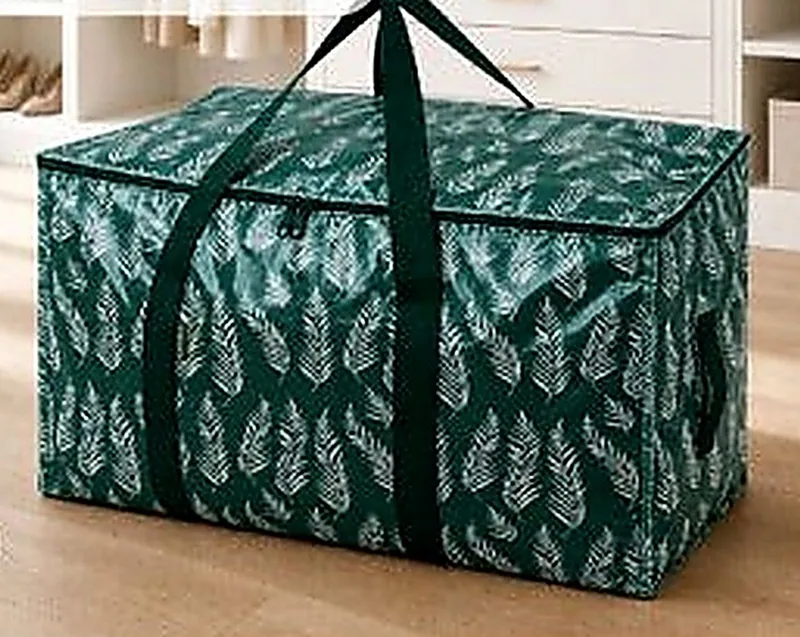
Five products in our storage range look similar on a shelf but raise different compliance questions: the clear woven bag with a zip lid (PP Woven Storage Bags with Zip Lid, TVD-2955), the clear single-compartment Transparent Moving Bag (TVD-2956), the two zip-top moving bags Transparent Moving Bag – Green (TVD-2959) and Heavy Duty Moving Bag – Leaf Print (TVD-10526), and the open bamboo shelf unit 3-Tier Bamboo Storage Rack (TVD-2971). This guide separates the questions that belong to flexible carry bags from those that belong to a small bamboo rack, so you ask for the right documents before a container is booked.
The five products and what each one is
- TVD-2955: a clear PP woven bag with green zip trim, supplied in 9 sizes from a 30 cm cube up to 93 cm long, with carry handles and a name-card window. The name-card window is what makes it a good fit for stock rooms, student storage and removals where each bag is labelled by owner. Read the full product guide for the zip-lid bag.
- TVD-2956: a clear PE bag measuring 73.7 x 35.6 x 33 cm with dual carry handles that shows its contents at a glance. See the moving bag guide.
- TVD-2959 and TVD-10526: the same 73.7 x 35.6 x 33 cm size with a zip top, a view window and carry handles, in plain and leaf-print versions. They are covered together in the green and leaf-print moving bag guide.
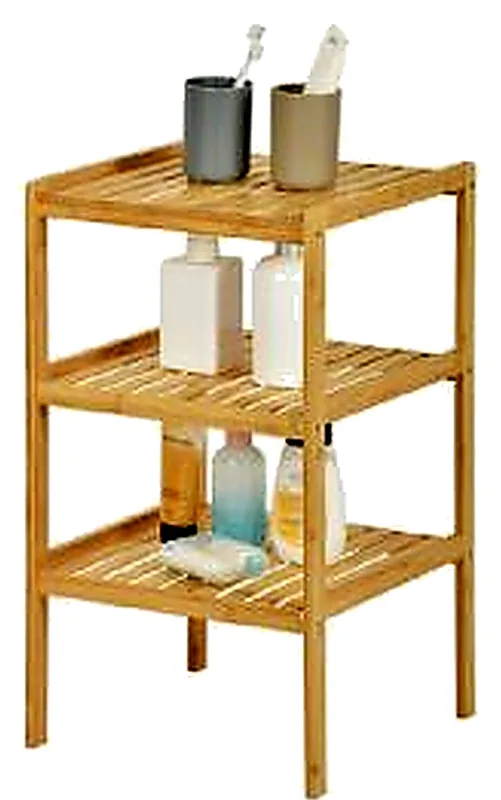
- TVD-2971: an open three-shelf bamboo rack measuring 34 x 34 x 60 cm that suits a bathroom or kitchen. The 3-tier rack guide explains where it fits.
Where certification marks do and do not come into it
None of the five products has a powered, lit, padded or glass part in the features we publish, so electrical marks such as CSA, cUL or cETL are not part of this conversation. If you plan to bundle a plug-in accessory with any of them, that accessory is a separate item and our guide to CSA, cUL and cETL marks explains what it would need. Please note that no certification mark is on file for any of the five, and we do not describe them as certified, listed or approved. What a Canadian buyer needs here is a set of labelling, safety and import documents rather than a single mark.
Rules that apply to the flexible bags
Once you sell a carry bag to the public it becomes a consumer product. The Canada Consumer Product Safety Act prohibits products that are a danger to human health or safety, requires incident reporting and allows recalls, and Health Canada enforces it. The practical questions for a clear plastic bag are sharp edges on zips and handle fittings, whether the film and handles hold up under the loads the printed or stated use implies, and whether any warning text is needed on the pack. Ask the factory what testing it has done and ask for the reports.
If a bag is sold prepackaged to consumers, the Consumer Packaging and Labelling Act requires bilingual English and French product identity and net quantity, plus the dealer's name and place of business. Bags sold to a moving company or a storage operator for their own use do not face the same retail labelling, but their customers may still ask. For Quebec, the Charter of the French language requires that labels, instructions and any warranty document be available in French, with French at least as prominent. Quebec retailers will check this before they list a product, so plan the artwork early.
If any version you order has a fabric body, trim or lining that you sell as a textile article, the Textile Labelling Act's fibre-content and dealer identity labelling can come into play. The listed features for the woven bag describe PP woven material rather than a sewn textile, so confirm on the quote which labelling route is needed.
The bamboo rack is a separate conversation
The 3-Tier Bamboo Storage Rack is furniture-like storage and needs a different checklist. Ask what finish is on the bamboo. Paints and coatings on furniture fall under the Surface Coating Materials Regulations, which set limits on lead and mercury, so request a coating declaration or test report. If any part of the rack is plywood, particleboard, MDF or a laminated panel, the formaldehyde emissions rules for composite wood products apply: ask for the third-party certificate and labelling, which for Canada is aligned with the TSCA Title VI paperwork. Because it suits a kitchen, also ask for food-contact test reports on the finish and any adhesive if shelves will hold unwrapped food. Bamboo is a natural material, so ask how it should be acclimatised before installation in dry heated interiors or humid coastal homes.
Document checklist for this group of products
| Document | Why you need it | Who issues it |
|---|---|---|
| Product safety test report | Supports your duty not to sell a product that is a danger to health or safety | Factory or an independent lab |
| Bilingual pack artwork | Identity, net quantity and dealer details for prepackaged consumer sales | You, with our proofing support |
| French instructions or inserts | Charter of the French language for Quebec sales | You or factory, checked before print |
| Coating declaration (rack) | Lead and mercury limits on coatings used on furniture | Factory or coating supplier |
| Composite wood certificate (rack, if any panel part) | Formaldehyde emission limits and labelling | Approved third-party certifier |
| Food-contact test report (rack, if used for food) | Buyers and inspectors ask for migration test evidence | Accredited laboratory |
| Commercial invoice with tariff classification | Duty and tax depend on the HS code and origin | Our customs broker confirms |
Duties, classification and the measures we watch
Import duty depends on the tariff classification and the country of origin, and GST, HST, PST or QST then apply according to the province of delivery; our sales tax guide explains the split and the landed cost calculator lets you rough out a budget before a written quote arrives. The anti-dumping and countervailing measures we track concern upholstered domestic seating, mattresses and stainless steel sinks. None of the five products in this guide is one of those, but our customs broker still confirms classification before we quote a delivered cost.
What happens when the paperwork is missing
A retailer that cannot show a bilingual label or a coating declaration may be refused a listing by a store buyer or a franchisor. A product found to be dangerous can be recalled. Goods held at the border for classification questions cost storage time. None of this is hard to avoid when the questions are asked before ordering; it becomes expensive when they are asked after the container lands.
How we handle it for you
Every quote states the specification, certification status and the documents we can supply, packing details, lead time and delivered cost to your address. If a document does not exist we say so, and we confirm certification status and supply what we have with the quote before you order. Samples are available on most items with the sample cost usually credited to the first order, trial minimum quantities are low on many lines, and products from several factories can share one consolidated container, which suits a mixed order of bags and a rack. Payment is 30% deposit and 70% before release; see how ordering works. Rules change, so confirm requirements with the relevant authority, your inspector or your customs broker; this guide is not legal advice. Browse the full storage bags and bins range, the wholesale guide or our Canada delivery hub.