Certification guide ·
Teak 2-Tier A-Frame Tray Stand (TVD-5900): Canadian Certification and Compliance Guide
No certification mark is on file for this tray stand. The real Canadian questions are food contact, coatings and labelling.
The compliance picture for TVD-5900 in brief
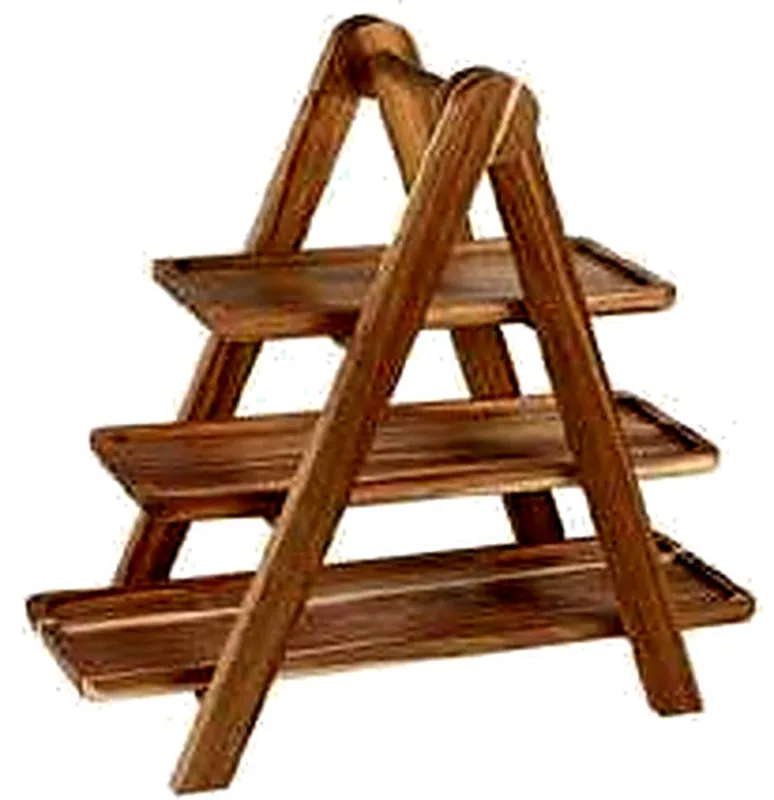
The Teak 2-Tier A-Frame Tray Stand (TVD-5900) comes with two tray tiers, an A-frame design and a natural teak finish. Nothing in that listing is powered, padded or glass. That keeps the electrical and upholstery rules out of the picture, but a serving-style stand raises two questions that a plain shelf does not: what happens when food or drink touches the wood, and how stable is a frame that carries trays? No certification mark is on file. We do not claim any approval for the stand, and everything below describes what a Canadian buyer should require. Rules change, so confirm with your inspector, the provincial authority or your customs broker. This is not legal advice.
Food contact: the question that sets this stand apart
If the trays will hold food, the Food and Drugs Act prohibits selling food in or with materials that may make it harmful. Health Canada does not pre-approve kitchenware, so buyers commonly ask the factory for food-contact test reports on finishes and glues. Wood and bamboo items are no exception. If the stand is used only for towels, books or sealed packages, the question does not arise, so decide the intended use early and say so on your quote request. A hotel serving breakfast and a spa laying out wrapped amenities have different needs, and the retailer's description of the product should match the use.
Coatings and composite wood
Under the Surface Coating Materials Regulations, coatings on furniture must meet the limits for lead (90 mg/kg) and mercury. A natural teak finish may be an oil or clear sealer, so we ask the factory to name it and supply a test report. If any part, including the tray bases, is plywood, particleboard, MDF or another laminated board, formaldehyde emission limits apply, with third-party certification and labelling. The TSCA Title VI certificate is aligned with the Canadian requirement. Solid teak parts are not part of that group.
Safety, labelling and language
The Canada Consumer Product Safety Act covers any consumer product that could be a danger to health or safety, and it requires incident reporting and allows recalls. For an A-frame stand that carries trays, ask about tip resistance, hinge or joint hardware and pinch points if the frame folds. Prepackaged consumer products need bilingual identity and net quantity under the Consumer Packaging and Labelling Act, and in Quebec labels, instructions and warranty documents must be available in French.
Document checklist
| Document | Why it matters | Who issues it |
|---|---|---|
| Construction statement for frame and trays | Settles the formaldehyde question | Factory, verified by us at quote stage |
| Finish name plus lead and mercury report | Coating limits on furniture | Factory or laboratory |
| Food-contact test report, if food touches the wood | Food and Drugs Act duty on food-contact materials | Factory or independent laboratory |
| Formaldehyde certificate, only if boards are used | Composite wood certification and labelling | Approved third-party certifier |
| Load per tier and stability statement | Supports product safety duties | Factory or laboratory |
| French and English instructions and labels | Quebec and bilingual labelling | Factory, translation on request |
| Tariff classification and duty note | Duty follows HS code and origin | Our customs broker |
Choosing intended use before you order
The cleanest way to avoid confusion is to write the intended use into your quote request: spa towels, hotel breakfast trays, retail display or home bedside. We then ask the factory for evidence that matches. A stand sold as a food-serving piece needs different documents from one sold as a decor stand, and describing the product on your own website or labels as something it was not documented for can create trouble with a retailer or inspector. Keep your product description, packaging and marketing consistent with the documents you hold.
What can go wrong without the paperwork
A health inspector in a hotel kitchen or spa cafe may ask where a wooden tray comes from. A retailer that lists the stand as a serving piece may be asked for food-contact evidence by its buyer. A shipment to Quebec without French instructions can be refused by the retailer. Each of these is easier to fix before the order than after the container has landed.
Rules that do not apply by default
- Electrical certification: nothing in the listing plugs in. A lamp or lit accessory added later needs a Canadian mark from an accredited body, and a US-only mark is not enough.
- Quebec stuffing permit: repealed on 9 December 2021, and never relevant to a bare wood stand.
- CE mark: not accepted in Canada as proof of compliance.
How we handle it
Your quote names the construction, finish, intended use, documents, packing, lead time and delivered cost. The customs broker confirms the classification before a delivered cost is given, and the sales tax guide explains tax by province. Samples are available on most items, payment is 30% deposit and 70% before release, and the ordering page describes the whole sequence. Compare with the Teak 2-Tier A-Frame Tray Stand buyer guide for selling advice on the stand, browse the teak and acacia line, or request a quote directly.
For the wider picture on electrical marks, see CSA, cUL and cETL marks explained.