Certification guide ·
Live-Edge Resin Table – Burl Wood Inlay (TVD-4375): Certification and Compliance in Canada
A resin-filled burl table raises questions about coatings, food surfaces and any powered additions. Here is what to confirm before you order.
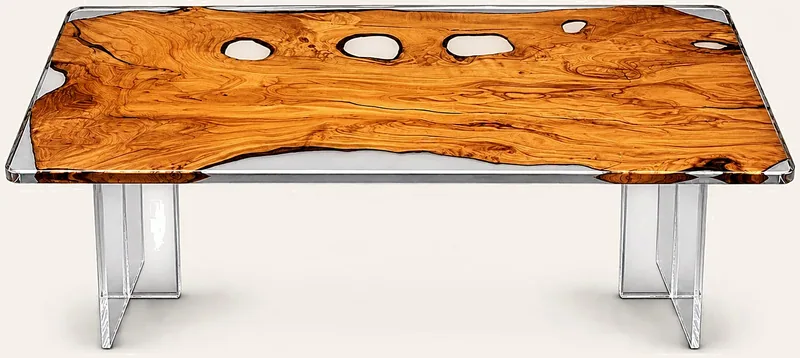
The Live-Edge Resin Table – Burl Wood Inlay (TVD-4375) is a burl wood table whose natural voids are filled with resin, sold in 2000 or 2200 by 800 by 755 mm with custom size, resin and leg options. Burl is prized because no two tops match, and the resin fill is what makes the top flat and usable. That same combination of irregular wood and cured resin is what shapes the Canadian compliance questions. This guide explains which rules a restaurant, designer or boardroom buyer should check. It is general information, not legal advice; rules change, so confirm with the authority, your inspector or your customs broker.
What is on file
No certification or test report is on file for TVD-4375, and we do not call it certified, approved or compliant. Our written quote states the certification status and attaches the documents that exist, before you order.
Is any electrical rule involved?
The listed features show a wood and resin top with no powered part, so electrical marks do not apply to the table as listed. They would apply if the version you order includes something plugged in or hard-wired, for example lighting built into the base or a charging point in the edge. In that case Canadian electrical products need a certification mark from a body accredited by the Standards Council of Canada, such as CSA, cUL or cETL, or a field evaluation label; a US-only mark is not enough, and the European CE mark is not recognised in Canada as proof of compliance. If you are considering any such addition, send it with your request and read the CSA, cUL and cETL marks explained guide first.
Resin-filled voids: the finish is a coating
The Surface Coating Materials Regulations under the Canada Consumer Product Safety Act limit lead (90 mg/kg) and mercury in paints and coatings on furniture and on children's products. The cured resin, any stain on the burl and any sealer on the surface act as a coating for this purpose. Ask the factory for a coating test report that covers the resin and the colour you choose, and tell us if the table is going into a daycare, school or other children's setting, since lead rules for children's products apply there too.
Restaurant use and food contact
Restaurants, cafés and hotel dining rooms are the buyers who ask about the surface, because plates, bread baskets and cutlery rest on it. The Food and Drugs Act prohibits selling food in or with materials that may make it harmful. Health Canada does not pre-approve furniture, so nobody certifies the top as such, but your public health inspector, landlord or franchisor may want a food-contact test report on the cured resin. Ask for one at quote stage. Provincial food premises rules expect surfaces to be durable and easy to clean, so check how the resin-filled voids and the burl surface are sealed, and request cleaning and care instructions in writing.
Burl wood and composite panels
Burl is solid wood, and the formaldehyde emission rules for composite wood apply to hardwood plywood, particleboard, MDF and laminated products, not to solid timber. The rule can still matter for what is beneath the burl. If a version has a board core, a laminated edge or a composite base panel, ask for the third-party certificate and labelling, and confirm on the quote what each part is made of.
Legs, load and size
The listing offers custom size, resin and leg options. Longer tables need stronger support, and the leg choice depends on the load. If you select clear acrylic or metal legs, ask for the load figure and how the legs fix to the top. If a version has any glass part, ask for the safety information that goes with it. Dimensions, weight and capacity beyond the listed size are confirmed on your written quote.
Document checklist for TVD-4375
| Document | Why it matters | Who issues it |
|---|---|---|
| Coating test report (lead and mercury) covering resin and tint | Surface Coating Materials Regulations | Test laboratory, via the factory |
| Food-contact test report on cured resin | Restaurant inspector, landlord or franchisor may ask | Test laboratory, via the factory |
| Material statement for core, edge and base | Shows whether formaldehyde rules for composite wood apply | Factory, confirmed on our quote |
| Electrical mark or field evaluation, only if powered parts are added | Electrical safety authority and insurer | Accredited certification body |
| French care card and labels, for Quebec delivery | Charter of the French language | Factory or us, agreed before production |
| Photos of the actual top, approved before shipment | Each burl top is unique | Factory, approved by the buyer |
Provincial differences
In Quebec, labels, instructions and warranty documents must be available in French. Heated interiors are dry in winter on the Prairies and in central Canada, which can move solid wood, while coastal British Columbia and Atlantic Canada are humid; acclimatise the table before it goes into service. Liquids and adhesives can freeze in winter transit, so plan freight with the season.
What happens if something is missing
A health inspector may refuse a dining surface that cannot be shown to be suitable, a franchisor may reject a finish that fails its own rule, and a retailer may decline to list furniture that has no coating report. For made-to-order tables, returning a rejected top is rarely practical, so settle documents first.
How we handle it
Send a quote request with the size, resin colour, leg style and delivery province. We confirm certification status and supply the documents with the quote. Payment is 30% deposit and 70% before release, and samples are available on most items; see how ordering works and the Canada delivery hub. For the whole range, read the line-wide compliance guide, or compare tables such as the Olive Wood table (TVD-4372), the Burl Wood River Table (TVD-4376) and the dark walnut compliance guide. The line page lists every option.