Product guide ·
Rolling Cart with Fabric Drawers (TVD-6321): Cream Frame, Wood-Tone Shelf and Castors for Canadian Retailers
A wheeled storage cart with fabric drawers and a side shelf. This guide covers who buys it, what the fabric drawers mean for Canadian labelling and what to confirm on the quote.
The cart in plain terms
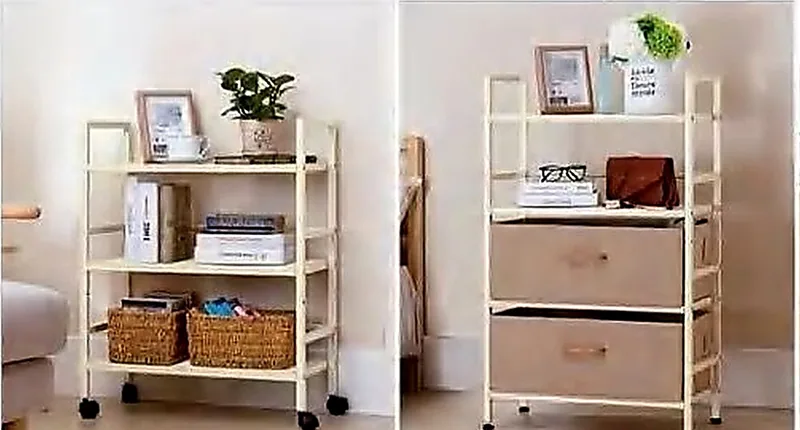
The Rolling Cart with Fabric Drawers (TVD-6321) is a wheeled storage cart with a cream frame, fabric drawers and a wood-tone side shelf, running on castor wheels. It is the soft, home-styled member of our storage line: where a wire rack looks like a utility object, this one looks like a piece for the nursery, the craft corner or the bathroom. Dimensions, drawer count, material of the frame and the shelf, and weight capacity are confirmed on your written quote; a free account shows the full specifications on the product page.
Where it sells
- Nursery and children's room storage. Fabric drawers do not slam and a rolling base lets a parent move the cart to the changing area. Treat this as a children's-room use only if you plan to market it that way, because that triggers extra rules covered below.
- Craft and hobby rooms. Wheels turn the cart into a mobile station for yarn, paper or paint supplies.
- Bathroom and laundry. A cart that slides beside the vanity holds towels and toiletries.
- Salon and small office back rooms. The wood-tone shelf holds a diffuser or a small printer, the drawers hold the supplies.
Retailers buying for home-organisation aisles will see this as a mid-height impulse item: it looks good on a display floor and shoppers can open the drawers to see the fabric.
Reading the three listed features
Cream frame, fabric drawers
The cream tone is gentle in photographs and in small rooms. Fabric drawers raise three practical questions: what the fabric is made of, whether it is removable for washing, and how the drawer holds its shape when full. Ask for the fabric type and a swatch, and ask whether the drawers have a rigid insert. Light cream also shows scuffs, so a sample from a production run is worth approving.
Wood-tone side shelf
The listing says wood-tone, which describes the look, not the material. It might be solid wood, veneer or laminate over board, and the answer matters for cost, moisture behaviour and for Canadian composite-wood rules. If the shelf is made from plywood, particleboard or MDF, the Formaldehyde Emissions from Composite Wood Products Regulations require the panels to meet emission limits, be certified by an approved third-party certifier and be labelled. Ask for the compliance certificate for the board used.
Castor wheels
Castors make the cart useful and they are also the part that fails first. Ask whether any castors lock, what the wheel material is, and whether the floor in the target market (carpet, hardwood, tile) works with it. Locking wheels matter in a nursery or a salon where the cart must not roll when loaded.
Fabric drawers and Canadian upholstery rules
This is the part of the specification that deserves attention. If the fabric drawers are padded or stuffed, or the fabric is sold as part of a textile article, three sets of rules may apply:
- The Textile Labelling Act asks for fibre-content and dealer identity labelling on consumer textile articles.
- Quebec repealed its regulation on stuffing and upholstered and stuffed articles in December 2021, so a permit number and label on upholstered and stuffed articles sold there are no longer required. Ontario repealed its similar rule in 2019; check the current rules in other provinces.
- Contract and institutional buyers, such as a daycare or a hotel, sometimes ask for a flammability test report for fabric in their tender. That is a buyer specification and not federal law, so confirm what the tender asks for.
If the drawers are plain unpadded fabric bins, only the fabric's fibre-content labelling is likely to matter. We do not assume either way: we confirm the construction with the factory and tell you on the quote. Our guide to upholstered storage products and Canadian rules sets out the document path in more detail. No certification is on file for this product, so we do not describe it as certified; we confirm status and supply documents with the quote before you order. Rules change; confirm with the authority, your inspector or your customs broker. This is not legal advice.
How to specify it
| Ask for | Why it matters |
|---|---|
| Fabric type, swatch and whether padded | Decides what textile fibre-content labelling applies |
| Board type behind the wood-tone shelf | Triggers composite-wood formaldehyde documents if it is panel product |
| Castor type and locking | Stability when loaded; floor protection |
| Frame material and finish | Corrosion, scratch resistance and coating test report |
| Assembly, hardware, instruction language | Quebec buyers need French instructions available |
| Carton size, weight, units per container | Freight and warehouse planning |
Canadian use notes
Cream finishes and fabric drawers are the sort of product that suffers in damp transit, so ask about carton protection when it is shipped through Vancouver or Prince Rupert and onward by rail. Dry heated homes in the Prairies and central Canada can shrink some wood-look panels over winter; coastal BC and Atlantic homes are humid, which is a question for the fabric as much as the shelf. For Quebec shops, the manual and any warranty text must be available in French; our quotes are in English with French support on request.
Compared with the rest of the line
A buyer who wants hard-sided, no-fabric storage should look at the Under-Bed Storage Cart with its clear lid, or the wire units in our steel wire shelving rack guide. Softer alternatives are the Fabric Storage Baskets with Handles (TVD-2891) and the Cotton Rope & Woven Baskets (TVD-2897). The cart is the only one here that combines fabric drawers with wheels.
How ordering works
Quote first: use the quote request with the quantity and delivery address. The written reply covers price, specification, certification status, packing, lead time and delivered cost. Samples are on offer for most items, credited against the first order. Payment is 30% deposit and 70% before release. See how ordering works and the sales tax by province guide to plan tax on delivery.