Certification guide ·
Side Tables and Dressers With Fabric Parts: Quebec Stuffing, Textile and Tender Rules
Fabric pockets, slings, baskets and drawers make a table feel soft, but they also raise labelling questions. Here is what a Canadian buyer should ask for, product by product.
A plain side table rarely raises a question about padding. Add a fabric pocket, a magazine sling, a basket or a fabric drawer and the buyer has new things to check: whether the soft part is filled, whether it is treated as a textile, and whether a tender expects a flammability report. This guide covers eight products with soft components. It is about requirements and the questions to ask; it is not a claim that any product has a certificate, because none is on file.
The products and their soft parts
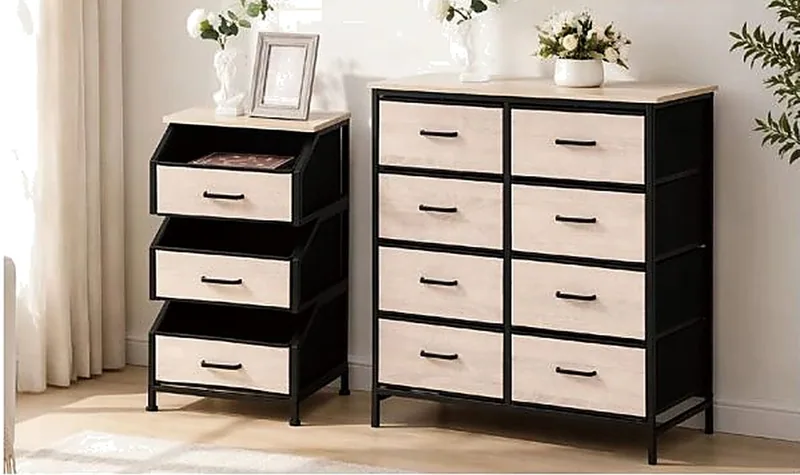
- Bedside Table & 8-Drawer Dresser (TVD-2987): black metal frame, fabric drawers. See the buying guide.
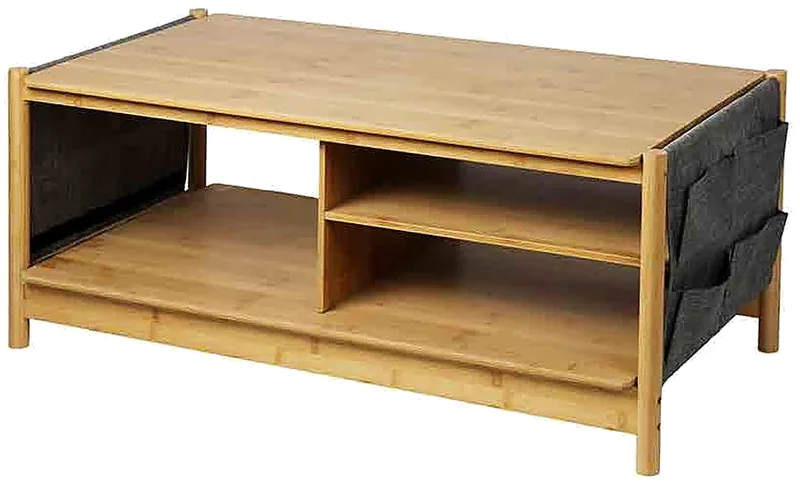
- Bamboo Coffee Table with Pockets (TVD-5608): open shelves, fabric side pockets, natural bamboo. See the collection guide.
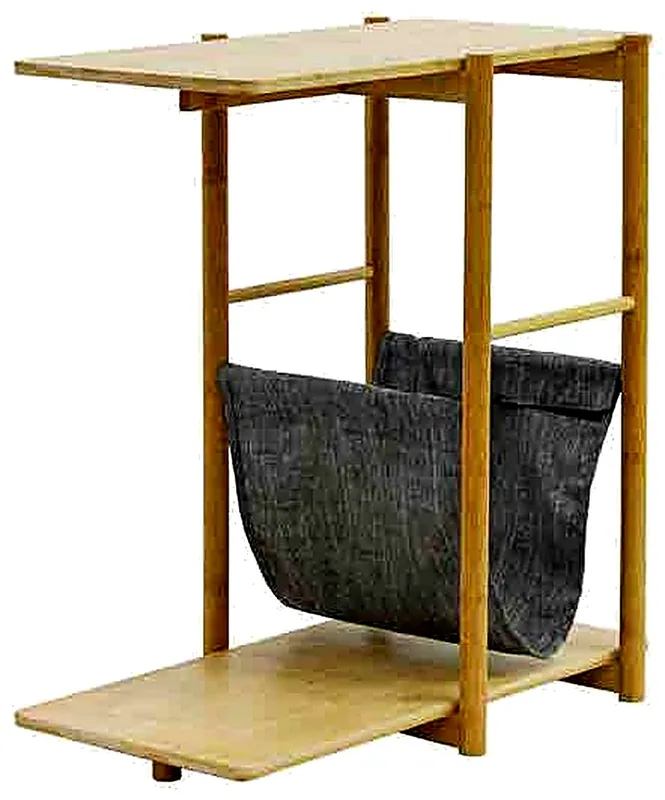
- Bamboo Side Table with Magazine Sling (TVD-5612): slide-under table with a fabric sling. See the product guide.
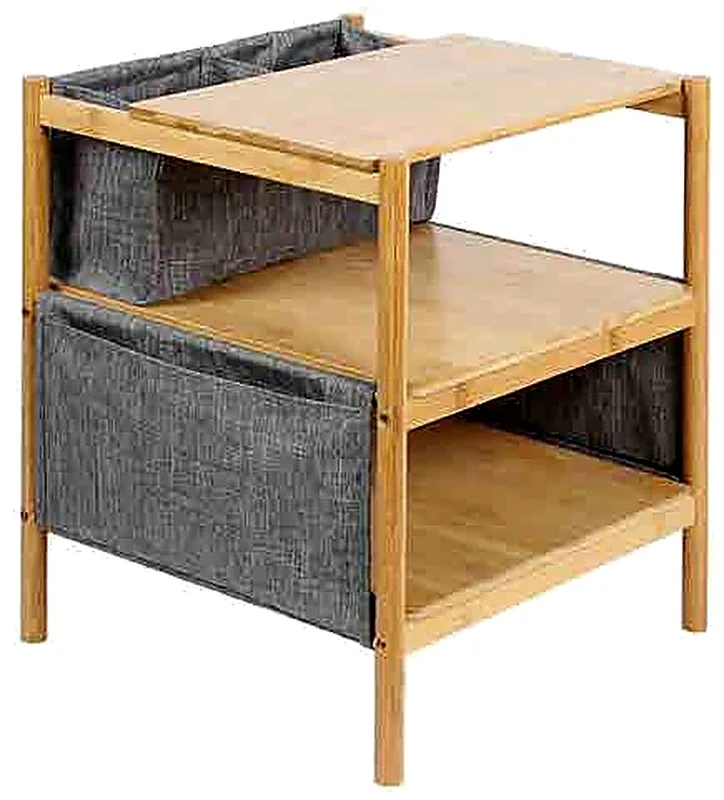
- Bamboo Side Table with Pockets (TVD-5648): fabric storage pockets and a two-tier shelf.
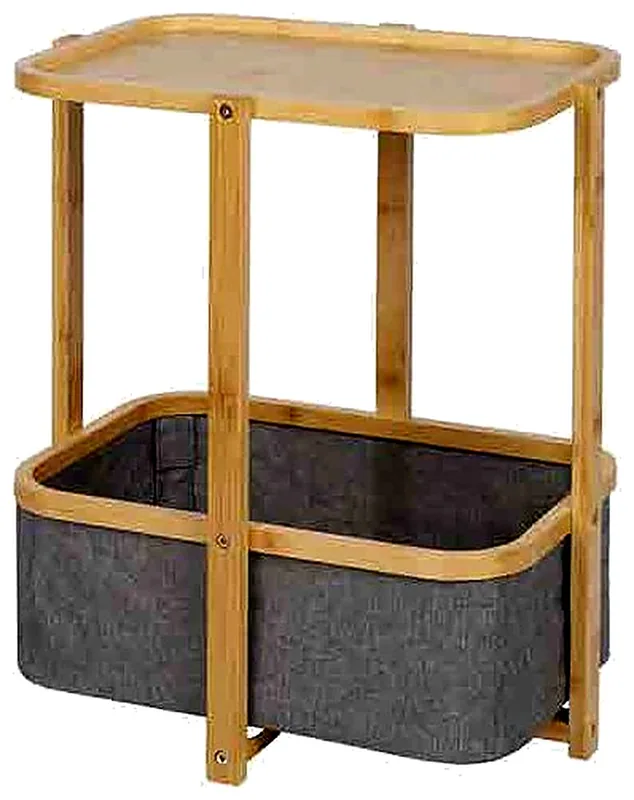
- Bamboo Side Table with Fabric Basket (TVD-5649): tray top with a grey fabric basket below. See the collection guide.
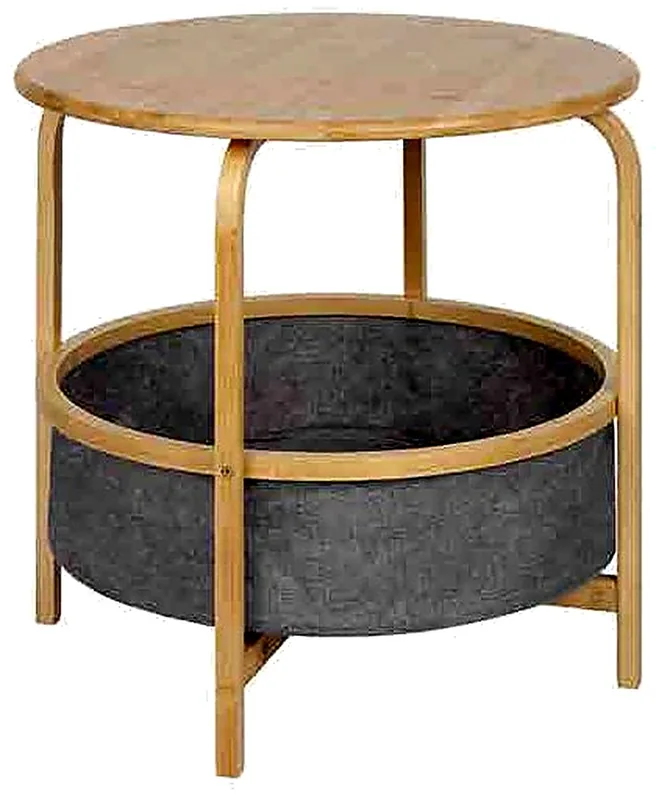
- Round Bamboo Side Table with Basket (TVD-5650): round top, grey fabric basket shelf.
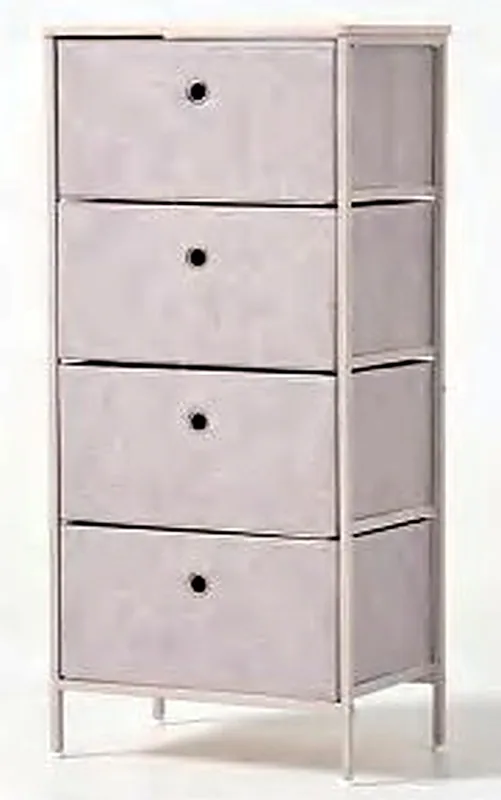
- Fabric Drawer Tower – 3 to 4 Drawer (TVD-6377): fabric drawers in a steel frame, narrow and wide towers, light grey. See the guide.
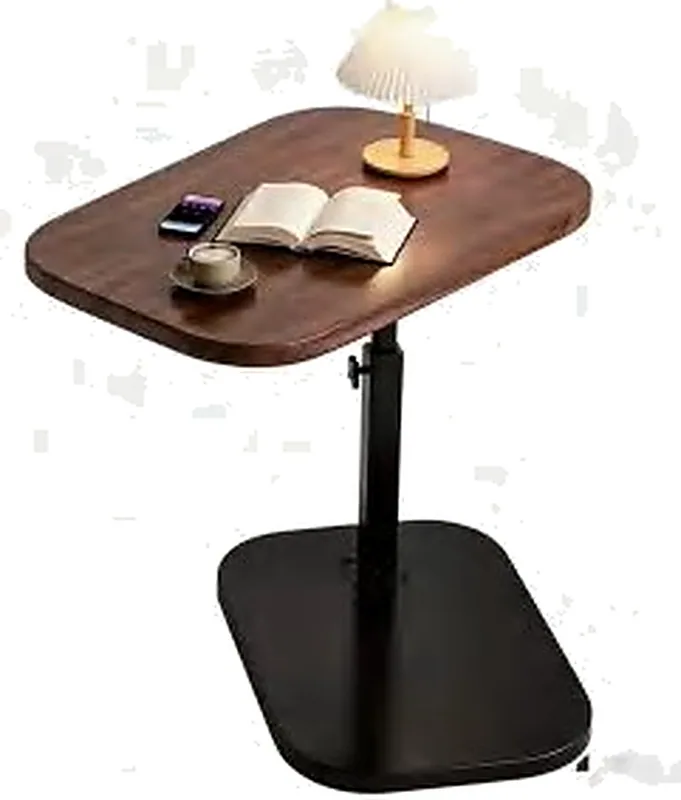
- Adjustable Sofa Table – Round Base (TVD-6364): height adjustable, walnut-look top, heavy black round base. Its listing shows no soft part; the upholstery questions apply only if the version you order has one. See the guide.
Question 1: is it upholstered or stuffed?
Quebec repealed its regulation on stuffing and upholstered articles in 2021, so no permit number or law label is needed on sofas, upholstered chairs and beds, mattresses, pillows or cushions; the Textile Labelling Act still asks for fibre content and dealer identity. Ontario repealed its similar rule in 2019; check current rules in other provinces. Among our eight products, a hanging sling, a slim pocket or a basket is a thin fabric part, not a cushion. A drawer tower with fabric drawers is a container. None is obviously a stuffed article. But a padded base, a quilted lining or a filled seat pad would change the answer, so the factory must state the construction in writing. We keep that statement with the order documents.
Question 2: is the fabric a textile article?
The Textile Labelling Act applies to consumer textile articles, such as bedding, pillows, cushions, throws, mats and upholstery fabrics sold as textiles, and requires fibre-content and dealer identity labelling. A side pocket on a table is a component of furniture and is unlikely to be sold as a textile. A loose fabric basket or a removable liner could be. Ask the factory what the fibre is and whether a fibre-content label is supplied, and ask your own retailer or buyer what it expects.
Question 3: does a tender name a flammability test?
Hotels, schools, clinics and theatres often specify flammability test reports for upholstery, for example California TB117-2013 or the standard named in the tender. These are buyer specifications, not federal law. If your tender includes one, tell us before the quote so we can ask the factory if a report exists for the fabric used.
The wood and frame side
Bamboo tops, walnut-look tops and black or light grey frames raise their own questions. If any panel is particleboard, MDF, plywood or laminated, the Canadian formaldehyde emission rules require limits, certification by an approved third-party certifier and labelling. Paints and coatings on furniture must respect the lead limit (90 mg/kg) and mercury limit in the Surface Coating Materials Regulations. Our composite wood compliance guide for the line covers this in more detail. Quebec's Charter of the French language also requires labels, instructions and warranty documents in French.
Document checklist
| Document or answer | Why you want it | Who issues it |
|---|---|---|
| Written construction summary per code (padded, filled or unpadded) | Decides whether fibre-content labelling applies | The factory, confirmed on our quote |
| Fibre-content label, if the article is upholstered or stuffed | Required for sale in Quebec | The permit holder named on the label |
| Fabric fibre content and fibre-content label | Textile labelling expectations | The factory or the dealer |
| Flammability test report named in your tender | Contract buyers ask for it | The factory's test laboratory, if one exists |
| Composite wood emission certificate | Formaldehyde limits for panels | An approved third-party certifier via the factory |
| Coating test report for lead and mercury | Furniture coating limits | An accredited laboratory via the factory |
| French labels, instructions and warranty | Quebec sale | The factory or the importer |
| Tariff classification confirmation | Duty and tax before a delivered cost | Our customs broker |
What happens when something is missing
A retailer may refuse to list a soft-part product without labelling, a hotel buyer can reject a delivery that does not meet its tender, and a Quebec retailer can query an upholstered article whose labels and manuals are not available in French. Under the Canada Consumer Product Safety Act, products that endanger health or safety can be prohibited or recalled. These outcomes are less costly to avoid with documents than to fix after delivery.
How we handle it
We ask the factory for the construction, the fabric details, the panel certificate and a French label proof, and we state on the written quote what is available. Our customs broker confirms tariff classification before we quote a delivered cost. Rules change; confirm with the authority, your inspector or your customs broker. This is not legal advice. Request a quote on the quote page; the ordering steps explain samples, low trial minimums, shared containers and the 30% deposit with 70% before release. For the broader rule set see the marks explainer if you add a powered piece, and the side tables and dressers line.