Certification guide ·
Leather, Plush and Linen Sofas for Canada: Import Rules and Document Checklist
Which Canadian rules apply depends on the covering. This guide compares the sixteen cushioned sofas by covering family and lists the documents to ask for.
Sixteen cushioned sofas, three covering families, one compliance question set
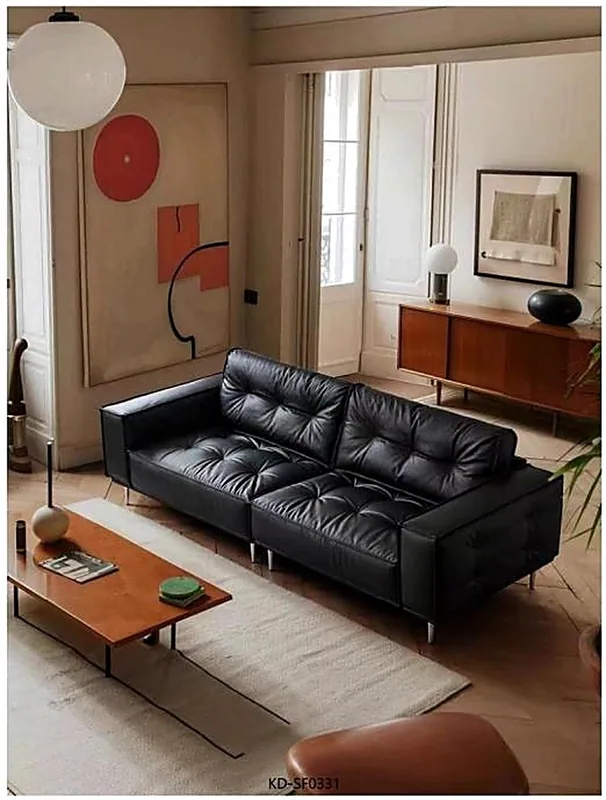
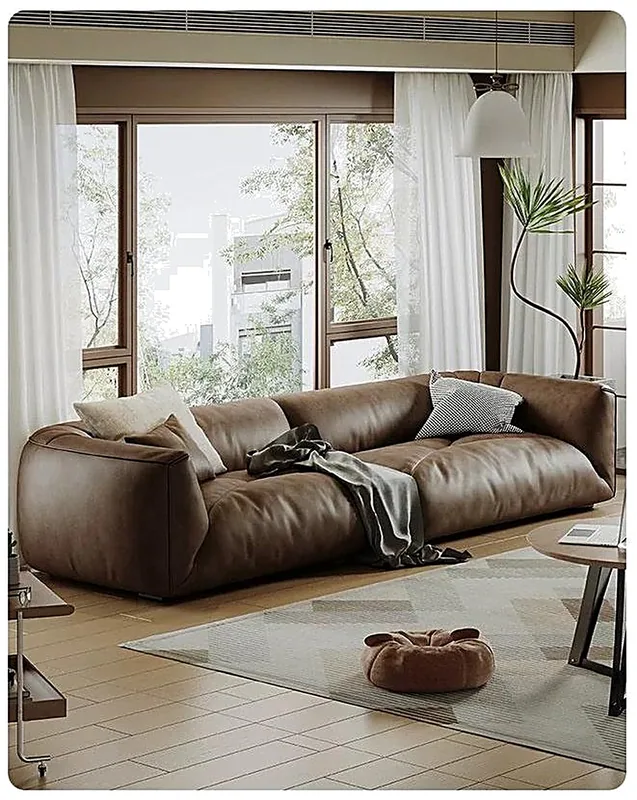
Importing sofas into Canada is rarely about one rule. It is about which rules your particular covering, stuffing and destination trigger. This guide covers sixteen sofas and sectionals from our line, from a leather model such as Black Leather Sofa – Tufted Cushions (TVD-9605) to a linen-named sofa such as Cream Linen Sofa – Deep Seat Cushions (TVD-9702). Our product listing describes all sixteen alike: an upholstered or leather sofa, in 2- to 4-seat and sectional layouts, with several colours shown. None has a certification mark on file, so every statement below is about what a Canadian buyer must check, not about what a sofa already holds.
Why the covering decides the route
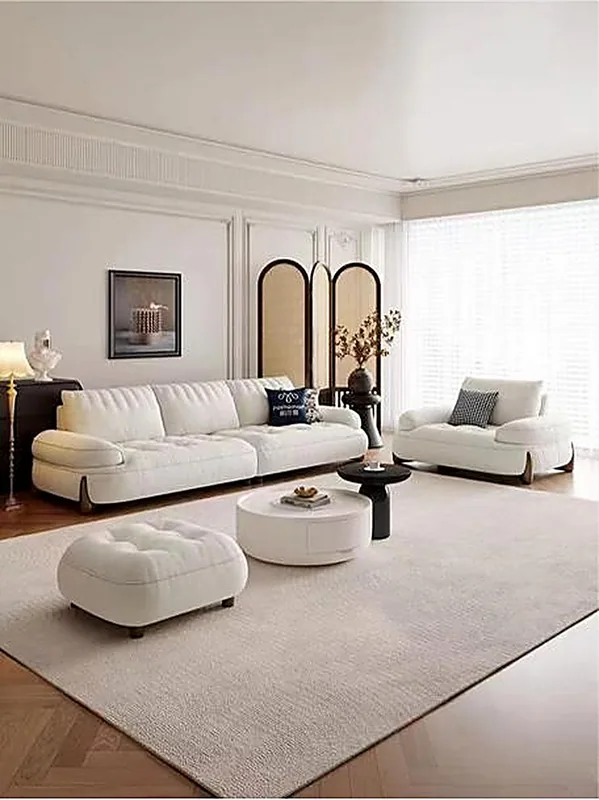
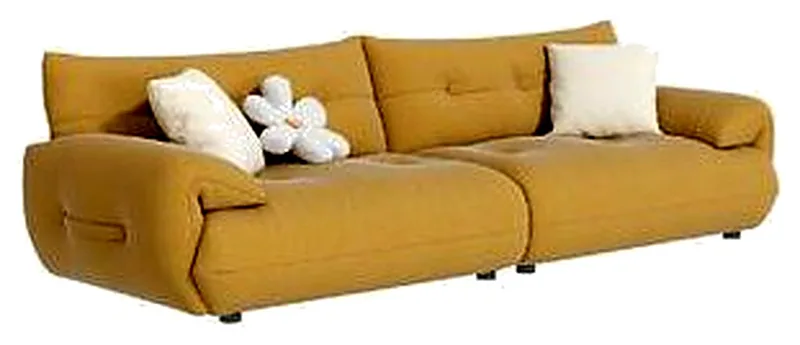
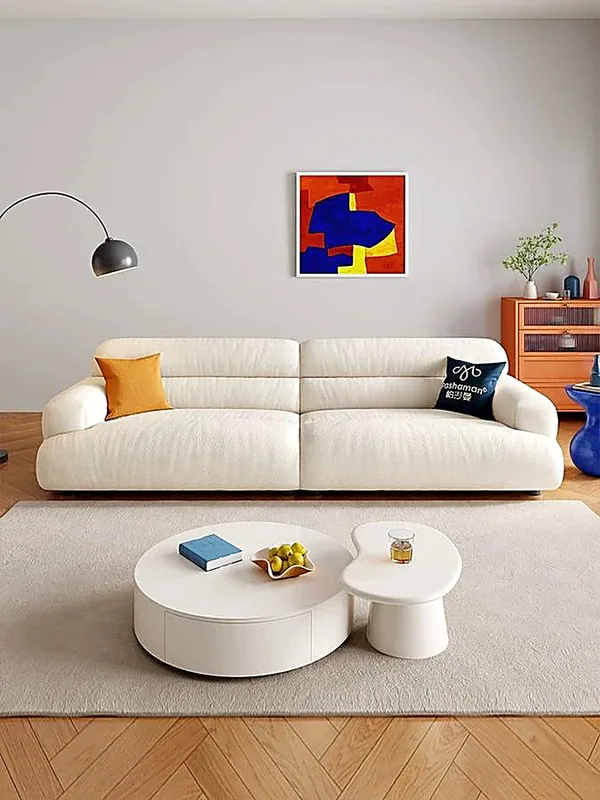
The sixteen split into families by name. Leather appears in TVD-9605, TVD-9635 and TVD-9671. Plush and soft pillow looks appear in Charcoal Plush Sofa (TVD-9655) and in the charcoal and mustard codes. Fabric and linen appear in Beige Pillow-Arm Fabric Sofa (TVD-9691) and TVD-9702. A sofa with a pillow-top set and ottoman, Cream Pillow-Top Sofa Set with Ottoman (TVD-9654), sits in the cream group. The family matters because upholstered domestic seating in leather, or with a motion mechanism, can attract anti-dumping and countervailing duty that is very high, often more than the value of the goods, while fabric-only stationary seating is excluded from that treatment. Our customs broker confirms classification and origin before we quote, and we may source from another origin.
Document checklist for a sofa order
| Document | Why it matters | Who issues it |
|---|---|---|
| Covering and filling statement per code | Decides duty treatment and fibre labelling | Factory, checked by our broker |
| Fibre-content label proof | Textile Labelling Act requires fibre content and dealer identity on consumer textile articles | Factory label; dealer completes identity |
| Textile Labelling Act fibre-content label | Needed on cushioned sofas sold in Canada | Factory label; dealer identity completed for the Canadian market |
| French labels, manual and warranty | Charter of the French language applies in Quebec | Importer, with factory artwork |
| Flammability test report | Hotel, school and tender specifications often name one, for example California TB117-2013 | Accredited test lab via factory |
| Frame panel formaldehyde certificate | Applies where the frame uses plywood, particleboard or MDF | Approved third-party certifier |
| Coating declaration for painted feet or legs | Surface Coating Materials Regulations set a lead limit of 90 mg/kg | Factory or test lab |
Differences between the sixteen
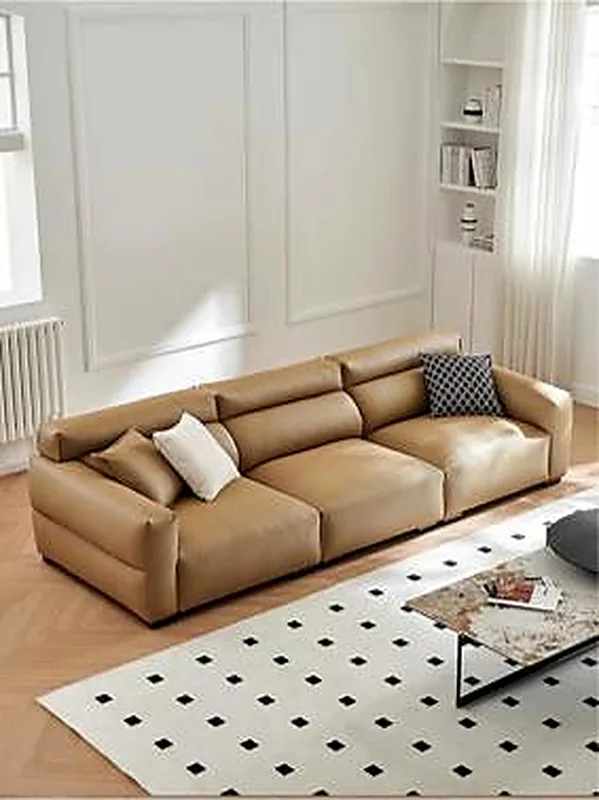
Leather and leather-named sofas such as TVD-9605 and Tan Leather Sofa – Soft Cushions (TVD-9671) raise the duty and covering-declaration questions first. Ask for the exact covering, because a name that says leather does not tell you whether it is full hide, split or a coated material.
Plush and pillow-back fabric sofas such as TVD-9655 depend less on duty and more on labelling: the fibre content of plush covers and cushion fillings must be stated, and a retailer's own label will be checked in Quebec for French content.
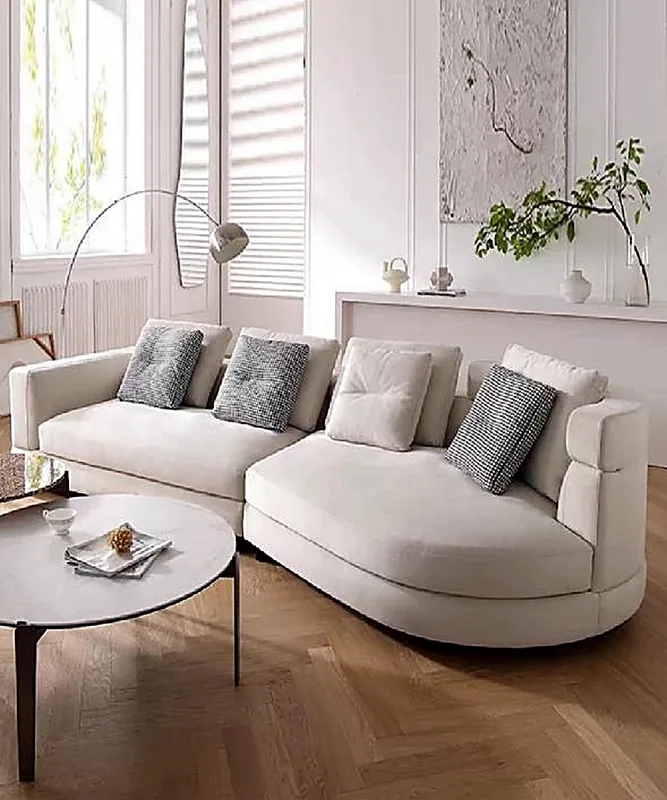
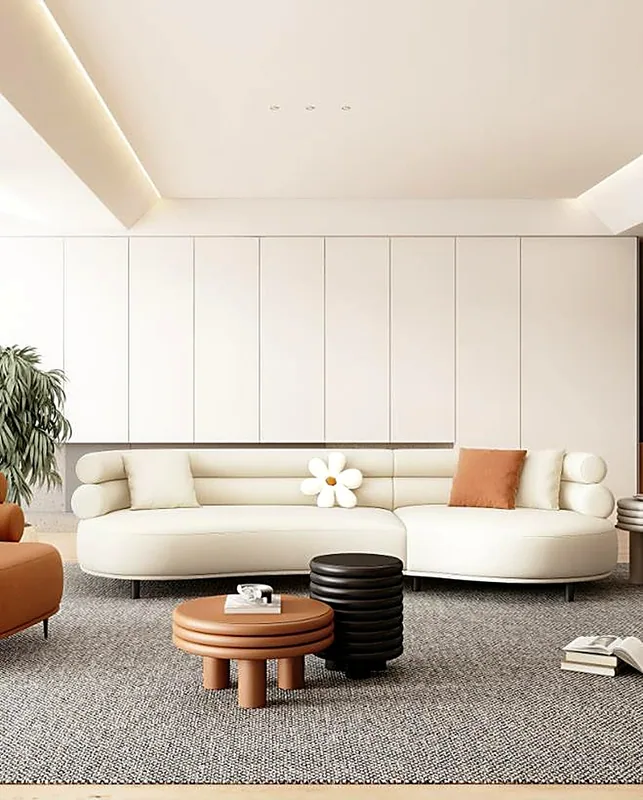
Sectionals and modular pieces such as Cream Pillow-Block Corner Sectional (TVD-9656) and White Pillow-Tufted Modular Sectional (TVD-9683) add a practical difference. Several modules mean several cartons and several labels, so ask whether the fibre label appears on each module or once on the set.
Linen and beige fabric sofas such as TVD-9702 and TVD-9691 are the simplest on duty but ask the most of your documents when the buyer is a hotel group or a school. Natural-fibre coverings are the ones a fire official or brand standard may ask to see test evidence for, so request the report early rather than after the sample is approved.
Quebec and the rest of Canada
In Quebec, the stuffing permit and label law was repealed on 9 December 2021, so sofas, upholstered chairs and cushions follow the Textile Labelling Act, and labels, manuals and warranties must be available in French, at least as prominent as English. Other provinces should be checked case by case, and gas, electrical or fire authorities are only involved if a version carries a powered feature or a tender asks for fire documentation. If the version you order includes a powered recliner, a USB port or a light, it needs Canadian electrical certification; the CSA, cUL and cETL marks are explained on our certification marks explained page.
What happens when something is missing
A missing fibre-content label or missing French wording can stop a retailer from shelving the sofa. A tender that asks for a flammability report can be lost if the report arrives after the closing date. A wrong fibre label can lead to relabelling at your cost, and a covering declared as fabric when it is leather risks a customs reclassification. Surface or formaldehyde documents that cannot be produced can make a buyer refuse an order. None of these is hard to avoid, provided the checklist is completed before you pay the deposit.
How we handle it
We confirm the certification status and the documents for each code with your written quote, before you order, and we check duty with our customs broker. For the cream set with ottoman you can read the cream pillow-top sofa set guide; the sofa and sectional compliance guide covers the general rules, and the group page for black tufted leather is the tufted-cushion leather sofa group. The sales tax by province guide helps you check taxes, and a quote request starts the process. Payment is 30% deposit and 70% before release. Rules change, so confirm current requirements with the authority, your inspector or your customs broker; this is not legal advice.