Product guide ·
Table Leg Options – Wood, Acrylic & Metal (TVD-4382): How to Choose and Order Legs
Wood panel, acrylic or metal: the right leg depends on the top it carries. Here is how to choose and specify legs for resin and live-edge tables.
A slab or resin top is only half of a table, and the Table Leg Options – Wood, Acrylic & Metal (TVD-4382) listing is the other half. It shows a set of leg styles in wood panel, acrylic and metal, and states that the choice depends on table size and load. That one line is the key to the whole listing: a leg is picked for the top it carries, not for looks alone. This guide helps designers, fabricators, restaurant buyers and furniture retailers choose a leg type, specify it and order it alongside the tops in the Resin and Live-Edge Tables line.
Three families of leg
- Wood panel legs. Solid slabs or panels that echo the table top. They look heavy and architectural, and they suit rooms where the table should feel carved from one piece. Ask what wood and finish the panel is and whether it is solid or built up from boards.
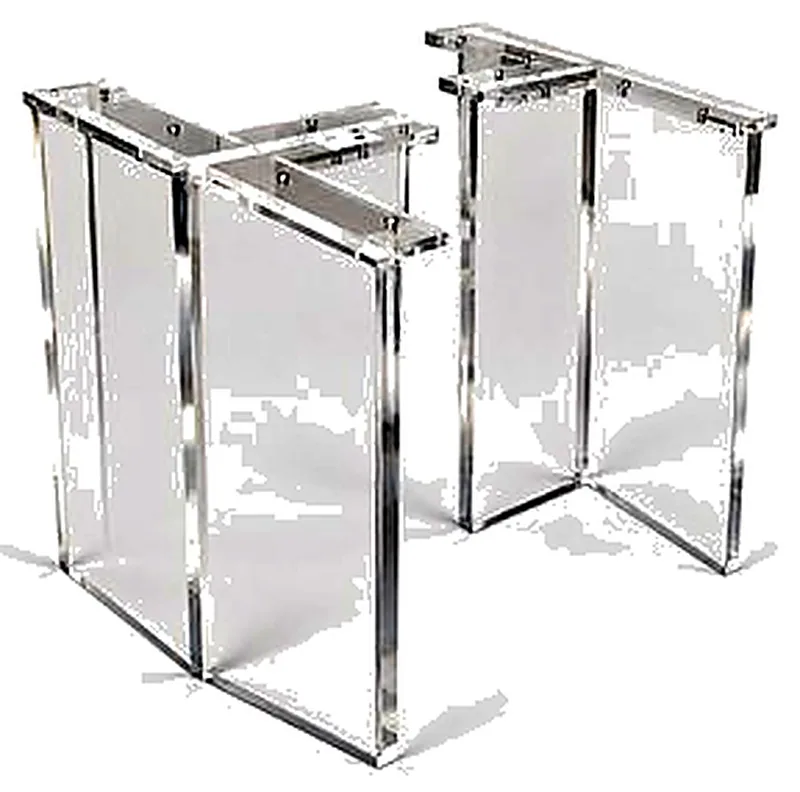
- Acrylic legs. Clear supports that make the top appear to float, which is why the line pairs them with several tables. Ask for the thickness and the load the acrylic is designed for, how the legs are fixed and whether they are glued, bolted or both.
- Metal legs. Slimmer, stronger for their size and good for long spans. Ask about the metal, the finish (powder coat, plating or paint) and the foot design, including floor protection.
Why size and load decide
A 2200 mm slab top is heavier than a 2000 mm one, and a thick burl or resin top is heavier again. A restaurant table takes pushing, leaning and the weight of people sitting at its edge, while a boardroom table mostly bears equipment. Because the listing links leg choice to table size and load, give us the size, the thickness of the top, the number of legs you expect and the way the table will be used. We confirm weight and capacity on the written quote, since they are not stated in the listing.
How to specify legs
- State which table the legs are for, by code, such as the Olive Wood table (TVD-4372) or the Walnut Clear Legs table (TVD-4374), or give your custom top size and thickness.
- Choose a family: wood panel, acrylic or metal.
- Ask for the number of legs per table and their overall height, so the finished table height matches the listed 755 mm where you want it.
- Ask how legs attach: brackets, plates, bolts or adhesive, and whether the fixings are supplied.
- Confirm the finish of each leg and, for painted metal or coated parts, ask for a coating test report.
- Ask whether the legs ship fitted or knock-down, and what the carton or crate looks like.
- Agree the instruction language for Quebec delivery.
Which leg goes with which top
| Leg family | Best for | Example top in the line |
|---|---|---|
| Wood panel | Dark or warm tops where the base should feel substantial | Dark Walnut Epoxy Edge (TVD-4379) |
| Clear acrylic | River and live-edge tops where the top should look like it floats | Red Walnut Clear Legs (TVD-4378) |
| Metal | Longer spans and busy restaurant use where slimness matters | Burl Wood Inlay (TVD-4375) |
| Sculptural base | Statement pieces where the base is the feature | Ask about the sculptural bases in the line |
These are suggestions based on look and typical use, not tested pairings, so we confirm that your chosen leg is right for the top on your written quote.
Canadian use notes
Metal legs and floor fixings should suit the floor in your building, whether tile, hardwood or concrete. Wood panels move with humidity: heated interiors are dry in winter on the Prairies and in central Canada, and coastal British Columbia and Atlantic Canada are humid, so acclimatise wood legs along with the top. Acrylic and adhesives can be affected by cold in transit, since liquids and adhesives can freeze in winter freight, so plan shipping with the season; the Canada delivery hub explains routes. Keep the crating plan for legs and tops together so that fixings are not lost.
Rules to check
No certification or test report is on file for this listing, so we do not describe any leg as certified or compliant. Canadian points to check: coatings and paints on furniture, including painted metal, fall under the Surface Coating Materials Regulations with limits on lead (90 mg/kg) and mercury; if any wood part is plywood, MDF, particleboard or laminated, formaldehyde emission rules apply; and if any version includes glass, ask for the safety information that goes with it. In Quebec, instructions and labels must be available in French. Rules change, so confirm with the authority or your inspector. The line-wide compliance guide covers these in more detail.
How ordering works
Every order is quoted in writing for your quantity and delivery address, with specifications, packing, lead time and delivered cost. Many lines have a low trial minimum, samples are available on most items, and the sample cost is usually credited to the first order. Payment is 30% deposit and 70% before release. Legs and tops from the line can ship in one order; see how ordering works and the landed cost calculator to plan your total. Send a quote request, or browse the Resin and Live-Edge Tables line page and the custom river table guide to choose the top first.