Certification guide ·
Halloween LED Fountain (TVD-8476): A Decision Guide to Electrical Marks, Adapters and Display Rules in Canada
Whether this lit pumpkin and ghost needs a Canadian mark depends on three answers. This guide walks through them in order, so a retailer can see where the product stands before ordering.
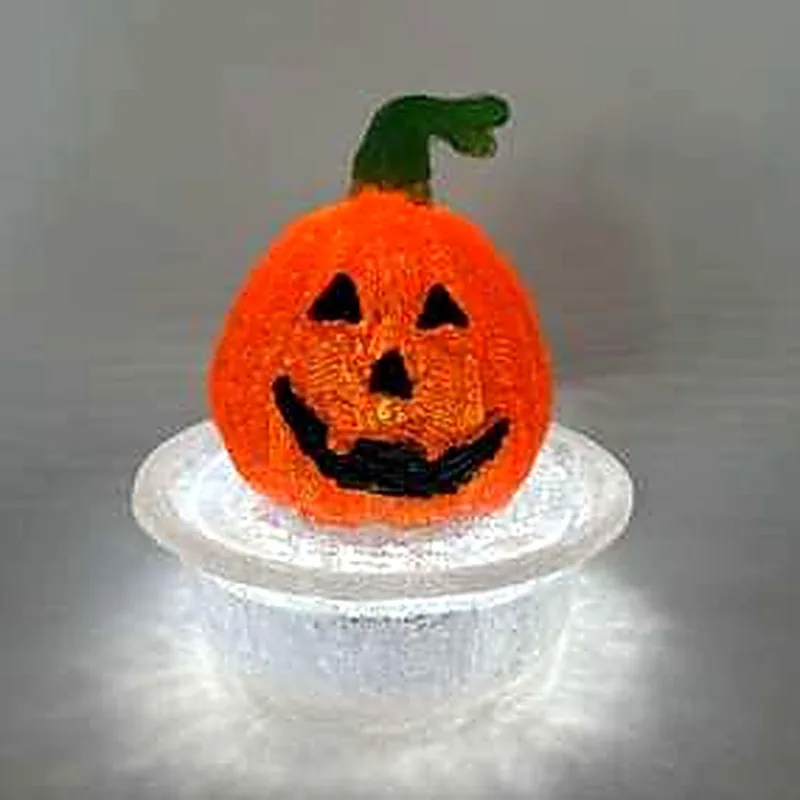
This is a decision guide, not a certificate. Transparent LED Fountain, Halloween (TVD-8476) comes in four designs, pumpkin and ghost, as a lit acrylic figure in a clear bowl, USB powered. No certification mark or certificate is on file for it, and we make no claim that one exists. What a Canadian buyer can do, with only the listing in hand, is work out which rules are in play by answering three questions in order.
Question 1: what is at the other end of the USB cable?
The figure draws low-voltage power over USB. The rules that attach to electrical equipment attach most firmly where it meets the mains supply, which in Canada is 120 V or 240 V single phase at 60 Hz. So the first thing to establish is how the USB feed is powered.
- A wall adapter in the box. Then the adapter is an electrical product sold in Canada, and needs a certification mark from a body accredited by the Standards Council of Canada, such as CSA, cUL or cETL, or a field evaluation or special inspection label.
- A cable only. The buyer supplies the adapter. The retailer still has to decide what to say on the pack about suitable power sources.
- Batteries. Not listed. If a version has them, general consumer product safety applies, and lithium batteries have dangerous-goods shipping rules.
We ask the factory which it is and report the answer on the quote. Until then, treat the product as one with an open electrical question.
Question 2: does a Canadian mark exist for the part that needs one?
If the answer to question 1 is a mains adapter, the next question is whether it carries a Canadian mark. A US-only mark, UL without the small c or ETL without the small c, is not enough. The CE mark is not recognised in Canada as proof of compliance for electrical products. Where a Canadian mark is missing, a field evaluation by an accredited body is sometimes possible, but it costs time and money, and it applies to the units evaluated. Our guide to CSA, cUL and cETL marks explains the system.
Question 3: where will it be displayed?
A lit decoration in a home is one thing. In a shop, a mall, a school or a haunted event, the rules of the building and the insurer come into play. Provincial and territorial electrical safety authorities enforce the marking rules, and their inspectors can refuse equipment without an accepted mark. A landlord or insurer may ask for evidence even if no inspector ever visits. If decorations are used in a public building, fire officials may ask for flame-retardant treatment or test documentation for materials. Clear acrylic is a plastic, so say so in your enquiry.
Decision table
| If this is the case | Then ask for | Who issues it |
|---|---|---|
| Mains adapter supplied | Canadian certification mark on the adapter; report or label | Accredited certification body |
| Cable only, no adapter | Written statement of the power source the product is designed for | Factory, confirmed by us |
| Batteries used | Battery type and shipping documents | Factory |
| Sold into a public venue | Material and flame-retardance documents where asked | Factory, or a laboratory |
| Sold in Quebec | French labels, instructions and warranty documents | Us and the factory; you approve proofs |
| Any sale | Bilingual product identity and net quantity on prepackaged goods | Us and the factory |
Provincial and territorial differences
Electrical enforcement is provincial. The Electrical Safety Authority in Ontario and its counterparts elsewhere each set their own approach, though all rely on marks from accredited bodies. For a consumer decoration, enforcement is mostly through the retail chain and insurers rather than inspectors walking into shops. Language is the clearest provincial difference. In Quebec, labels, instructions, manuals and warranty documents must be available in French, with French at least as prominent, and Quebec retailers will ask.
What happens when the answers are poor
A retailer who sells a lit product with an unmarked mains adapter risks a refusal from a store's compliance team, a question from an insurer after a loss, or a challenge from an inspector. Under the Canada Consumer Product Safety Act, a product judged a danger to health or safety can be recalled. A Halloween product has a short season, so even a delay while the question is resolved can mean losing the selling window. These are reasons to settle the questions before an order.
How we handle it
With the quote we state certification status. For TVD-8476 today that means no certificate on file. We confirm what is supplied for power, provide the documents that exist and, if a Canadian mark is needed that is not in hand, explain which route is possible before you commit. Rules change, so confirm with your provincial authority, your advisor or your customs broker. This page is general information, not legal advice.
Where to read next
The buying side of this product is in the product guide for TVD-8476. For the stakes in the same line, see the Halloween décor compliance guide. Browse the Halloween décor line, read the sales tax guide, then send a quote request. Payment is 30% on order and 70% before release.