Certification guide ·
Wooden House Bed (TVD-6277): Canadian Certification and Compliance Checklist
No certification is on file for this kids' wooden bed. Here are the rules, documents and questions that apply in Canada.
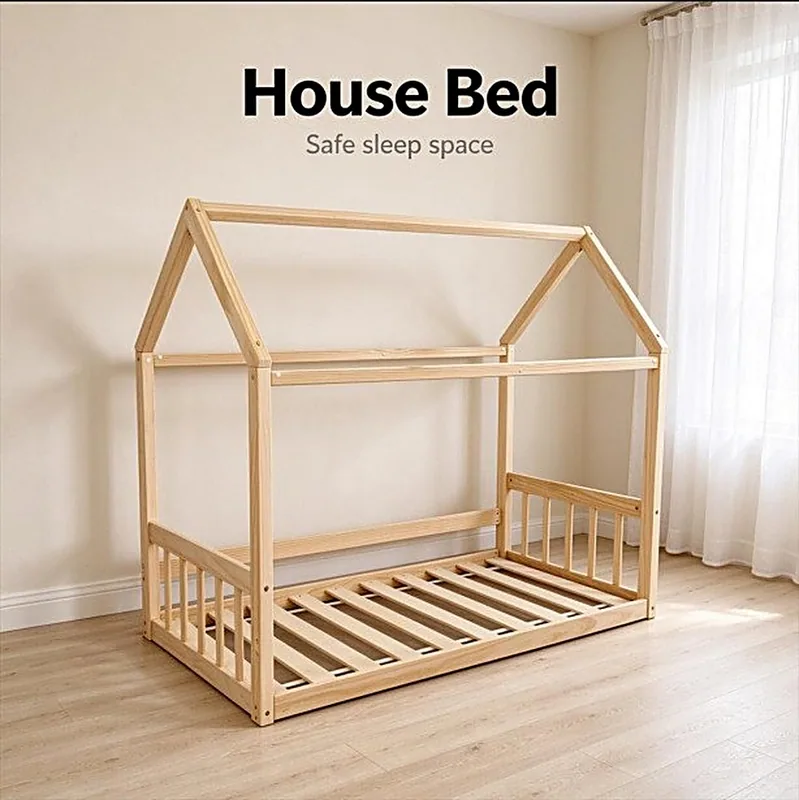
A children's wooden bed with a house-shaped frame looks simple, but a Canadian retailer, daycare buyer or rental operator still needs paperwork behind it. This post covers the Wooden House Bed – Kids (TVD-6277), described as having a natural wood house frame, a slatted base, rounded corners and a non-toxic finish. To be clear from the start: no certification mark or test report is on file for this item, so we do not say it is certified, approved or compliant. What follows is what to ask for, from whom, and what happens if it is missing. The commercial side of the product is in our Wooden House Bed buying guide.
Which Canadian rules touch a kids' wooden bed
Two groups of rules matter here, and a third is worth checking if the use changes.
- Canada Consumer Product Safety Act (CCPSA). It applies to consumer products. It prohibits products that are a danger to human health or safety, requires incident reporting and allows recalls. Health Canada enforces it. A child's bed bought by a family falls on the consumer side.
- Surface coating limits. The Surface Coating Materials Regulations set limits on lead (90 mg/kg) and mercury in paints and coatings on furniture and on children's products. A natural finish on a wooden bed is a surface coating.
- Lead in children's products. The Consumer Products Containing Lead Regulations set lead limits for products for young children.
- Bunk beds. If the frame will be stacked or used with an upper sleeping surface, note that there is no bunk-bed-specific Canadian regulation: the CCPSA general prohibition applies, and Health Canada advises choosing beds that meet the voluntary ASTM F1427 standard. Tell us before quoting.
- Cribs, cradles and bassinets. These have strict regulations and we do not supply them through this site. A house bed for a child is a separate product from a crib.
The non-toxic finish claim
The words non-toxic describe the finish in the product description. They are not a certificate. A buyer who needs to repeat that claim in a catalogue, a daycare licensing file or a shelf label should ask for the test report on the coating, showing lead and mercury results, and for the finish type. We request that report from the factory and send what exists with your quote. If the report cannot be provided, do not repeat the claim in marketing.
Document checklist
| Document | Why you want it | Who issues it |
|---|---|---|
| Coating test report (lead, mercury) | Shows the finish meets the Canadian surface coating limits for furniture and children's products | Independent testing laboratory, arranged by the factory |
| Lead in children's products test | Supports the lead limits for products for young children | Independent testing laboratory |
| Wood and panel declaration | Tells you if any part is composite wood, which brings formaldehyde rules and labelling | Factory, with certifier paperwork where composite wood is used |
| Bunk or stacking statement | Confirms whether the frame is intended for a single sleeping level only | Factory, confirmed in the quote |
| Instruction manual and warning labels | Needed for assembly, load limits and Quebec French requirements | Factory, translated if required |
| Dealer identity labelling | Name and place of business of the dealer on the product or pack | You or us, agreed on the quote |
Provincial points
Quebec is the main difference. Under the Charter of the French language, labels, instructions, manuals and warranty documents must be available in French, with French at least as prominent as any other language. A Quebec retailer will check this before listing the bed. In other provinces the federal rules above apply, and you should confirm anything provincial with your authority. Packaging that is sold prepackaged to consumers also needs bilingual product identity and net quantity under the Consumer Packaging and Labelling Act, plus the dealer's name and place of business.
What happens if the paperwork is missing
- A store or marketplace may refuse to list a children's product without test reports.
- A daycare licensing officer or inspector may ask to see the finish documentation and the age grading.
- Health Canada can require a recall if a product is found to be a danger, and the dealer carries that cost.
- Insurers may ask for the documents after an incident.
How we handle it
We do not wait until the deposit. The quote lists certification status for the item and the documents the factory can supply, and anything that is missing is stated plainly, so you decide with the facts in front of you. If a test has to be done for your market, we say so and agree it with you before you pay. A free account on the product page shows the full specification. For the commercial side, read how ordering works; for delivery, the Canada delivery hub.
Related reading
The upholstered members of the family have further rules on top of these, for example Textile Labelling Act fibre-content labelling and, where composite wood is used, the formaldehyde regime; see the navy upholstered kids bed collection. For another wooden-frame piece in the family, the baby changing table certification post runs through its own document list. The whole line is in the Baby Cribs & Kids Beds compliance guide, and the Baby Cribs & Kids Beds line lists each product. Send questions through the quote request page. Rules change; confirm with the authority, your inspector or your customs broker. This is not legal advice.