Certification guide ·
Folding Luggage Rack Stool (TVD-5706): Upholstery, Quebec Label and Canadian Compliance
TVD-5706 has a padded fabric seat, so upholstery rules apply. No certificate is on file; here is what Canadian buyers should request before ordering.
Padded seat, so upholstery rules come into play
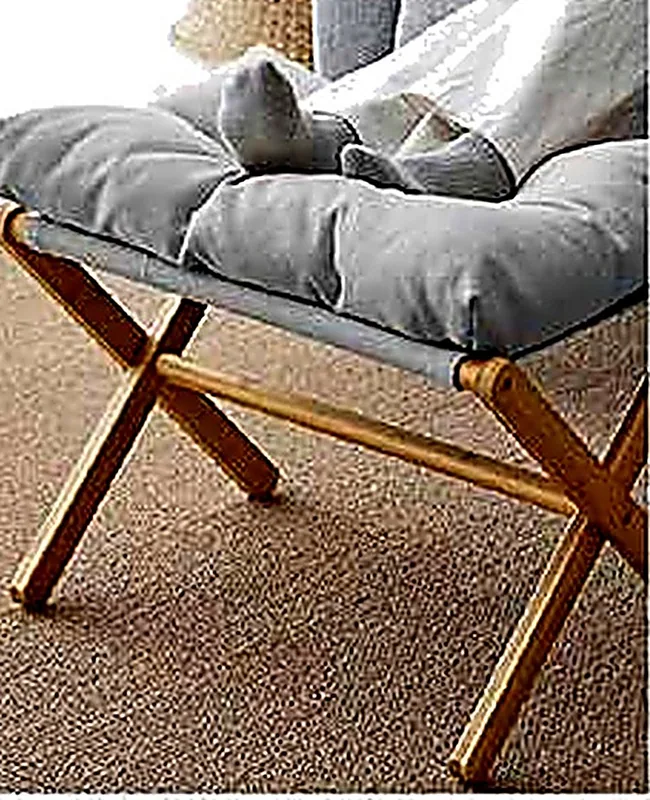
No certificate or test report for TVD-5706 Folding Luggage Rack Stool is on file. We therefore describe nothing about it as certified, approved or compliant. This page lists what a Canadian buyer needs, and the product-side facts are in the TVD-5706 buying guide. The item has X-frame folding legs and a padded fabric seat in several colours, so it counts as furniture and upholstered goods. The padded seat is the reason the paperwork is heavier than for a plain wooden stool.
This is general information, not legal advice. Rules change; confirm with the authority, your inspector or your customs broker.
Rules that reach this stool
Textile labelling and French-language labels
Quebec repealed its stuffing permit and label law on 9 December 2021, so no permit number or law label is needed for a padded stool in Quebec or anywhere else in Canada. What remains is the federal Textile Labelling Act for the fabric seat cover, the CCPSA general safety prohibition, and French-language labels and documents for Quebec buyers.
Flammability reports in tenders
Hotels, schools, theatres and offices often ask for flammability test reports on upholstery, for example California TB117-2013 or whatever standard their tender names. These are buyer specifications and not federal law. A hotel brand standard may ask for one even when no regulation does, so read the tender and tell us the wording.
Textile labelling
The Textile Labelling Act applies to consumer textile articles and requires fibre content and dealer identity. Whether a stool's seat cover is treated as a textile article for labelling depends on how it is sold, so we ask the customs broker and the factory how the cover will be labelled.
Consumer product safety and coatings
The Canada Consumer Product Safety Act covers the stool as a consumer product, and any paint or lacquer on the frame falls under the Surface Coating Materials Regulations (lead and mercury limits). If the frame includes plywood, particleboard, MDF or laminated parts, the formaldehyde emissions rules apply.
Anti-dumping on seating
Certain upholstered domestic seating from China, namely leather or motion and reclining types, attracts very high anti-dumping and countervailing duty, often more than the value of the goods. Fabric-only stationary seating is excluded, according to our files. A folding stool with a fabric seat is a different product from a reclining sofa, but cover material matters: leather or leather-look would need a customs broker's opinion. Our broker confirms classification and origin before we quote a delivered cost.
Document checklist for TVD-5706
| Document | Why | Who issues it |
|---|---|---|
| Fibre-content and dealer label details | Required for the fabric seat cover under the Textile Labelling Act | Dealer named on our quote |
| Flammability report named in your tender | Contract buyers specify it; not a federal rule | Factory or lab; we ask what your tender names |
| Fibre-content statement for the seat cover | Textile labelling and cleaning instructions | Factory |
| Filling description for the padding | Needed for the Quebec label and for fire reports | Factory |
| Coating statement for lead and mercury | Frame finish under surface coating rules | Factory or independent lab |
| Formaldehyde certificate if any board is used | Composite wood rule | Approved third-party certifier |
| Load test for the X-frame | Hotels ask for it; the factory can often supply it | Factory or lab |
| French labels and instructions | Quebec language rules | Factory, to our specification |
CE is not a Canadian pass
A carton printed with a CE mark does not prove compliance in Canada for consumer products. If you see one, ask for the Canadian documents listed above instead.
What happens when something is missing
A Quebec retailer may refuse an unlabelled upholstered stool, a hotel group can reject a shipment that lacks the report in its specification, and Health Canada can order a recall of a consumer product that is a danger to health or safety. We collect and review the documents before a deposit, so surprises show up on the quote and not at the dock.
Quick answers for a procurement team
- The padded seat is the reason for the extra paperwork; a plain slatted stool would not need the same items.
- Quebec buyers should ask to see the French-language label wording before the order is paid.
- Send us your tender wording on flammability, and we will ask the factory whether a matching report exists.
- Keep every document with the delivery file; inspectors and retailers can ask months later.
How we handle it
Our written quote states certification status in plain words, lists the documents the factory can provide and attaches them before you order. If a report is missing, we say so and suggest testing or an alternative from the Bamboo Chairs & Stools line. For a plain unpadded alternative, see the slatted stool certification note; for the whole line, see the line compliance guide. Start with the quote page and read how ordering works.