Certification guide ·
Electric Standing Desks in Canada: Electrical Certification, Voltage and Documents
Four electric standing desks in our home office range look alike but carry different electrical parts. Here is what Canadian rules ask of each, and the documents to collect before you order.
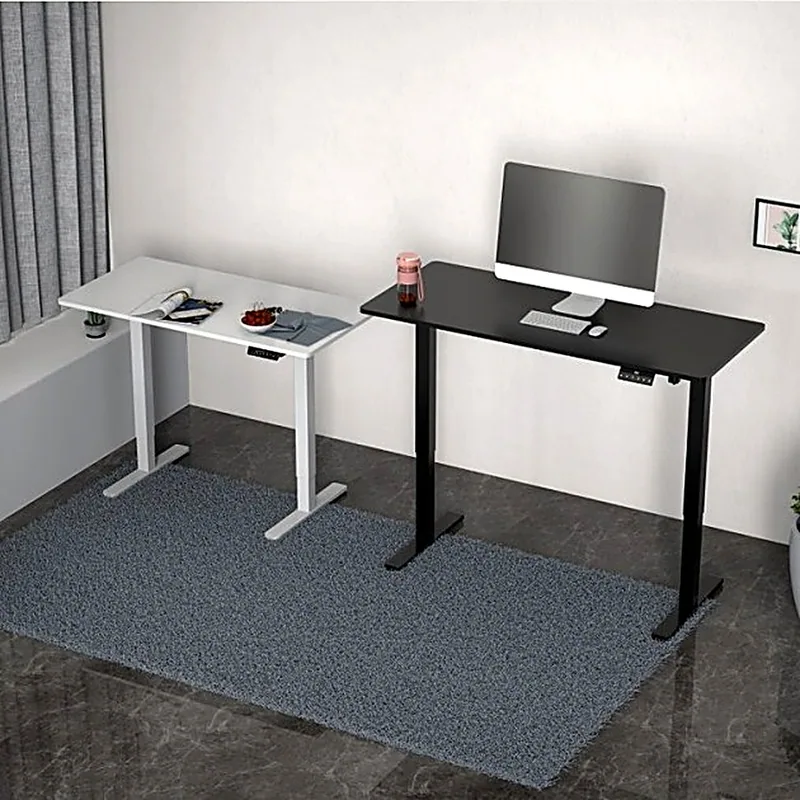
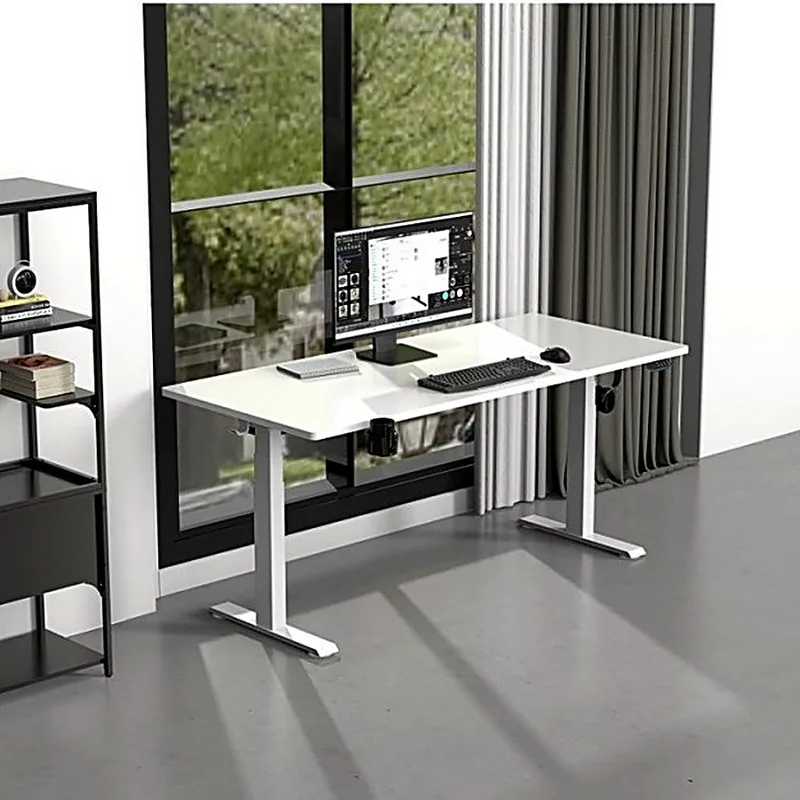
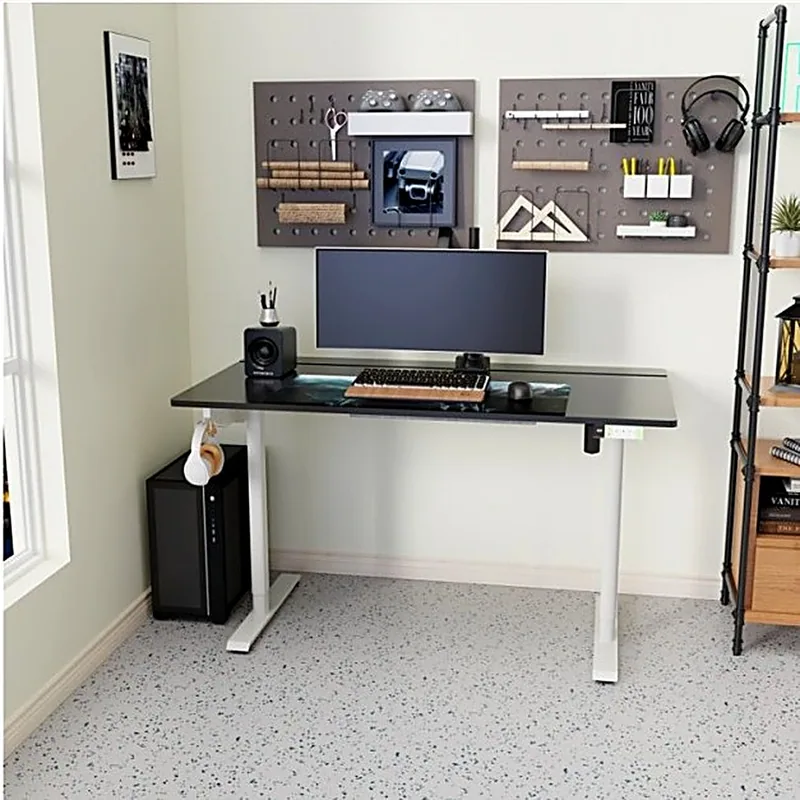
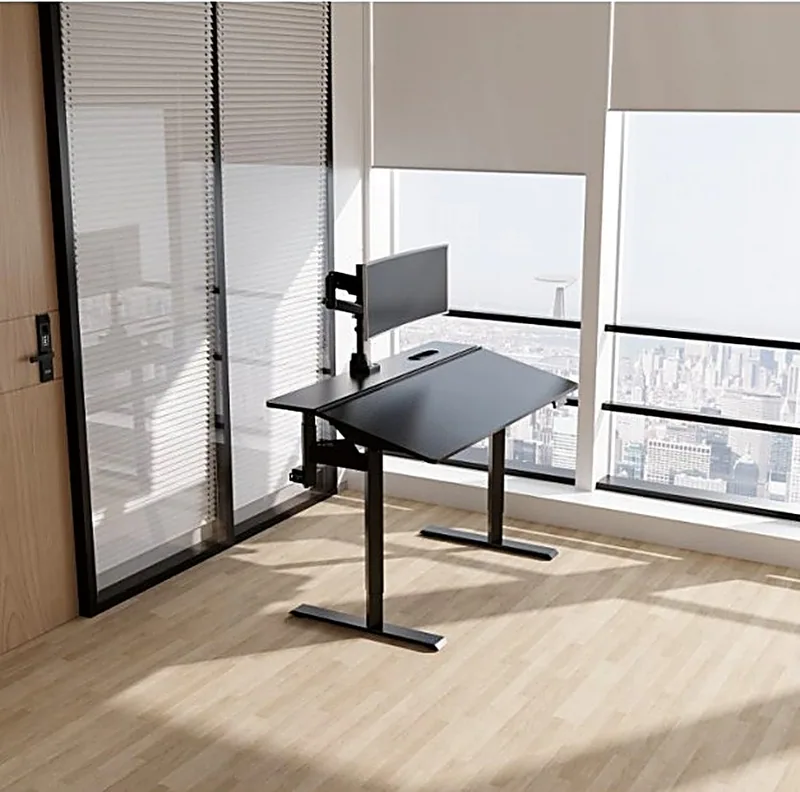
A standing desk looks like furniture, but the moment it has a motor, a control box and a power cord, it is an electrical product in the eyes of a Canadian inspector. This guide covers the four electric standing desks in our home office desk range that are built around that powered frame: Electric Standing Desk – Single Motor (TVD-9260), Dual-Motor Standing Desk – 3-Stage (TVD-9261), Glass-Top Electric Standing Desk (TVD-9262) and Carbon-Fibre Standing Desk with LED (TVD-9263). TVD-9264 and TVD-9266 are covered in their own posts.
Where things stand today
No certification mark is on file for any of the four desks. That does not mean they cannot be certified; it means we do not hold a Canadian certificate we can hand you now. We confirm certification status and supply the documents with the quote before you order, and if a mark has to be obtained or a field evaluation arranged we say so before you commit.
The core requirement: a Canadian electrical mark
Electrical products sold or installed in Canada must carry a certification mark from a certification body accredited by the Standards Council of Canada, for example CSA, cUL or cETL, where the small c means Canada, or a field evaluation or special inspection label from an accredited body. Provincial and territorial electrical safety authorities enforce this, such as the Electrical Safety Authority in Ontario. Inspectors can refuse uncertified equipment and insurers may question it. A mark without the small c, plain UL or plain ETL, is a US-only mark and is not enough, and the European CE mark is not recognised in Canada as proof of compliance. If you are new to the labels, read CSA, cUL and cETL marks explained.
Voltage and frequency
Canadian supply is 120 V or 240 V single-phase at 60 Hz, and commercial buildings often use 208 V or 600 V three-phase. A desk built for 220 V at 50 Hz must be confirmed as built for Canadian voltage and 60 Hz before it is ordered, since motors and control electronics can misbehave on a different frequency. For a standing desk that plugs into a normal outlet, 120 V at 60 Hz with the correct plug is the target.
How the four desks differ electrically
| Desk | Listed electrical features | What to ask for |
|---|---|---|
| TVD-9260 Single Motor | 2-stage inverted frame, 50 kg, 5-button hand controller | Mark for motor, control box and handset; controller functions |
| TVD-9261 Dual-Motor 3-Stage | Dual motor, 3-stage frame, 150 kg, 7-key 4-memory controller | Mark covering both motors and the control box; memory function details |
| TVD-9262 Glass-Top | 2-stage inverted frame, 50 kg, 3-memory controller, power strip | Separate mark for the power strip and its cord; glass details |
| TVD-9263 Carbon-Fibre with LED | D-tube frame, 70 kg, USB controller, LED strip | Mark for the LED strip and its driver or adapter; USB controller power source |
The single-motor desk TVD-9260 has the shortest list of parts to document. The dual-motor TVD-9261 has more components, so the mark has to cover the full assembly, not just the handset. The glass-top TVD-9262 adds a power strip, which is a mains-connected accessory with its own cord and plug. The carbon-fibre TVD-9263 adds an LED strip: LED drivers are components of the listed product, drivers marked AC85-265V usually accept Canadian voltage, but the finished desk still needs a Canadian mark, and damp location ratings only matter if the desk is used in damp rooms.
Beyond electrical: other rules that may touch these desks
- Consumer product safety: the Canada Consumer Product Safety Act prohibits products that are a danger to human health or safety, requires incident reporting and allows recalls, and Health Canada enforces it.
- Wood panels: if a desk top has a panel core, such as the OSB top listed for TVD-9261 or a board core under the carbon-fibre finish of TVD-9263, the Canadian formaldehyde rules for composite wood may apply. See our composite wood guide for home office desks.
- Coatings: paints and coatings on furniture are limited to 90 mg/kg of lead under the Surface Coating Materials Regulations.
- Labelling: prepackaged consumer products need bilingual English and French product identity and net quantity, and in Quebec labels, manuals and warranty documents must be available in French.
Document checklist
| Document | Why it matters | Who issues it |
|---|---|---|
| Certificate or listing showing a Canadian mark (CSA, cUL, cETL) | Inspectors, retailers and insurers look for it | Accredited certification body |
| Test report for the whole desk assembly, including controller | Shows the mark covers the full product, not one part | Certification body or laboratory |
| Separate mark for power strip or LED strip, where fitted | Accessories are electrical products in their own right | Accredited certification body |
| Voltage and frequency statement | Confirms 120 V at 60 Hz suitability | Factory, verified by us |
| Load test report for the stated kg figure | Backs the capacity in your product description | Factory or laboratory |
| French and English manual and carton text | Bilingual labelling; French in Quebec | Factory or importer |
What happens when the mark is missing
An inspector can refuse the equipment, an insurer can question a loss involving it and a retailer's compliance team can refuse to list it. A field evaluation by an accredited body is sometimes possible, but it adds cost and time, so it is better to ask for the mark before you order than after the container lands. Our compliance guide for TVD-9264 follows the same document list for a desk with an MDF top.
How we handle it
We confirm certification status and supply documents with each written quote, ask the factory for the missing reports and discuss a field evaluation if needed. Payment is 30% deposit and 70% before release, so you see the documents before the goods leave. Duties and taxes follow the tariff classification and the province of delivery, see the sales tax guide; our customs broker confirms classification before we quote a delivered cost. Read how ordering works and ask for a quote. Rules change, so confirm requirements with your provincial electrical safety authority, your inspector or your customs broker. This is not legal advice.