Certification guide ·
Lit Memorial Garden Stones, Angels and Niche Statues in Canada: Electrical and Lighting Rules Before You Import
Resin memorials with LED candles and lit niches look like simple gifts, but their lights decide the paperwork. Here is the line-wide guide, with what is and is not on file.
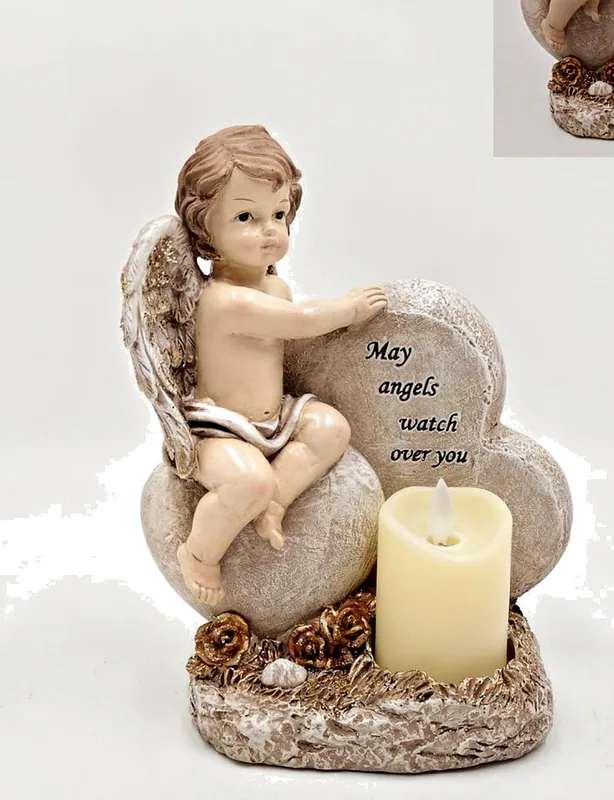
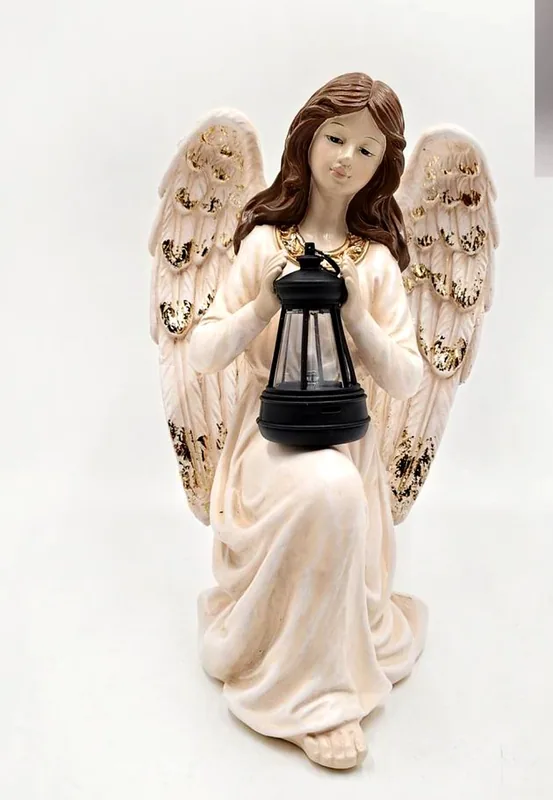
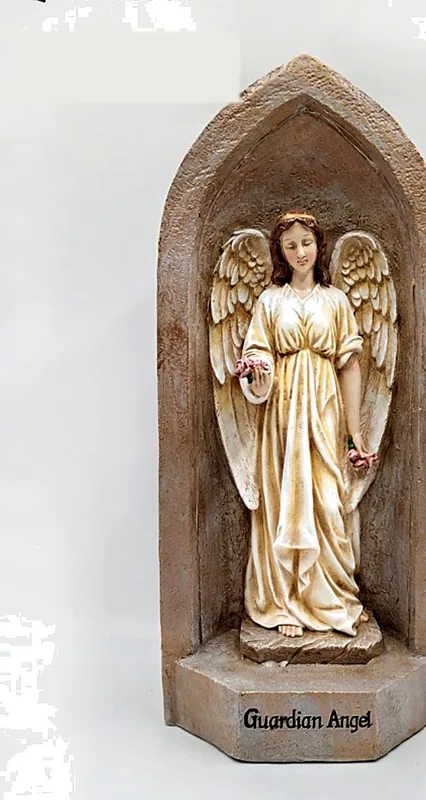
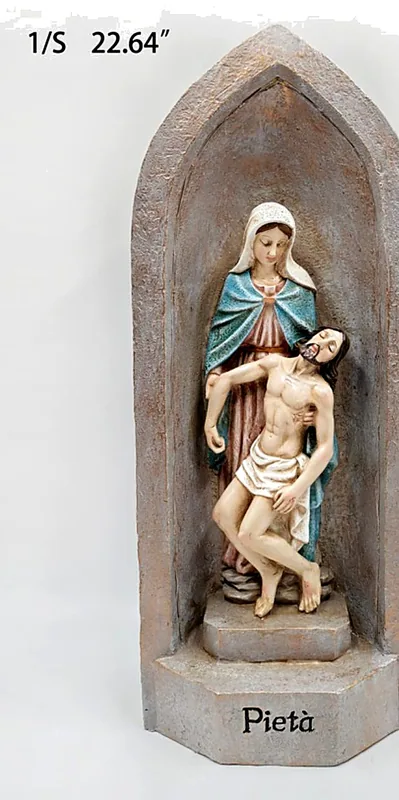
Plain statues need little paperwork. Statues with a light inside them need more. Our memorial, religious and nativity line includes many lit pieces: hearts with a candle feature, cardinal stones, angels holding lanterns and arched niches with LED lights. None has a certification mark or certificate on file today, so we do not describe any of them as certified. This guide sets out which Canadian rules may apply and what to ask for. For the wider import picture, see the line page for every piece.
The dividing line: what powers the light
Our listings say "LED candle / light-up feature shown", "lantern lights up" or "LED lights in niche (inset shown)". They do not say whether the light is battery operated, powered by a plug or adapter, or hard wired. That is the single most important fact, and we confirm it on the written quote for each item.
- Battery only. The piece follows the Canada Consumer Product Safety Act, which prohibits products that are a danger to human health or safety, requires incident reporting and allows recalls. Health Canada enforces it. Lithium batteries carry dangerous-goods shipping rules.
- Plug, adapter or hard wired. The electrical part must carry a certification mark from a body accredited by the Standards Council of Canada, such as CSA, cUL or cETL, or a field evaluation label from an accredited body. Provincial electrical safety authorities enforce this. See the marks explained guide.
A US-only mark, UL or ETL without the small "c", is not enough. A European CE mark is not accepted as proof of compliance for electrical products in Canada.
How the line splits
| Type | Examples | Listed light feature | Main question |
|---|---|---|---|
| Small memorials | TVD-8304 heart with cross and roses; TVD-8312 cardinal memorial stone | LED candle or light-up feature shown | Battery or adapter; sealed against rain |
| Candle holders | TVD-8307 angel and heart; TVD-8310 rock with dove | LED candle shown | Candle unit separate or built in |
| Angels with lanterns | TVD-8326 kneeling angel | Lantern lights up | Where the battery sits, how to reach it |
| Niche statues | TVD-8334 guardian angel niche; TVD-8338 pieta niche | LED lights in niche | Wiring, adapter, voltage and frequency |
Voltage and frequency
Canadian supply is 120 V and 240 V single-phase at 60 Hz. An adapter or driver rated 220 V at 50 Hz must be confirmed as built for Canadian voltage and 60 Hz before you order. A wide-input rating such as AC85-265V usually accepts Canadian voltage, but the finished product still needs a Canadian mark. For the niche statues in particular, ask for the adapter rating in writing.
Painted finishes
The line is hand painted. The Surface Coating Materials Regulations set limits on lead and mercury in paints and coatings on furniture and on children's products. A memorial statue is not furniture, but a retailer who positions a figure as a child's keepsake should ask for a coating report. Ask for one if you are unsure.
Labelling and Quebec
Prepackaged consumer products need bilingual product identity and net quantity, plus the dealer's name and place of business, under the Consumer Packaging and Labelling Act. In Quebec, the Charter of the French language requires labels, instructions, manuals and warranty documents to be available in French. A retailer will ask for French on an instruction card for a lit piece first.
Document checklist for lit memorials
| Document | Why it matters | Who issues it |
|---|---|---|
| Canadian certification mark or report, for any mains adapter or driver | Retailers, insurers and inspectors ask for it | An accredited certification body |
| Adapter or driver rating sheet | Confirms voltage and 60 Hz suitability | The maker, confirmed through us |
| Battery type and shipping classification | Lithium cells follow dangerous-goods rules | The maker, checked by our shipping side |
| Outdoor suitability statement | A lit resin piece in rain needs sealing | The maker, in writing |
| French and English instruction card | Required in practice for retail, and for Quebec | Agreed with you before packing |
Display in public places
Churches, funeral homes and care homes sometimes buy lit pieces. A public building with an open flame or unmarked plug-in equipment may attract questions from a fire official or an insurer. Battery candles are favoured for this reason. Cemeteries have their own rules about what may be placed, so customers must ask the cemetery. Fire and building authorities vary by province.
What happens if the paperwork is missing
A retailer's compliance team may refuse to list a lit item with no Canadian mark. An insurer may question a claim. An inspector may refuse uncertified equipment if a niche is wired in. A product found to be dangerous can be recalled. These are costs for the importer, so we raise the questions before the order.
How we handle it
For each piece you ask about, we confirm the power arrangement, the certification status of the finished item and any adapter, and we list the documents on the written quote. Where a mark is missing, we say so and may propose a field evaluation or a battery-only option. The memorial, religious and nativity line lists every piece, and the wholesale guide explains the typical buyers. Order steps are in how ordering works: payment is 30% on order and 70% before release. Rules change, so confirm with the authority, your inspector or your customs broker. This is general information and not legal advice. Send your list through the quote form.
A practical order of questions
When you review a lit memorial piece, ask in this order: how is it powered, what is supplied in the carton, what marks does the supplied power part carry, can the piece go outdoors, and what French and English text will be on the pack. Five written answers give you a file you can show a retailer, an insurer or an inspector later. If an answer is missing, you know what to resolve before the deposit is paid and not after the goods have landed.