Certification guide ·
School Desks and Chairs in Canada: Certification, Coatings and Composite Wood Rules by Product Group
Classroom furniture sits under children's product rules, coating limits and composite wood regulations. This guide sorts our school desks and chairs by material and says what to ask for.
Classroom furniture: the rules depend on what each piece is made of
Our School Desks & Chairs line runs from simple single desks to folding exam desks, modular group tables and stackable chairs. A school buyer does not need to learn every standard, but should know which Canadian rule areas attach to which kind of piece. This guide sorts the products in the line by material and use, and says what to ask for in each group. We hold no certification mark on file for any of them, so nothing here is a claim that a product is certified, approved or compliant; we confirm certification status and supply the available documents with the written quote, before you order.
The rules that apply to children's furniture
- Canada Consumer Product Safety Act (CCPSA). It prohibits products that are a danger to human health or safety, requires incident reporting and allows recalls. Health Canada enforces it.
- Surface Coating Materials Regulations. They limit lead (90 mg/kg) and mercury in paints and coatings on furniture and on children's products. Steel frames, painted trim and coloured edges all count.
- Consumer Products Containing Lead Regulations. They set lead limits for products for young children.
- Phthalate limits. These apply to soft vinyl in childcare articles and toys; ask about any soft vinyl part such as edge trim or caps.
- Formaldehyde Emissions from Composite Wood Products Regulations. Hardwood plywood, particleboard, MDF and laminated products must meet emission limits, be certified by an approved third-party certifier and be labelled. This matters for wood-grain and laminate desk tops.
- Quebec. The Charter of the French language requires labels, instructions and warranty documents to be available in French, while Quebec's old stuffing permit and label were repealed in December 2021 and no longer apply.
Rules change. Confirm with the authority, your inspector or your customs broker; this is not legal advice.
Group 1: desks with laminate or wood-grain tops
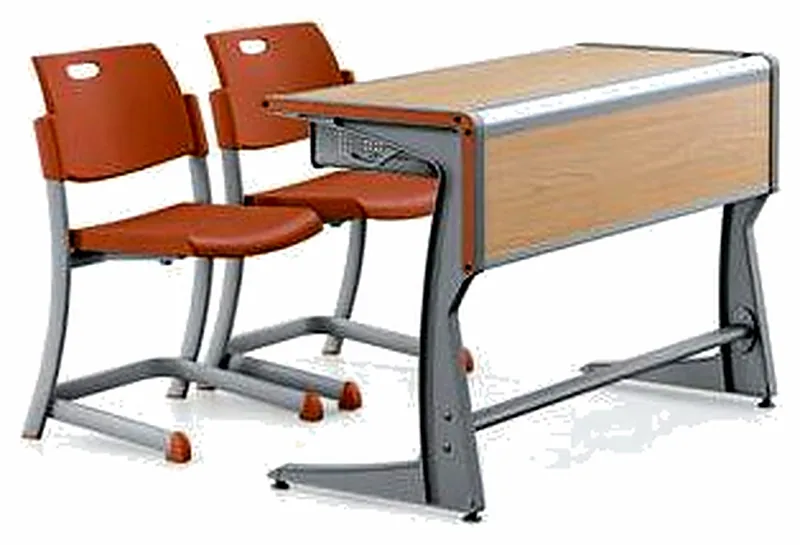
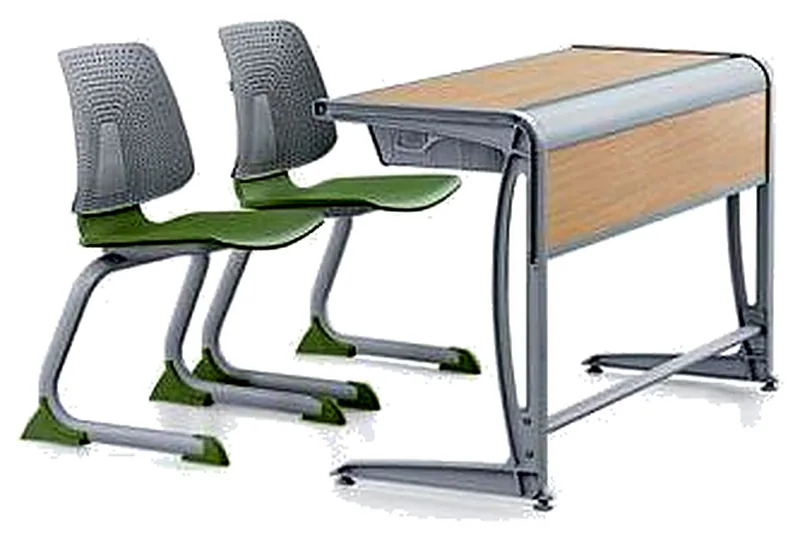
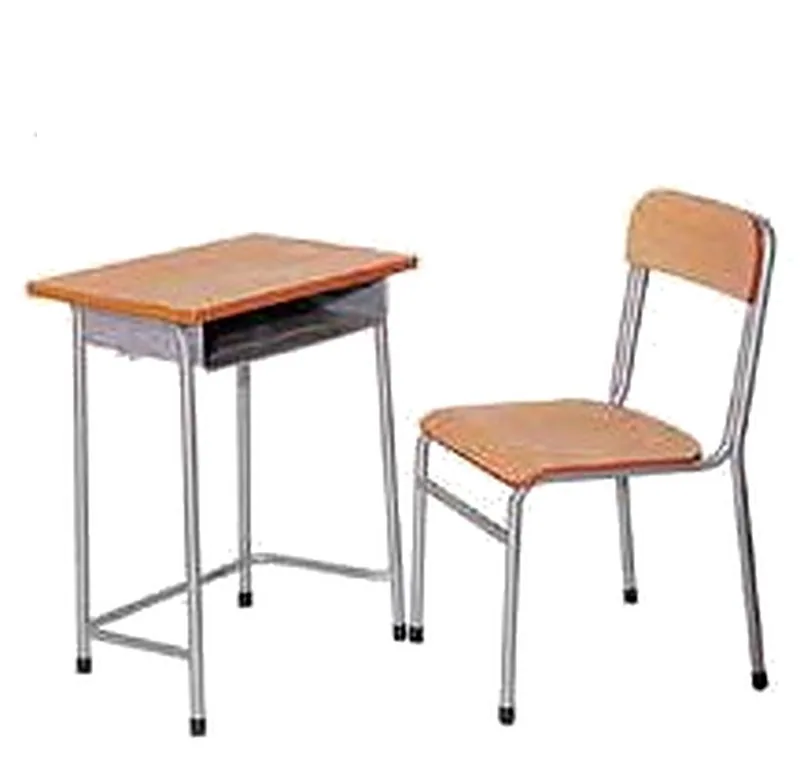
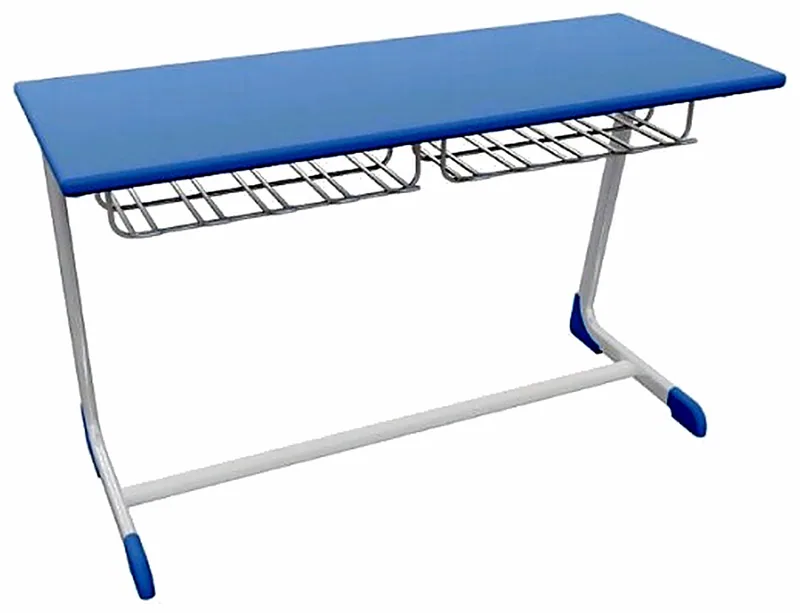
The sets in the navy steel and silver frame collection guide all pair steel frames with desk tops. The Student Desk & Chair Set – Wood Top (TVD-4297) and the Rounded Edge set (TVD-4298) are described with wood-grain tops, and the Classic Wood Desk & Chair – Steel Frame (TVD-9279) has a wood top and shelf with a matching wood-back chair. A wood-grain or laminate surface is normally a decorative layer over a panel, so the composite wood rule is the first thing to check. Ask for the certifier's compliance certificate and the panel label, and ask what the finish and edging are. The Double Student Desk with Book Basket (TVD-8574) is described with an ABS top rather than a panel, so the question changes to the plastic and any coloured finishes.
Group 2: folding and castor tables
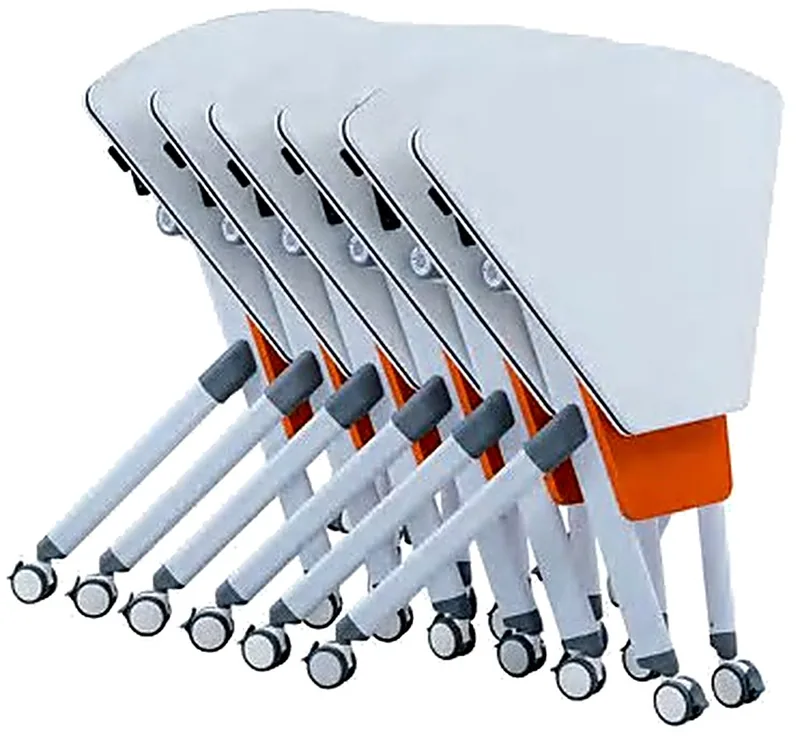
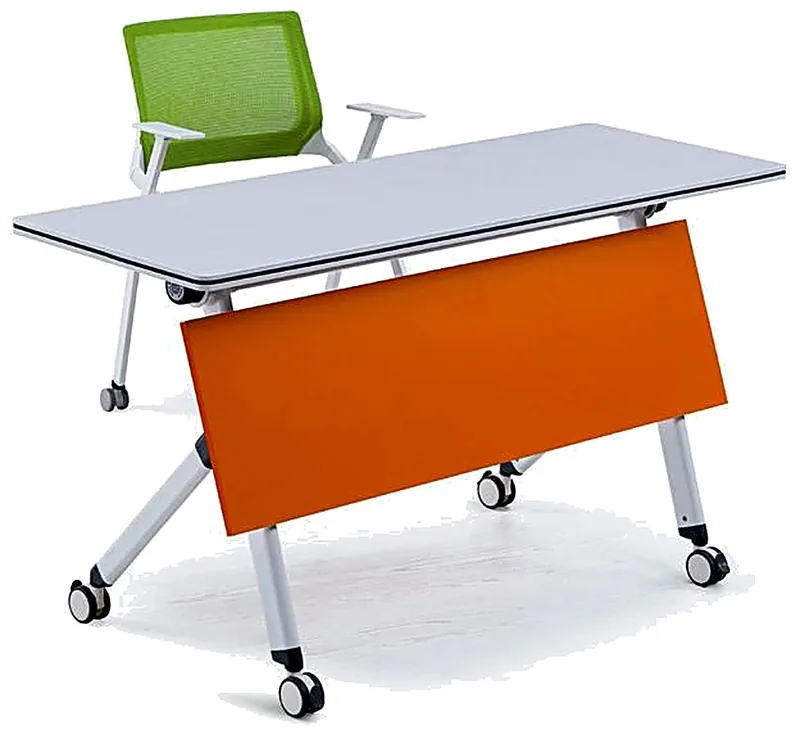
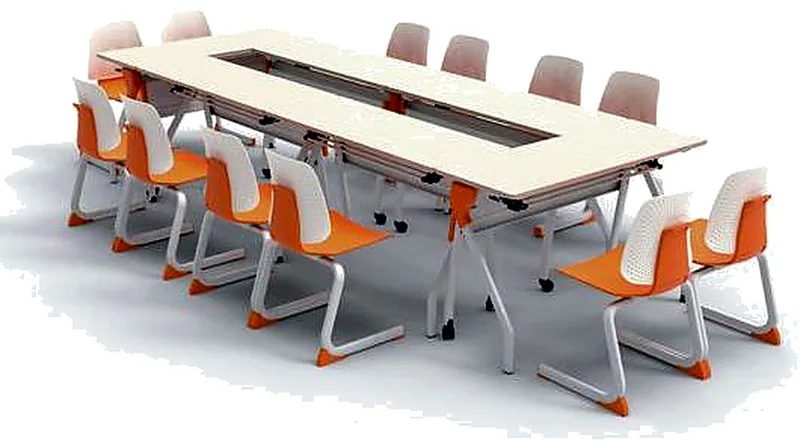
Training desks and tables are used in colleges, tutoring centres and exam halls. The Folding Training Desk – Castors (TVD-4288) has a flip-top and nests for storage, the Folding Training Table with Panel (TVD-4289) adds an orange modesty panel, and the modular tables, Round & Hex (TVD-4291) and Oval & Long (TVD-4292), join shaped tops into group layouts. Each has a top that may carry the composite wood and coating questions above. Moving parts add a practical point: ask for hinge and castor details, and whether your tender wants a load or stability test report. That is a buyer specification, not federal law.
Group 3: moulded chairs
Plastic-shell chairs such as the School Chair – Folding A-Frame (TVD-4302) and the School Chair – Cantilever (TVD-4306) carry no panel and no padding in their listed features, so formaldehyde and upholstery labelling rules do not arise unless a version you order has a wood or padded part. For moulded shells the useful documents are the coating report for the steel legs, a material description for the plastic, and a note of colourants. Coloured plastics and pigments are a standard question for children's articles.
Which document goes with which product
| Product group | Rule area to check | Document to request |
|---|---|---|
| Laminate or wood-grain desks (TVD-4297, TVD-4298, TVD-9279) | Composite wood formaldehyde; coatings | Third-party certificate and panel label; coating report |
| ABS-top desk (TVD-8574) | Coatings and lead on the frame and finishes | Coating test report; material description |
| Folding tables and desks (TVD-4288, TVD-4289, TVD-4291, TVD-4292) | Top material; coatings; moving parts | Composite wood certificate where applicable; coating report; strength test where tendered |
| Plastic-shell chairs (TVD-4302, TVD-4306) | Coatings on steel legs; lead in colourants | Coating report; material description |
| Any upholstered or padded seat in the order | Textile Labelling Act fibre-content label; flammability where tendered | Label details; flammability test report named in the tender |
Electrical rules: a conditional
None of these classroom items is described as having a plug, a cord or a light, so electrical certification does not come into the order. If a version you order adds a powered accessory, such as a charging port or a lamp, then it must carry a mark from a certification body accredited by the Standards Council of Canada, or a field evaluation label. US-only marks are not enough, and the CE mark is not accepted in Canada as proof of compliance. See the CSA, cUL and cETL explainer.
What goes wrong when the documents are missing
School boards and daycare operators commonly hold bids until the coating and composite wood paperwork arrives. Retailers and marketplaces may refuse a listing without evidence. A dangerous product can be recalled, and incidents must be reported. Composite wood products that lack the required certification and label can be stopped at import or pulled from sale. The cure is to ask before you order, which is what our quote process is built for.
How we handle the line
Each quote states the price for your quantity, specifications, certification status and documents, packing, lead time and delivered cost to your address. Where a field evaluation or extra testing would help, we say so. Samples are available on most items and the cost is usually credited to the first order; trial minimum order quantities are low on many lines; payment is 30% deposit and 70% before release; and different factories' products can share one consolidated container. Our customs broker confirms classification and duty before we quote delivered cost, as described in the sales tax guide and the landed cost calculator. Provincial buying notes sit in our guides for Ontario and Saskatchewan; ordering steps are in how ordering works. Send codes through the quote request page.