Product guide ·
Hanging Monthly Calendar Whiteboard: What Offices, Restaurants and Retailers Should Confirm
A 50x40 cm dry-erase monthly grid with a hanging cord. This guide covers how it is used, who buys it and what the listing leaves for the quote.
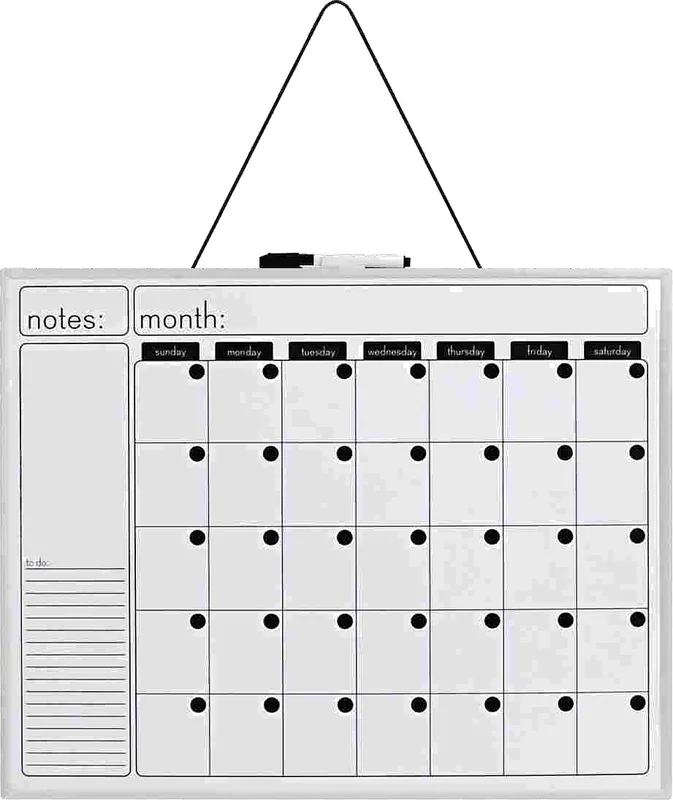
A wall calendar that can be wiped clean and redrawn every month is a small piece of equipment that offices, restaurants, workshops and families actually keep using. The Hanging Monthly Calendar Whiteboard (TVD-5479) has a monthly dry-erase grid, a hanging cord and a single listed size of 50x40 cm. Our product listing does not mention a frame colour, an eraser or a marker, so those are questions for your written quote. This guide covers how the grid is used, who it suits and how to specify it so your customers are not disappointed.
Why a monthly grid, and why dry-erase
A printed paper calendar is fixed and gets thrown away. A dry-erase monthly grid lets the user change the month, correct a date and reuse the board indefinitely. For a small business, the use is concrete: delivery days on a warehouse wall, staff holidays in a staff room, school events in a front office, a rota in a back-of-house corridor. The 50x40 cm size is large enough to write a short entry in each day, but not so large that it needs a wall to itself.
Ask how the grid is made. A printed grid can wear off if the board is wiped hard for a year, while a grid that is part of the surface, or protected, lasts longer. Ask for the number of columns, whether the week starts on Sunday or Monday, and whether there is a heading area for the month name. The listing does not tell us any of these.
The hanging cord
The board hangs by a cord, which makes installation a one-screw job and lets the board be moved from room to room. It also means the board hangs freely, so in a kitchen or workshop where doors slam it can swing or tilt. Ask for the cord length, how it is fixed to the board and the rated load, and tell shoppers to use a fixing that suits their wall. Where a board has to stay level and fixed, ask whether a second hanging point or an adhesive fixing is possible.
Who buys it
- Offices and workshops use it as a team calendar in a corridor or break room.
- Restaurants and cafés put it in the back-of-house area for a staff roster, supplier delivery days and event bookings.
- Hotels and guesthouses use it in housekeeping and maintenance rooms to plan room turnarounds.
- Schools and daycares use it as a staff or classroom events calendar.
- Retailers and discount and variety chains sell it as a family planner for a kitchen or hallway.
- Online sellers list it as a home-organisation product, often with a bundle of markers.
What to confirm on the quote
- Frame material and colour. The listing gives none.
- Whether a marker and eraser are included. The listing does not say.
- Surface material and how it takes marker and erases after months of use.
- Grid format: number of rows, week start day and whether dates are pre-printed or you write them.
- Cord length, material and rated load.
- Thickness, weight and carton size.
- Whether the surface is magnetic. The listing does not say it is.
- If any panel or backing in the version you order is made from MDF, particleboard or similar composite wood, the formaldehyde emission documents that Canadian rules require.
Compared with other calendar boards
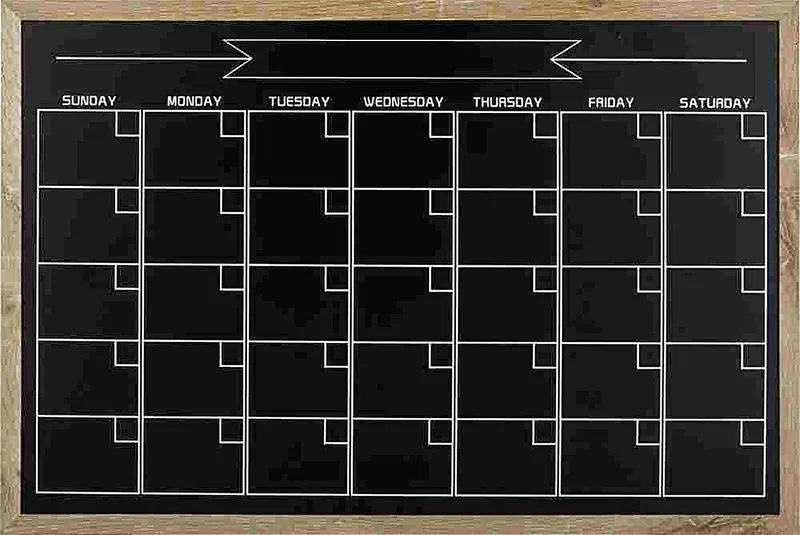
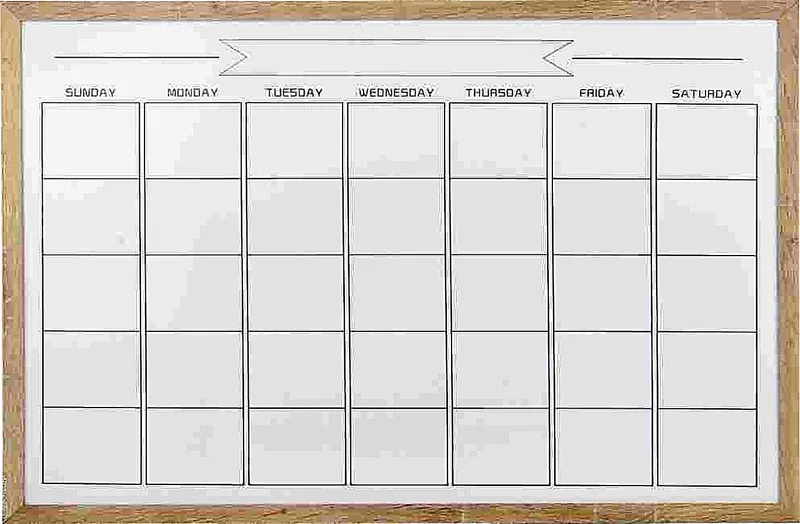
The Monthly Planner Board – Black Frame (TVD-5437) has a black calendar surface in a wall-hang frame at 68.5x45.5 cm, which is bigger and reads as a more formal office piece. The Monthly Planner Whiteboard – Wood Frame (TVD-5438) is a dry-erase calendar grid in a wood frame in a wall-hang format, and suits a warm, home-style room. The hanging monthly whiteboard here sits between them: smaller than the black board, simpler than the wood-frame version and defined by its cord. If your customers want a blank surface instead of a grid, the guide to the hanging mini whiteboard in pink covers a hanging board in three sizes.
For weekly planning, the weekly planner board with cork strip collection covers three different layouts.
Canadian use notes
Canadian businesses often put a calendar where it is cold or damp for part of the year, such as a loading dock office, a garage workshop or a restaurant back door. A dry-erase surface and a plastic or painted frame can behave differently at low temperatures, so if your customers will hang the board in an unheated space, say so on the quote request. Indoor heated spaces are the normal use.
Prepackaged consumer products need bilingual English and French product identity and net quantity, with the dealer's name and place of business. In Quebec, labels, instructions and warranty documents must be available in French. Calendar boards often carry month and day names, and if the grid is printed with English words only, discuss a bilingual or wordless layout on the quote before you sell into Quebec. No certification is on file in our listing for this board, so we make no certification claim. We confirm the status and supply documents with the quote before you order. Rules change, so confirm them with the authority or your customs broker; this is not legal advice.
How to order
Put the code on the request a written quote page with your quantity. The written quote covers price for your quantity, specifications, packing, lead time and delivered cost to your address. Payment is a 30% deposit with 70% before release. We can send samples on most items, with the cost usually credited to the first order, and trial quantities are available on many lines. See how ordering works, the sales tax by province guide, the landed cost calculator and the Whiteboards & Memo Boards range.