Product guide ·
Kindergarten Storage Cabinet (TVD-9311): open cubbies and bins for daycares and schools
A cubby cabinet is where coats, art, readers and spare clothes live all day. This guide covers how to specify TVD-9311, how it compares with the other storage pieces, and how ordering works.
What the Kindergarten Storage Cabinet is
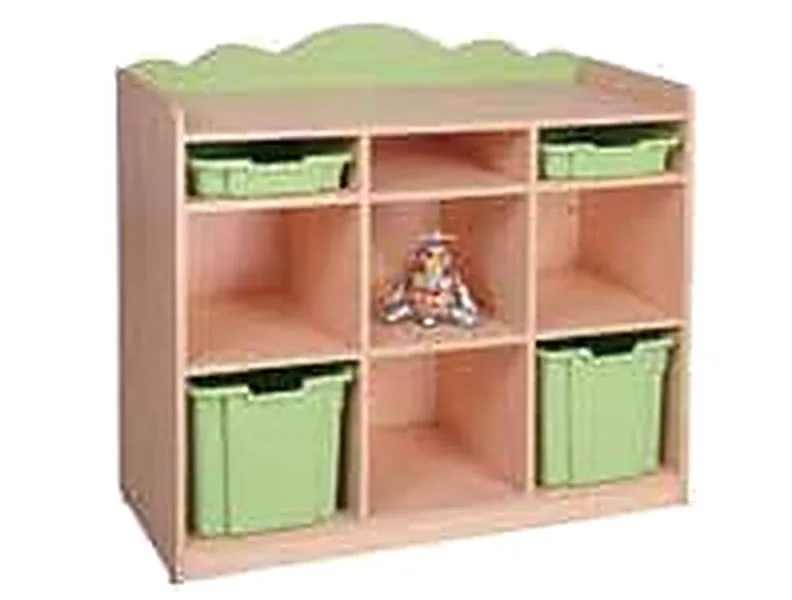
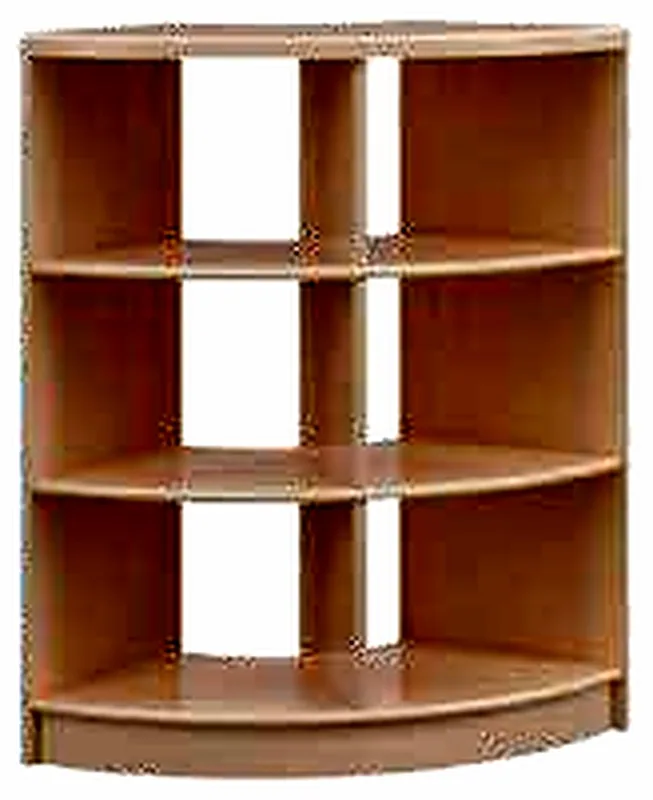
The Kindergarten Storage Cabinet (TVD-9311) is built from wood panels and arranged as open cubbies that hold storage bins. It comes with several colour trims, so a room can be colour-coded by group or by age. There are no doors: children see what is inside, reach it, and put it back themselves, which is the whole point of the design.
The typical buyers are daycares and schools. A daycare director usually wants one cabinet per group room for each child's spare clothes and comfort items. A school buys the same cabinet for classroom supplies, take-home folders or a reading corner's baskets. Because it is a plain freestanding unit, it also suits after-school programs and community centres that share a room with other users and clear it each evening.
What the listed features mean in practice
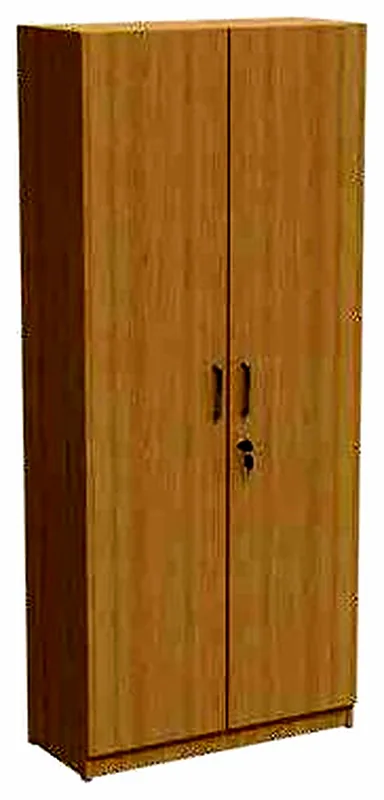
- Open cubbies. Open compartments mean no hinges to pinch fingers and no latches to fail. Staff can see at a glance which cubby is full. The trade-off is that nothing is lockable or dust-proof; items that must be secured belong in a cabinet with doors such as the Tall Storage Cabinet – Wood (TVD-9317).
- Storage bins. Bins let each child own a labelled container that can be lifted out, carried to a table and returned. Ask how many bins come with each cabinet and what they are made of; both are confirmed on your written quote.
- Wood panel construction. Panel furniture is light enough to rearrange and stable enough for a classroom. Panel type, thickness and edge finishing are quote items; see the rules section below for why.
- Several colour trims. Trims let you match room themes or separate age groups. Check the colour range against your branding before ordering large quantities, and ask for a physical sample if colour accuracy matters.
How to specify it: a checklist
Use these points on your request and the written quote will answer each one.
- Overall width, depth and height in metric and imperial, plus the height of the top shelf. A unit that suits five-year-olds can be out of reach for toddlers.
- Number of cubbies, and the interior size of one cubby against the bins that come with it.
- Rated load per shelf and the test standard or report behind it.
- Panel material and thickness, edge treatment and finish, in writing.
- Colour trims available and how colours are picked when you order several units.
- Assembly level, hardware included, carton size and units per container.
- Anti-tip provision: whether the cabinet can be fixed to a wall and what fasteners are supplied. Tall storage in a children's space deserves this question.
Compared with the rest of the line
Several storage pieces in the kindergarten line look alike at first glance, so here is how they differ.
| Product | Layout | Best for |
|---|---|---|
| Kindergarten Storage Cabinet (TVD-9311) | Open cubbies with storage bins, several colour trims | Personal bins for each child in a group room |
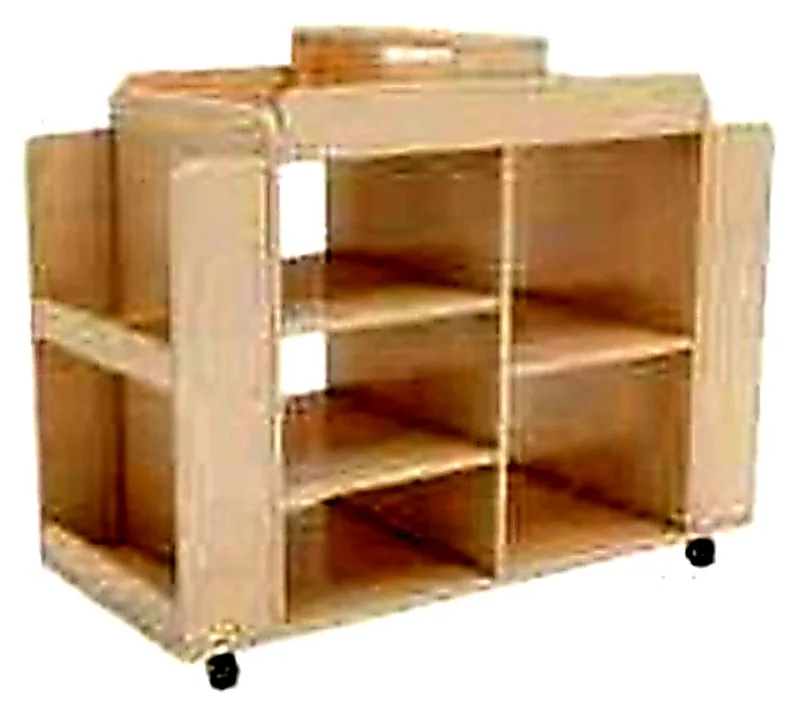
| Classroom Cubby Shelf – Wood (TVD-9315) | Open cubby compartments, wood panel build, optional castors | Rooms that rearrange often, where wheels help |
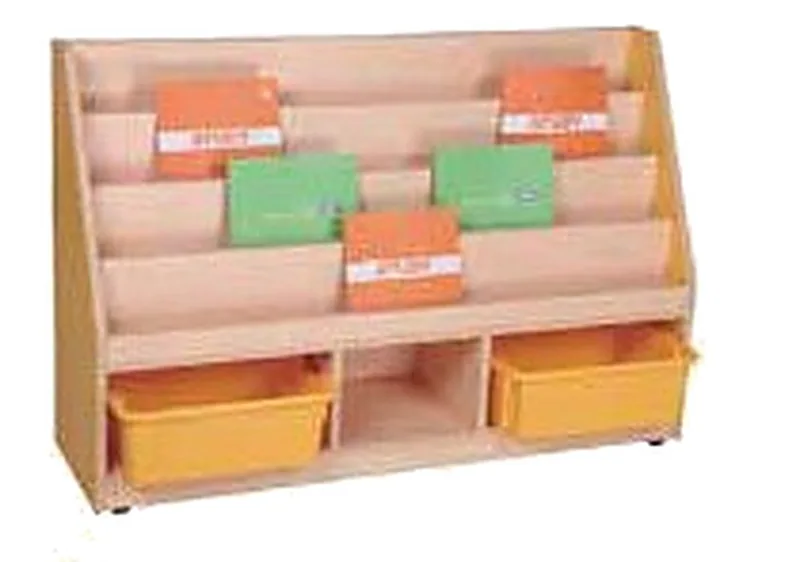
| Kids Book Display Shelf (TVD-9312) | Tiered book display with storage bins below | Reading corners with books facing out |
| Corner Shelf Unit – Curved (TVD-9316) | Curved corner shelves | Using dead corner space |
If you want bins and colour trims, TVD-9311 is the closer fit. If you want the option of castors, ask about TVD-9315 instead. For buyers who also need a table, our guide to the kids solid wood table range covers that side of the room, and the book display shelf guide covers the reading corner.
Canadian use notes
Heated classrooms in central Canada and the Prairies are dry in winter, which is hard on any wood product; wood panels are more forgiving than solid timber but still benefit from being unpacked and left in the room before final assembly. Coastal and Atlantic buildings are humid, so check that edges are sealed. Freight arrives by ocean to Vancouver or Prince Rupert and then by rail and truck, and cold-season transit can be rough on cartons, so inspect on delivery and photograph any damage.
Most of the rules that matter here apply to the panels and finishes because this is children's furniture. Composite wood panels (particleboard, MDF, hardwood plywood, laminated products) must meet formaldehyde emission limits, be certified by an approved third-party certifier and be labelled. Paint and coatings on children's furniture are limited to 90 mg/kg of lead, with a mercury limit as well. No certification mark is on file for this cabinet, so we do not call it certified: we confirm the status and supply the documents with the quote before you order. Rules change; check with your licensing officer or school board. For the full list, read the kindergarten furniture import rules.
How ordering works
Everything starts with a written quote covering the price for your quantity, specification, certification status, packing, lead time and delivered cost to your address. Many lines have low trial quantities, and samples are available on most items with the sample cost usually credited to the first order. Payment is a 30% deposit and 70% before release. Products from several factories can share one container, so a cabinet order can ride with chairs and tables. The how ordering works page has the steps, taxes depend on your province (sales tax by province), and you can ask for the quote on our quote page. A free account shows the full specifications on the product page. Browse the rest of the kindergarten furniture line or see delivery across Canada.