Product guide ·
Monthly Planner Whiteboard with Wood Frame: Choosing Between TVD-5438 and TVD-5448
Two wood-framed dry-erase boards, one with a calendar grid and one plain. Here is how they differ and which buyer each one suits.
Wood-framed dry-erase boards are the ones people actually leave on a wall for years: they read as furniture rather than as classroom equipment. This guide covers two of them that sit side by side in our range, the Monthly Planner Whiteboard – Wood Frame (TVD-5438) and the Whiteboard – Wood Frame (TVD-5448). They share a dry-erase face and a wood frame, but they are not the same board, and picking the wrong one is the most common mistake we see on small office and retail orders.
What the two boards have in common
Both boards come with a dry-erase writing surface and a wood frame, and both are made for hanging on a wall. That means the buying questions overlap: how the frame is finished, how the board is fixed to the wall, how the corners are protected in the carton, and whether the frame is solid timber or built up from panel material. Our product line page for whiteboards and memo boards puts these two next to the metal-framed alternatives if you want to compare materials before deciding.
How they differ
| Item | Writing face | Frame | Size on the product page | Best use |
|---|---|---|---|---|
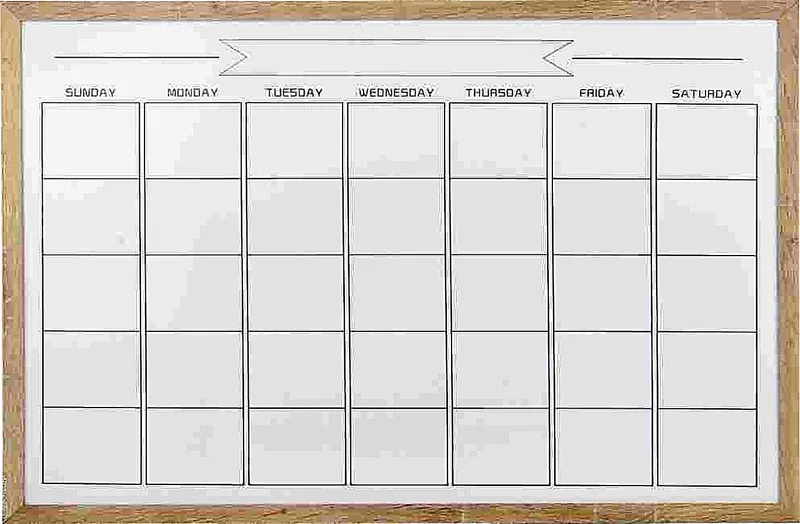
| TVD-5438 Monthly Planner Whiteboard | Dry-erase calendar grid, laid out as a month | Wood frame | Wall-hang format; full size confirmed on your written quote | Fixed monthly schedules, rota walls, shared booking calendars |
| TVD-5448 Whiteboard | Plain dry-erase surface | Natural wood frame | 40x30 to 90x60 cm | Open-ended notes, lists, lesson prompts, reception messages |
The planner board has the calendar grid built in, so nobody has to rule lines on it every month. The plain board gives you free space and a choice of sizes from 40x30 cm up to 90x60 cm. If your staff will write on a calendar anyway, choose the grid; if they will use the board for everything from phone messages to sketches, choose the plain one. The planner's overall dimensions are not stated on its product page, so we confirm them on the quote rather than guess.
Which buyer each board suits
- Offices and shared workspaces. A calendar grid on a meeting-room or team-area wall keeps leave, deadlines and room bookings visible to everyone. The wood frame sits better in a front-of-house area than a bare aluminium edge would.
- Schools and daycare staff rooms. The plain board suits a staff room or a classroom corner where teachers write daily notices. For a classroom the wall-hang format matters: confirm the fixing method for the wall type before you order in volume.
- Retailers. Both boards work as gift-shop and home-office lines. The planner is the stronger shelf item because the grid shows what it is for at a glance; the plain board is the better multi-size range because of the 40x30 to 90x60 cm span.
- Home offices and family kitchens. A monthly grid is the classic household planner. A smaller plain board sits well beside a desk.
A wood frame and Canadian rules
No certification is stated for either board, so we make no certification claim about them. What a Canadian buyer should know is how a wood frame can be built. If the version you order uses solid timber, the main questions are finish and moisture movement. If the frame or backing board uses composite panels such as plywood, particleboard or MDF, Canada's formaldehyde emission rules for composite wood products require emission limits, certification by an approved third-party certifier and labelling. Painted or lacquered frames also fall under the Surface Coating Materials Regulations, which limit lead and mercury in coatings on furniture and on children's products, so school buyers in particular should ask for coating information. We confirm the construction and the available documents with the quote, before you order. Rules change, so check the current requirement with the authority, your inspector or your customs broker; this is general information, not legal advice. For the wider picture, read our compliance and import guide for whiteboards and memo boards.
Canadian use notes
Wood moves with humidity. In heated buildings across the Prairies and central Canada winter air is very dry, while coastal British Columbia and Atlantic Canada are damp, so let cartons of wood-framed boards sit in the building for a day or two before you hang them. In winter transit, think about the delivery address and unloading plan: a board left on an unheated dock can be cold enough to fog when it comes inside. Check that the writing surface wipes clean with your preferred markers; we can ask for a sample first.
How to specify the boards
- State the final size you want for each board, in metric and imperial. For TVD-5438 the full size is confirmed on the quote.
- Ask for the frame material and thickness, and whether any panel material in it carries a formaldehyde compliance certificate.
- Confirm fixing hardware for your wall type and whether it is included.
- Confirm carton size, units per carton and corner protection.
- Tell us if the boards are for children's rooms so we can discuss coating documents.
- Ask for a sample when finish and writing quality matter to the project.
Mixing both boards in one order
A single quote can include both codes at different sizes, so a school or office can have planners for the corridor and plain boards for each room. Products from several factories can share one consolidated container, which helps if you add a cork board from the same line, such as the Cork Notice Board – Silver Frame group. For a different writing surface, see the Whiteboard – Silver Frame group, which covers metal-framed boards in 40x30 and 60x45 cm. TVD-5437 is a black-framed monthly planner if a wood tone does not suit your interior.
Ordering and delivery
Every order starts with a written quote showing the price for your quantity, the confirmed specification, certification status and documents, packing, lead time and the delivered cost to your address across Canada. Many lines carry low trial minimums and most items have samples, with the sample cost usually credited to the first order. Payment is 30% deposit and 70% before release. See how ordering works for each step, check the provincial sales tax guide for what GST, HST, PST or QST will apply, and use the landed cost calculator to plan. When you are ready, send your sizes and quantities through the quote form. Our Canada delivery hub explains freight by region.