Certification guide ·
Patterned Cork Memo Board – Black Frame (TVD-5436): Canadian Compliance Checklist
A fabric-covered cork board looks simple, but a Canadian buyer should still ask about its frame, backing and surface material. Here is what applies, what is on file and which documents we request.
Where TVD-5436 stands today
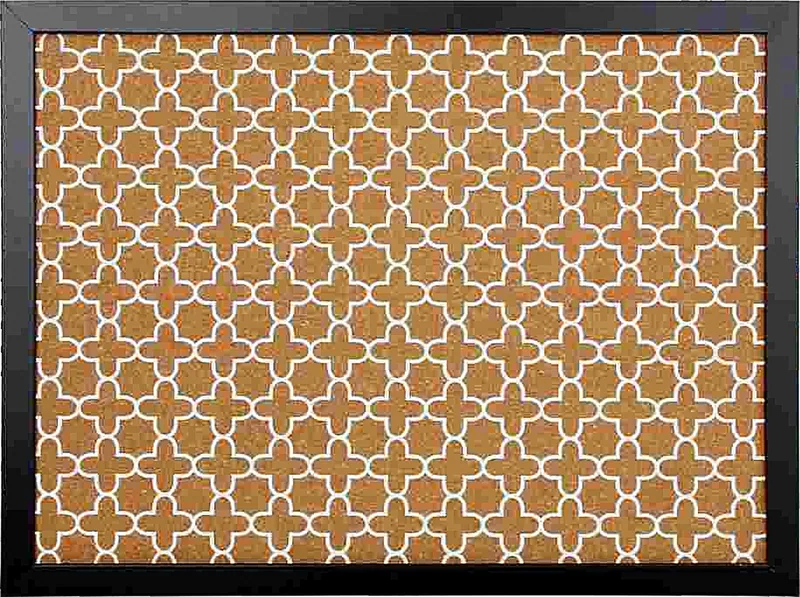
Patterned Cork Memo Board – Black Frame (TVD-5436) has a printed fabric-over-cork surface, a black frame and comes in 40x30 and 60x45 cm. No certification mark is on file for this product, and we do not describe it as certified, listed or approved. Before you order, we confirm certification status and supply the documents with your quote. The commercial overview for the same product is in our TVD-5436 wholesale buying guide.
This page works through the Canadian rules that can touch a board like this, based on its features: a fabric face, a cork core and a frame. Not every point applies to every version, so each is written as a requirement and a question to settle on the quote.
1. Composite wood in the frame or backing
Canada's regulations on formaldehyde emissions from composite wood products have been in force since 2023. Hardwood plywood, particleboard, MDF and laminated products must meet emission limits, be certified by an approved third-party certifier and be labelled. A memo board is not furniture in the usual sense, but if the frame or the backing panel is made from one of these materials, the rule is relevant to the product. Our listing describes a black frame without stating the material, so we ask the factory and state the answer on the quote. If composite wood is used, ask for the TSCA Title VI or Canadian compliance certificate, which are aligned.
2. The fabric surface and the Textile Labelling Act
The Textile Labelling Act applies to consumer textile articles and requires fibre-content and dealer-identity labelling. A fabric-covered pin board is not an obvious textile article, which is exactly why we do not assume either way. If you intend to resell the board at retail, we confirm with the factory what the fabric is made of and tell you on the quote whether a fibre-content label is something to prepare.
3. Quebec: French labels and textile labelling
Quebec repealed its regulation on stuffing and upholstered and stuffed articles on 9 December 2021 and Ontario repealed its own in 2019, so no permit number is needed in either province. A flat memo board with fabric glued to cork is not an upholstered article anyway, but if the version you order has foam or soft padding under the fabric we confirm the construction and tell you which labels apply, including French-language labels for Quebec sales.
4. Packaging, labelling and French
The Consumer Packaging and Labelling Act requires prepackaged consumer products to show product identity and net quantity in English and French, plus the dealer's name and place of business. In Quebec, the Charter of the French language also requires that product labels, instructions and warranty documents be available in French, at least as prominent as any other language. Retailers in Quebec will ask for this. Our product pages and quotes are in English, with French support on request.
5. General safety
The Canada Consumer Product Safety Act prohibits consumer products that are a danger to human health or safety, requires incident reporting and allows recalls. Health Canada enforces it. For a hanging board, the practical points are the fixing hardware, sharp pins or tacks supplied in the carton, and the frame corners. If you sell it for children's rooms, ask for the finish details too: coatings on furniture and children's products must respect Canada's limits for lead and mercury.
The CE mark is not recognised in Canada as proof of compliance. That matters if a factory offers European test papers as the only evidence.
Document checklist
| Document | Why you want it | Who issues it |
|---|---|---|
| Materials declaration for frame, core, backing and fabric | Decides which of the rules above apply to the version you order | The factory, confirmed by us on the quote |
| Composite wood formaldehyde certificate (if a panel is used) | Shows the emission limits are met and the third-party certification is in place | Approved third-party certifier, supplied through the factory |
| Fabric fibre-content statement | Supports textile labelling if the board is sold as a consumer textile article | The factory or fabric mill |
| Coating or print information | Supports questions about lead and mercury in coatings on children's products | The factory, with test reports where available |
| Bilingual label or insert artwork | Needed for retail sale and for Quebec | You or your marketing team, with our guidance |
| Packing and carton specification | Protects the fabric face in freight and sets pallet planning | The factory, confirmed on the quote |
What happens if a document is missing
For a pin board, the consequences are mostly commercial. A retailer's buyer may refuse to list a product without bilingual labelling or a materials statement. A school board or public tender may ask for proof of coatings and composite wood compliance. In a worst case, a product found to be a danger can be subject to recall under the Canada Consumer Product Safety Act. Asking for the paperwork before the order is far better than finding the gap after the container lands.
How we handle it
We confirm certification status and documents on your written quote, before you order. If a document is missing, we say so and tell you whether the factory can provide it. Samples are available on most items, and the sample cost is usually credited to the first order, so you can see the fabric, the frame and the packaging first. Payment is 30% deposit and 70% before release. Read how ordering works or send a request on the quote page.
For the whole range, see our whiteboards and memo boards compliance guide. Sales tax by province is explained in our sales tax guide. Rules change, so confirm requirements with your inspector, the relevant authority or your customs broker; this is not legal advice. Other boards in the line include TVD-5437 and TVD-5443.