Certification guide ·
School Desks and Chairs in Canada: The Safety Rules and Documents Behind TVD-4279
TVD-4279 is a steel-frame student desk and chair set with a laminate top and moulded chair. No certification is on file for it, so here is what a Canadian school buyer should request.
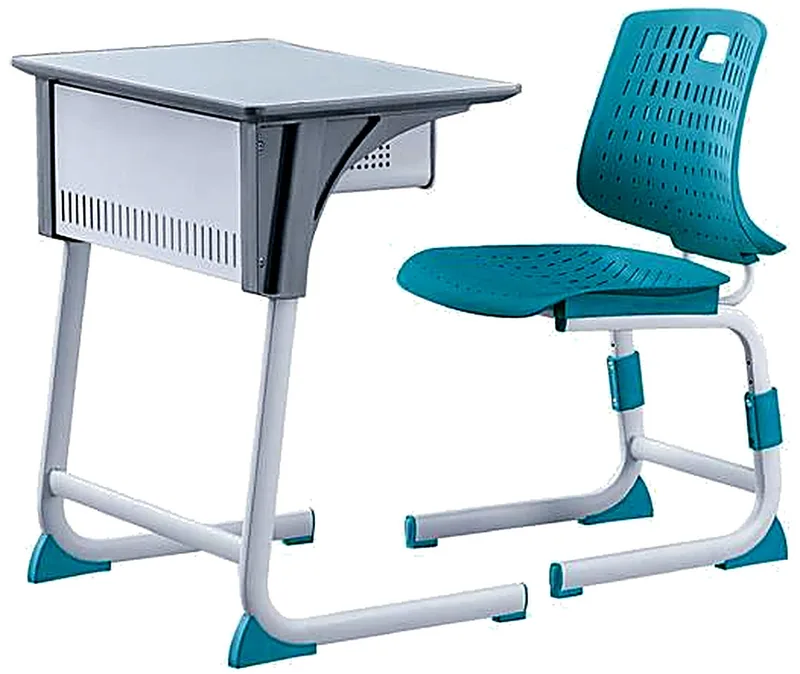
A classroom set is a children's product, a piece of furniture and, usually, a panel product, all at once. That combination is why the paperwork for a Student Desk & Chair Set – Moulded Chair (TVD-4279) deserves attention before an order. The product page lists a single or double desk with chair, a steel frame, a laminate top and a moulded teal chair. This page covers the Canadian rules around those materials and the documents we suggest you request.
Certification status of TVD-4279
No certification mark or test report is on file for TVD-4279. We do not describe the set as certified, approved or tested to any standard. For every quote we confirm certification status and supply the documents before you order. If a document you need cannot be provided for the version you want, we tell you in writing at that stage.
Why children's furniture is treated differently
Three Canadian rules matter most for a desk and chair that children will use daily.
- Surface Coating Materials Regulations. They limit lead (90 mg/kg) and mercury in paints and coatings on furniture and on children's products. Painted frame parts and printed or coated surfaces are the areas a test report should cover.
- Consumer Products Containing Lead Regulations. Lead limits apply to products for young children and to some other consumer products.
- Canada Consumer Product Safety Act. It prohibits products that are a danger to human health or safety, requires incident reporting and allows recalls. Health Canada enforces it. A school buying direct is not exempt from the idea that unsafe products can be recalled.
Phthalate limits apply to soft vinyl in childcare articles and toys. A desk and chair set is not a toy, but if any soft vinyl component is added, such as a cover or trim, we ask the factory about it.
The laminate top and formaldehyde rules
Laminate desktops sit on a board core. Canada's Formaldehyde Emissions from Composite Wood Products Regulations, in force since 2023, set emission limits for hardwood plywood, particleboard, MDF and laminated products. They require certification by an approved third-party certifier and labelling, and they matter for furniture made from these panels. TVD-4279 uses a composite wood panel, so ask for the TSCA Title VI or Canadian compliance certificate for the panel. The two are aligned. Where the desktop board is the main component of a classroom order, this single document often decides whether a product is accepted.
Document checklist for a school order
| Document | Why it matters | Who issues it |
|---|---|---|
| Coating lead and mercury test report | Supports limits on paints and coatings for furniture and children's products | Accredited test laboratory, via the factory |
| Composite wood formaldehyde certificate | Needed for panel tops under the Canadian regulations | Approved third-party certifier |
| Lead content test for children's products | Products for young children face lead limits | Test laboratory |
| Load and stability test report | Many tenders ask for rated load and test standard evidence | Test laboratory |
| Bilingual or French manuals and warranty | Required for sale in Quebec under the Charter of the French language | Agreed with you before production |
| Tariff classification confirmation | Duty depends on classification and origin | Our customs broker |
What tenders and boards ask for
Schools and institutions often name their own test standards in tender documents, for example an ANSI/BIFMA report for desks and chairs. These are buyer specifications, not federal law. We recommend copying the exact tender wording into your enquiry so that the quote reflects it. A classroom order is judged on the weakest document, and a missing coating report can hold up an entire delivery.
CE and other marks
Canada does not recognise the CE mark as proof of compliance for consumer products. A set sold with a CE mark elsewhere still needs to meet the Canadian items above. Furniture without a plug does not need an electrical certification mark. If a model ever includes a powered item, electrical rules apply, and our guide to CSA, cUL and cETL marks explains them.
What happens if a document is missing
An inspector or facilities manager can refuse delivery or installation of furniture without the report a tender named. A recalled product can be pulled from classrooms. A panel product without the right formaldehyde certification may be turned away by a distributor or school board. Those are expensive outcomes for a purchase that is easy to document at the quote stage.
How we handle it
Describe your room, the age groups and the tender wording on the quote request. We reply with the specification, the certification status, the documents we can supply and the delivered cost, and we say plainly where a document is missing. Related reading: the TVD-4279 product guide, plus our guides for Saskatchewan and Ontario. The school desks and chairs line lists the rest of the range.
Rules change. Confirm requirements with Health Canada, your school board or inspector, and your customs broker. This is general information and not legal advice.