Certification guide ·
Student Desk & Chair – Sled Base (TVD-4282): Certification and Documents for Canadian Schools
A two-colour steel desk-and-chair set for pupils meets children's product rules, coating limits and, depending on the top, composite wood rules. Here is what to ask for and what we can and cannot say.
TVD-4282 certification status: what we can and cannot say
Procurement staff ask one question first: is it certified? For the Student Desk & Chair – Sled Base (TVD-4282), the honest answer is that we hold no certification mark on file and make no claim that it is certified, listed or approved to any standard. What we do is confirm certification status and supply the available test documents with the written quote, before you order. This guide sets out which Canadian rules a white and green steel desk-and-chair set for pupils can run into, so that you ask for the right paperwork the first time.
The set in terms of rules
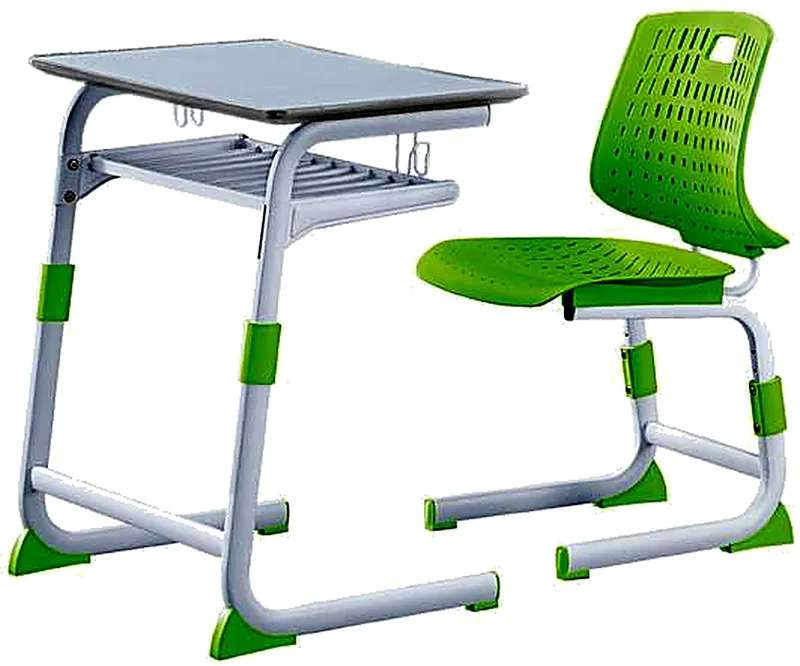
Our product listing describes a single desk and chair set with an open storage rack under the top and a white and green steel frame. Read through a compliance lens, that gives three points. It is a children's product when bought for pupils. It carries a painted or coated surface on the frame. And it may contain a panel in the top or seat, depending on the version, which we confirm on the quote. It has no cord, no motor and no light in the listing, which is why electrical marks are a conditional rather than a requirement.
Children's furniture rules
- Canada Consumer Product Safety Act. Products that are a danger to human health or safety are prohibited. Incidents must be reported, and Health Canada can order a recall.
- Surface Coating Materials Regulations. Lead is limited to 90 mg/kg and mercury is limited in paints and coatings on furniture and on children's products. Two-colour finishes mean two coating systems to test, so ask whether the report covers both the white and the green.
- Consumer Products Containing Lead Regulations. Lead limits apply to products for young children, so ask about plastic caps, glides and fasteners as well as the frame.
- Phthalate limits. These apply to soft vinyl in childcare articles. If the version you order has soft vinyl trim or edge banding and the set is for a daycare, ask for a phthalate statement.
Composite wood: a conditional
If the desk top or the seat on the version you order is made from hardwood plywood, particleboard, MDF or a laminated panel, the Formaldehyde Emissions from Composite Wood Products Regulations apply. Those panels must meet emission limits, be certified by an approved third-party certifier and be labelled. The certificate asked for is the TSCA Title VI or the Canadian compliance certificate, which are aligned. We confirm the top and seat materials on the quote and tell you plainly if the rule is in play. If the pieces are plastic or steel only, it is not.
Electrical marks: only if something plugs in
Nothing in the listed features of the TVD-4282 is powered. If you add a charging module, a lamp or any plug-in accessory to the order, that accessory must carry a mark from a certification body accredited by the Standards Council of Canada, such as CSA, cUL or cETL, or a field evaluation label. US-only marks without the small c are not enough, and CE is not recognised in Canada as proof of compliance. Our marks explainer covers the differences.
Document checklist
| Document | Why it matters | Who issues it |
|---|---|---|
| Coating report covering white and green frame finishes | Shows lead and mercury in coatings are within the furniture and children's product limits | Accredited laboratory, via the factory |
| Statement on plastic parts, glides and fasteners | Addresses lead and phthalate questions for children's products | Factory, confirmed on our quote |
| Composite wood certificate and panel label (if a panel is used) | Evidence of formaldehyde emission compliance | Third-party certifier |
| Strength or stability report named in your tender | Buyer specification, not federal law | Test laboratory, where one exists |
| French labels and instructions | Quebec requires French on labels, manuals and warranty | Factory or us, on request |
| Bilingual labelling of prepackaged units, if sold retail | Consumer Packaging and Labelling Act rules for English and French identity and quantity | Packer or importer |
Provincial differences
The coating, lead and composite wood rules are federal and apply nationwide. The differences sit in how a province or school board buys. Quebec adds the Charter of the French language; a hard plastic and steel seat is not stuffed, but a padded seat added to the order would bring in Textile Labelling Act fibre-content labelling. Ontario and Saskatchewan school buyers can read our provincial notes in the Ontario guide and the Saskatchewan guide.
What happens without the documents
- The purchasing office can reject the bid or hold the invoice.
- A reseller can lose a marketplace or store listing.
- If a product is found to be dangerous, a recall under the CCPSA is possible.
- Composite wood panels without the required certification and label can be stopped at import.
How we handle it on your quote
We list specifications, the certification status of the set, the documents we can supply, packing, lead time and delivered cost. Where an evaluation or extra testing is useful, we say so. Samples are available on most items, and the sample cost is usually credited to the first order, which lets your inspector see the finish and the labels. Payment is 30% deposit and 70% before release, and the set can share a consolidated container with other products. Duty and tax are confirmed by our customs broker; see the sales tax guide. Companion reading: the buyer's guide for the TVD-4282 and the line-wide children's compliance guide. Rules change; confirm with the authority, your inspector or your customs broker. This is not legal advice. Start a request on the quote page, or read how ordering works.