Certification guide ·
Restaurant Chairs Wholesale: Certification and Compliance for TVD-749 in Canada
TVD-749 has no certification mark on file. Here are the Canadian rules and test reports that matter for upholstered restaurant and condo chairs.
Restaurant chairs: marks, tests and what a buyer actually needs
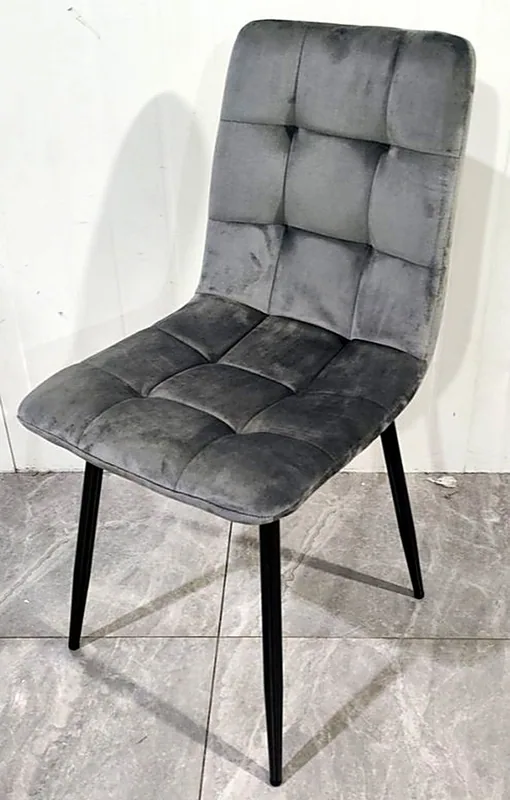
TVD-749 Velvet & Fabric Dining Chairs come with velvet, linen and PU covers on metal or wood-look legs, for restaurants, condos and retail. No certification mark is on file for this chair. Chairs are not electrical or gas products, so a CSA, cUL or cETL mark is not the issue. The issues are composite wood, upholstery, labelling, and whatever test reports your landlord, franchisor or tender asks for. This guide explains each in plain terms. For the commercial side, see the TVD-749 buyer guide.
The rules that apply to an upholstered chair
- Composite wood. TVD-749 may use composite-wood panels. Seat bases and frames made from plywood, particleboard or MDF fall under Canada's formaldehyde emission rules, in force since 2023, which require emission limits, third-party certification and labelling. Ask for the TSCA Title VI or Canadian compliance certificate.
- Coatings. The Surface Coating Materials Regulations limit lead and mercury in coatings on furniture. Wood-look legs usually have a coating or print finish, so ask for a coating test report.
- Textile labelling. Upholstered chairs sold in Quebec no longer need a permit number and label, since Quebec repealed that regulation in December 2021. Ontario repealed its similar rule in 2019.
- French. Labels, manuals and warranty documents must be available in French in Quebec.
- Product safety. The Canada Consumer Product Safety Act applies to consumer products and permits recalls.
- Retail labelling. If you sell chairs prepackaged to consumers, the Consumer Packaging and Labelling Act requires bilingual product identity and net quantity, plus the dealer's name and place of business.
A CE mark does not prove Canadian compliance. Canada does not recognise it as such.
Anti-dumping duty and cover materials
Our files show that certain upholstered domestic seating from China, namely leather or motion and reclining seating, carries very high anti-dumping duty plus countervailing duty, often more than the value of the goods. Fabric-only stationary seating is excluded. TVD-749 is offered with velvet, linen and PU covers, and which category applies depends on the final specification and tariff classification. Our customs broker confirms before we quote a delivered cost, and we may source from another origin if needed.
What contract buyers ask for beyond the law
Hotels, restaurant groups and tender documents often specify flammability test reports for upholstery, for example California TB117-2013 or whichever standard the tender names, and ANSI/BIFMA test reports for office seating. These are buyer specifications, not federal law. Confirm what your tender or franchisor requires before you order; if the chair is going into a theatre or other assembly space, the fixed-seating layout, aisle widths and anchoring are checked by the provincial building and fire authority, and the designer or fire official confirms what applies.
CE and Canadian requirements, and provincial differences
If the factory offers a European CE declaration, keep it, but treat it as a separate matter from Canadian compliance. The Canadian requirements are federal and provincial: Health Canada enforces the product safety law everywhere, the French-language rules are specific to Quebec, and building and fire officials in each province decide what applies to chairs in assembly spaces such as theatres. Ontario's former upholstery rule was repealed, and other provinces differ again, so check the current rule where your chairs will be sold. If a retailer or franchisor sets its own checklist, ask for it at the start so we can request the right reports from the factory.
Document checklist for TVD-749
| Document | Why you want it | Who issues it |
|---|---|---|
| Composite wood emission certificate | Formaldehyde emission rules for panels in seat bases and frames | Panel producer or approved certifier, via the factory |
| Coating test report | Surface Coating Materials Regulations for painted or printed finishes | Factory or independent laboratory |
| Upholstery flammability report | Hotel, restaurant and tender specifications | Testing laboratory, via the factory |
| French-language labels and manuals | Needed on an upholstered chair sold in Quebec | Confirmed with the quote; agreed before the order ships |
| French labels and warranty | Charter of the French language | Prepared before delivery to Quebec |
| Specification sheet | Weight capacity, frame joints, seat height, foam density and covers | Confirmed on your quote |
What happens when a document is missing
A restaurant's landlord or franchisor may reject chairs with no test reports. A retailer will not list an upholstered chair whose labels lack the fibre content, or whose Quebec labels lack French. If the product is later found to be a danger, a recall can follow, and the importer bears the cost. Gathering documents before the order is far easier than chasing them afterwards.
How we handle it
We confirm certification status and supply documents with the quote before you order. If a report is not available for the cover or leg finish you want, the quote says so. Tell us if your delivery is in Quebec in the quote request. Region guides for Ontario and British Columbia cover freight and local notes. For the other marks buyers ask about, see CSA, cUL and cETL marks explained, and for the whole range, the Dining & Café Chairs line. The page on how ordering works explains the process. Rules change, so confirm current requirements with the relevant authority, your inspector or your customs broker. This is general information, not legal advice.