Certification guide ·
Gas spring monitor arms and desk stands in Canada: what to ask for before you import
Gas spring monitor arms are mechanical, not electrical and not fuel-gas equipment. This guide separates the rules that really apply from the ones that only sound relevant, and shows how our four arms differ.
Start with the name: "gas" does not mean gas appliance
Search for compliance on a gas spring monitor arm and you will meet articles about gas fitters and fuel-gas certification. Those rules concern commercial cooking equipment and other fuel-burning appliances, where provincial bodies such as TSSA in Ontario, Technical Safety BC and the Régie du bâtiment du Québec regulate installation. A monitor arm has none of that. The "gas" in gas spring is a sealed pressurised cylinder inside the arm that balances the weight of the screen. It is the same kind of part as the height lift in an office chair. No fuel, flame or gas supply is involved, so no gas certification is expected for it.
What does matter for these products is quieter: test evidence of strength and cycle life, coatings and finishes, labelling for resale, and the wording of the tender or the retailer's listing rules. No certification mark or test report is on file for any of the arms below, so we do not call any of them certified. For each order we confirm the certification status and supply any documents with the written quote before you order.
The four arms and how they differ
All four are gas spring arms, but their ratings are different, and a document that fits one does not automatically fit another.
| Product | Arms | Rating and screens | Mount |
|---|---|---|---|
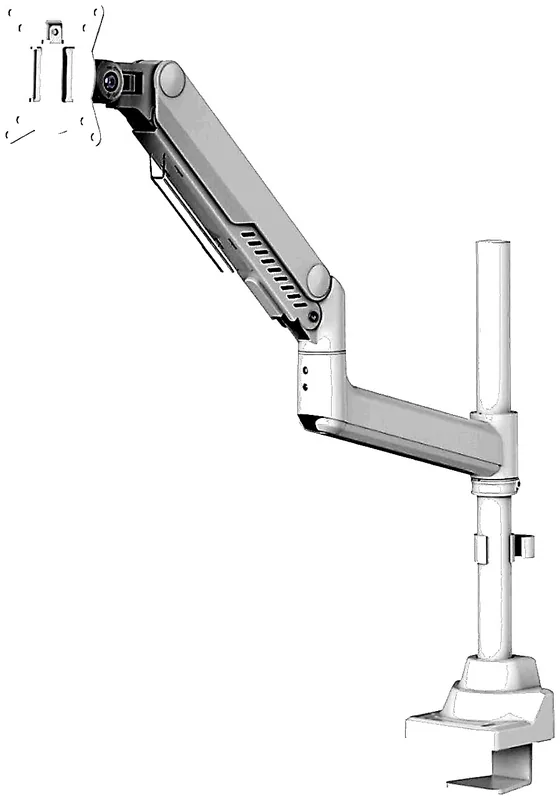
| Single Monitor Arm – Gas Spring, White (TVD-9267) | Single | Flat 18 kg, curved 15 kg; 17 to 49 in | Clamp mount |
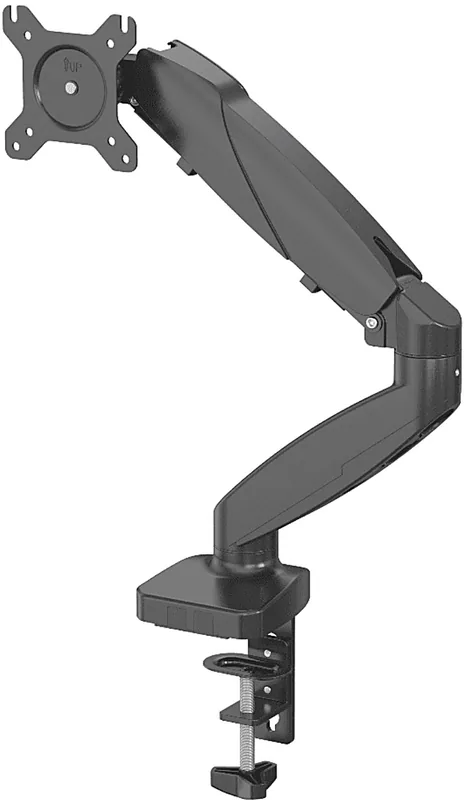
| Single Monitor Arm – Black (TVD-9268) | Single | 2-9 kg; 15-32 in | Desk clamp; a glass-top mount version |
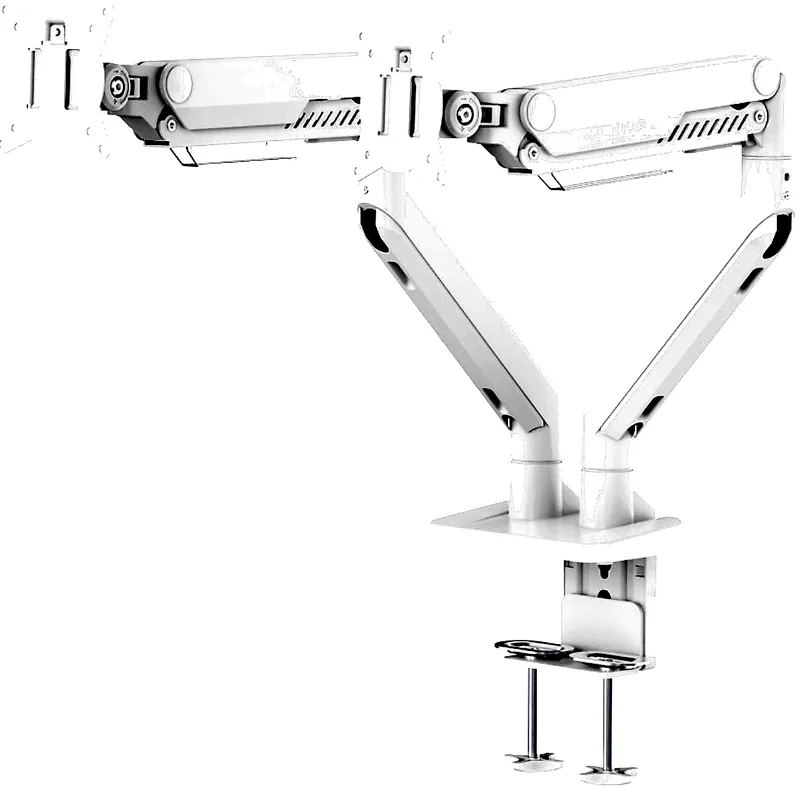
| Dual Monitor Arm – White (TVD-9269) | Dual | Flat 18 kg, curved 15 kg; 15 to 45 in | As confirmed on the quote |
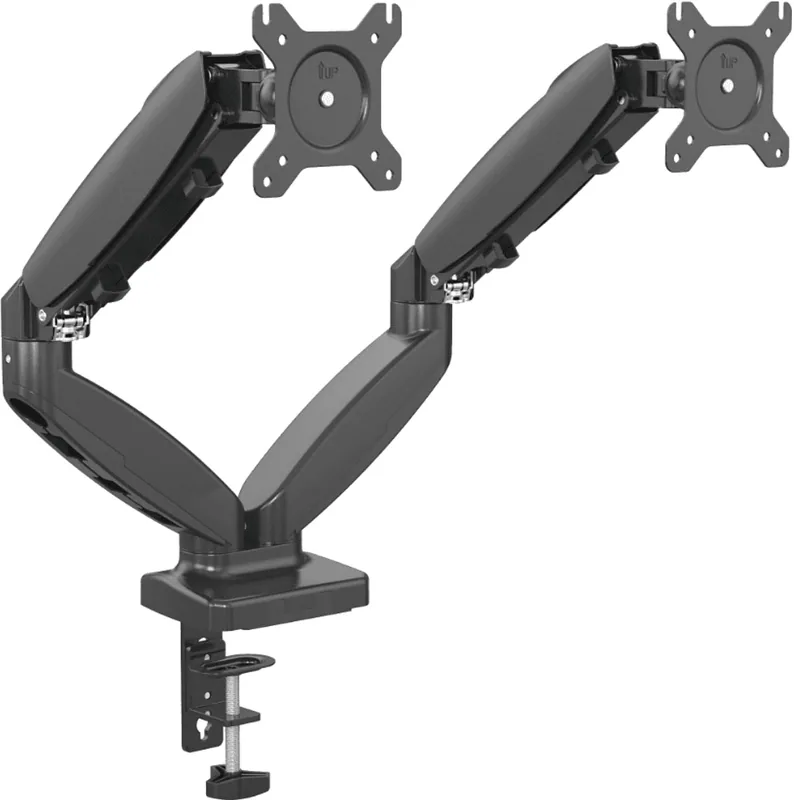
| Dual Monitor Arm – Black (TVD-9270) | Dual | 2-9 kg; 15-32 in | Desk clamp mount |
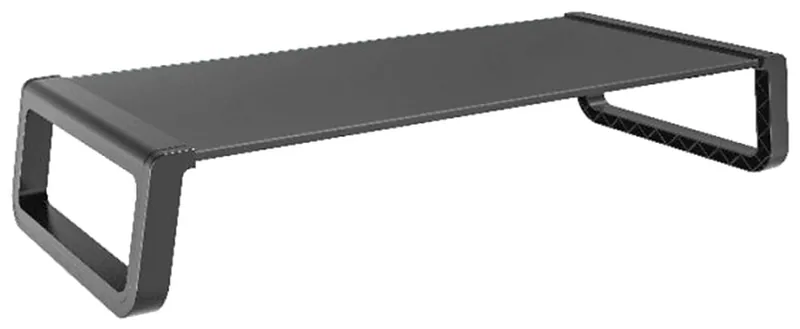
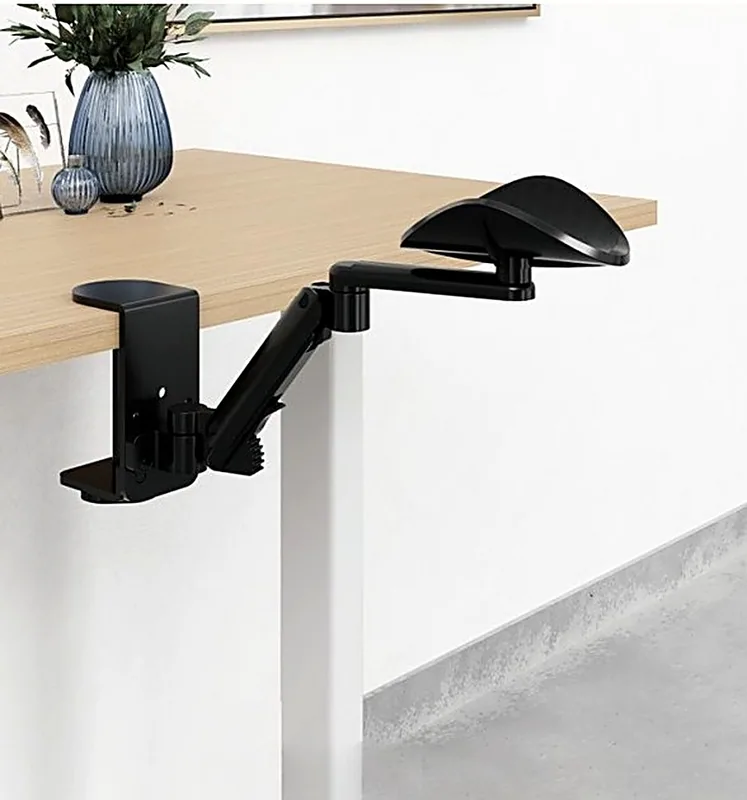
The white arms are rated for heavier and larger screens; the black arms are rated for ordinary office monitors. Test evidence should match: a strength report for the 18 kg rating is a different document from one for the 9 kg rating. For dual arms, ask whether the stated weight is per arm or for the whole assembly. That is confirmed on the quote. Each product has its own guide: TVD-9267, TVD-9268 and TVD-9269. The line also includes the monitor riser stand (TVD-9271), desk-mount ergonomic arm rest (TVD-9272) and their certification notes: riser stand and arm rest.
Which Canadian rules actually bear on these products
- Consumer product safety. Where the product is sold to consumers, the Canada Consumer Product Safety Act prohibits products that are a danger to health or safety, requires incident reporting and allows recalls; Health Canada enforces it. For an arm, "danger" means a screen that drops or an arm that snaps under rated load.
- Labelling for resale. Prepackaged consumer products need bilingual product identity and net quantity, plus the dealer's name and place of business. Retailers who resell the arms need this on retail packaging; ask for it at quote stage.
- Quebec. Labels, instructions and manuals must be available in French under the Charter of the French language, and Quebec retailers will ask for it. Installation instructions are the main item for an arm.
- Coatings. Paint and coatings on furniture and children's products are limited by the Surface Coating Materials Regulations to 90 mg/kg of lead, with a mercury limit. A desk accessory in an office is not a children's product, but retailers often ask for coating reports on painted metal anyway.
- CE is not enough. Canada does not recognise the European CE mark as proof of compliance. A CE-marked arm still needs to meet Canadian requirements where they apply.
- Electrical parts. None of the four lists any powered feature. If you ask for a version with USB ports, a light or a charger, Canadian electrical certification (CSA, cUL, cETL or a field evaluation label) comes into play; a US-only mark is not enough. Our explainer on CSA, cUL and cETL marks covers it.
Rules change, and inspectors and tender authorities differ. Check with your inspector, tender authority or customs broker. This is general information and not legal advice.
Document checklist
| Document | Why you ask for it | Who issues it |
|---|---|---|
| Load and cycle test report at the rated weight | Shows the spring and joints hold the stated flat and curved weights; tenders often ask for it | Independent laboratory or factory test department |
| Test standard named in the report | Lets a tender reviewer compare it to the standard they require; ANSI/BIFMA reports are sometimes specified for office products | Laboratory |
| Coating or paint report | Lead and mercury limits on coated furniture; retailer listing requirements | Independent laboratory |
| Spring replacement and service information | Gas springs lose pressure over years; buyers want to know whether the arm can be re-tensioned | Factory, on written request |
| French and English instructions and packaging text | Quebec requirement; bilingual labels for retail packs | Arranged with the factory by us |
| Electrical certification (only if a powered version is ordered) | Canadian mark required for powered products | Accredited certification body |
What happens when something is missing
A tender evaluator can mark a bid non-compliant for a missing test report, even if the product is fine. A big-box buyer or marketplace may refuse to list an arm without bilingual packaging. A facilities manager who installs an arm that sags can ask for replacements, and an insurer who learns a screen fell onto a keyboard may ask what testing existed. Customs matters are separate: duty depends on the tariff classification and origin, and our customs broker confirms the classification before we quote a delivered cost.
How we handle it
Every quote states specification, certification status, documents, packing, lead time and delivered cost. Samples are available on most items and the sample cost is usually credited to the first order, which lets you load a real screen before committing. Payment is 30% deposit and 70% before release. The how ordering works page has the steps, the quote form is where you ask for documents, and our monitor arms and desk stands line shows every product. We deliver across Canada.