Product guide ·
3-Tier Rolling Cart – Bamboo Baskets (TVD-5695): Mobile Storage for Homes, Salons and Shops
Three bamboo-trimmed baskets, a black metal frame and swivel wheels make this a cart that moves where the work is. Here is how to specify the wheels, the baskets and the paperwork.
A storage cart that moves
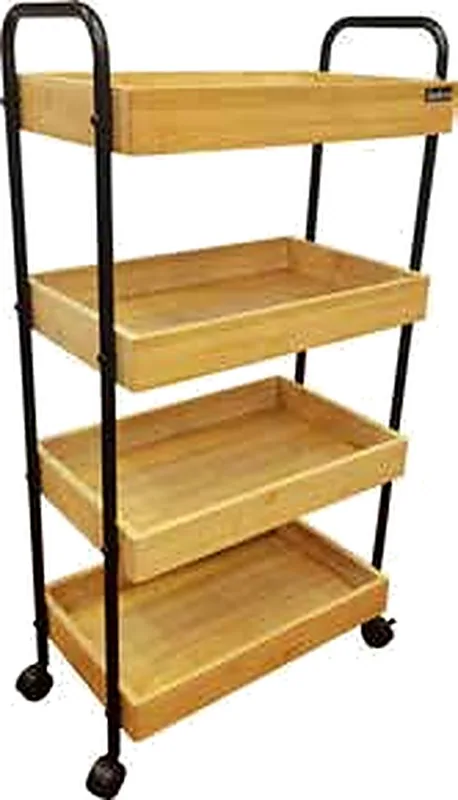
3-Tier Rolling Cart – Bamboo Baskets (TVD-5695) comes with three bamboo-trimmed baskets, a black metal frame and swivel wheels. That is the full list in our product listing. The cart is the mobile member of the Tiered Trays & Storage Carts line, where most items are tabletop stands; its job is to carry things from room to room rather than to sit on a vanity.
The three features each raise a buying question. “Bamboo-trimmed” asks how much of each basket is bamboo and what the rest is made of. “Black metal frame” asks what coating it has. “Swivel wheels” asks whether the wheels lock, because a cart without brakes on a sloped floor is a nuisance.
Who buys it and what they use it for
- Households use a three-basket cart for laundry supplies, craft materials, baby items or bathroom towels, parked beside a bath or in a pantry corner.
- Salons and spas roll one between chairs to carry towels, foils or products, with a black frame that suits a dark interior.
- Home-organisation and variety retailers sell it as a storage solution that fits a shelf-end display.
- Cafés and small restaurants sometimes use a baskets cart in back-of-house for produce, bread or paper goods. The listing does not describe a food cart, so food-contact checks apply (see below).
- Daycares and classrooms use mobile baskets for supplies; for anything intended for children, ask about the coatings and the rules that apply.
Reading the three features
Three bamboo-trimmed baskets. Baskets differ from solid trays: they hold loose items and let air through if they are open-weave, but they need a lining for very small objects. Trim means bamboo appears at the edges or handles; ask where it is used and how it is attached, because a basket that fails at a trim joint is the usual complaint with carts like this.
Black metal frame. A black frame hides scuffs and suits most interiors. The coating matters more than the colour: ask what it is, how it is applied and how it behaves in a damp laundry room.
Swivel wheels. Swivel wheels turn freely and make tight turns easy, but they also let a loaded cart drift. The buying tip for rolling carts in this line is to confirm the load per shelf, the wheel type and whether brakes are fitted to at least two wheels. Also check floor compatibility: hard wheels can mark soft flooring.
Quote checklist for a rolling cart
- Load limit per basket and for the whole cart, as stated by the factory.
- Wheel material, diameter and whether any wheel locks.
- Overall height, width and depth, and the basket sizes; full sizes are confirmed on the quote.
- Frame coating and basket material, including the bamboo trim.
- Assembly: how many parts, what tools and whether the instructions are bilingual.
- Packaging, carton size and quantity, and the minimum order.
Compared with other storage in the line
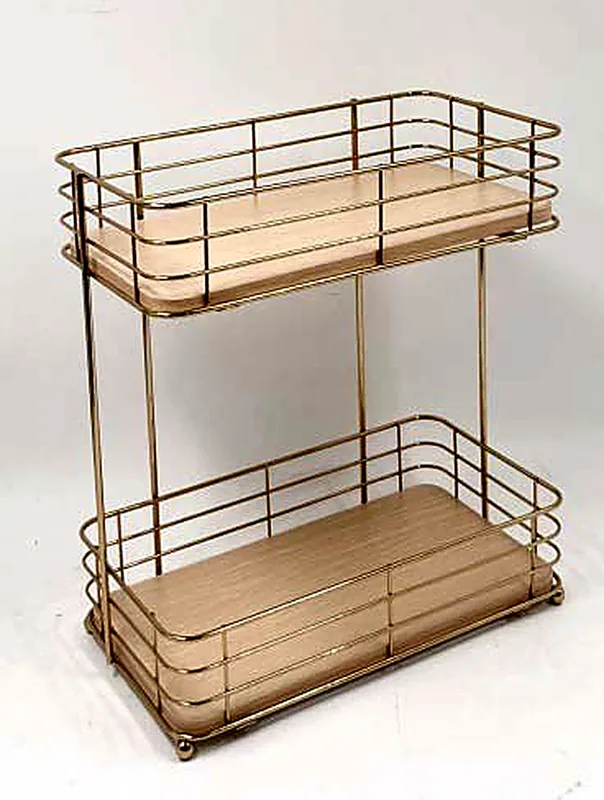
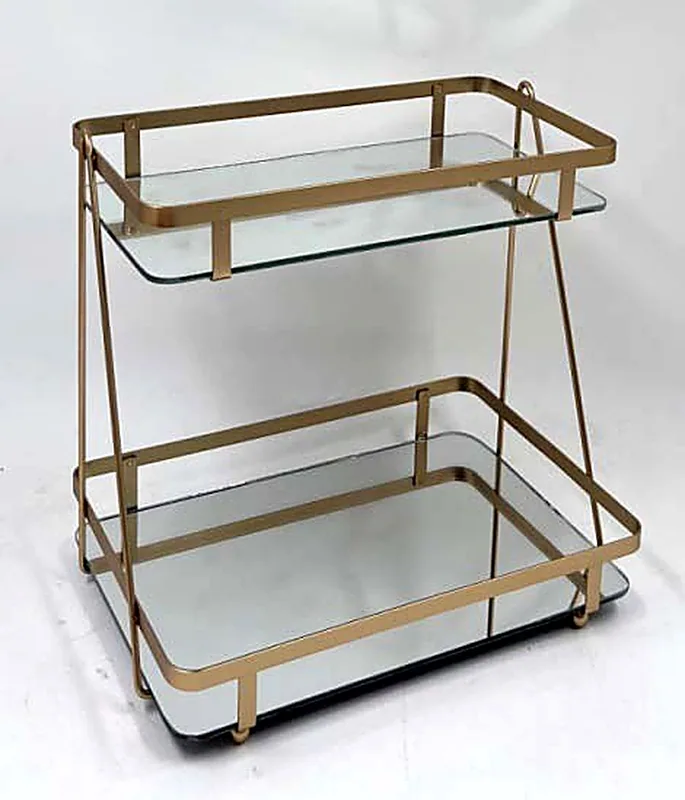
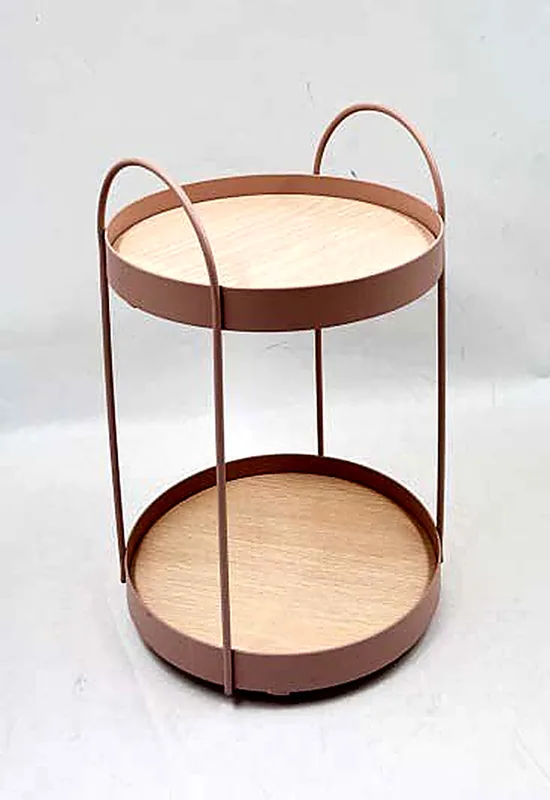
A cart with baskets suits loose items; a stand with tray shelves suits display. The Two-Tier Wire Rack – Rose Gold (TVD-2316) has wire sides and wood-look shelves, a more open alternative that you can read about in the TVD-2316 guide. The Two-Tier Mirror Tray Trolley – Champagne (TVD-2313) is a smaller trolley with mirror-finish trays, covered in the mirror trolley guide. If a customer wants storage that does not move, the Two-Tier Round Tray Stand – Rose Gold (TVD-2309) has carry handles and wood-look trays. Together these give a retailer a small ladder from tabletop to floor-standing storage.
Canadian notes: floors, winters and freight
Canadian homes have a mix of hardwood, tile and carpet, and swivel wheels behave differently on each. Salons and cafés with tiled floors may like hard wheels, while homeowners with hardwood may want soft ones, so ask what is fitted. In winter, bamboo and metal both react to the move from a cold truck to a heated shop; leave cartons to warm before unpacking and check each joint on arrival. Bamboo can also move slightly between humid coastal air and dry heated interiors, which is another reason to order a sample first.
Food, bamboo and coatings: what to ask
If the baskets or trim touch food, the Food and Drugs Act prohibits selling food in or with materials that may make it harmful, and Health Canada does not pre-approve kitchenware. For bamboo parts, ask for food-contact tests covering finishes and glues, and be aware that melamine-bamboo blends are not for microwave use. If the version you order is sold to schools or daycares, coatings on children’s products are subject to lead limits under the Surface Coating Materials Regulations. Prepackaged consumer units need bilingual product identity and net quantity, and in Quebec instructions and warranties must be available in French. No certification mark is on file for this product; we confirm certification status and supply documents with the quote before you order. The line guide to decorated and food-contact rules for tiered trays and carts has more. Rules change; confirm with the authority or your customs broker. This is not legal advice.
Ordering
Send your quantity and address through the quote request and we reply in writing with price, specification, certification status, packing, lead time and delivered cost. Samples are available on most items, and the sample cost is usually credited to your first order. Payment is 30% deposit and 70% before release. Carts are bulky, so plan freight with the landed cost calculator and the sales tax guide, and read how ordering works. A free account shows the full specifications on the product page.