Certification guide ·
Gold-Rim and Gold-Trim Bowls, Candy Dishes and Jars: What Canadian Importers Must Check
Gold rims, knobs and handles make serveware sell, and they are also the part an inspector or retailer will ask about. Here is what to request before you order a decorated food-contact piece.
Why decoration changes the compliance questions
A plain clear bowl raises one question: is the material safe for food? A bowl with a gold rim raises a second: what is the gold, where does it sit, and can anything in it reach food or a mouth? The Acrylic Bowls, Candy Boxes & Jars line includes a group of pieces with gold decoration, and this guide covers them. A companion article, Canadian rules for the plain food-contact pieces in the same line, covers the clear ones.
None of the pieces named here has a certification mark on file with us, and we make no certification claim for any of them. What follows is what a Canadian buyer needs and what we obtain and confirm before you order.
The decorated pieces and where the gold sits
The gold position tells you how much attention the decoration needs. Closer to the lip or the inside surface means a higher risk.
| Product | Gold feature | What to ask |
|---|---|---|
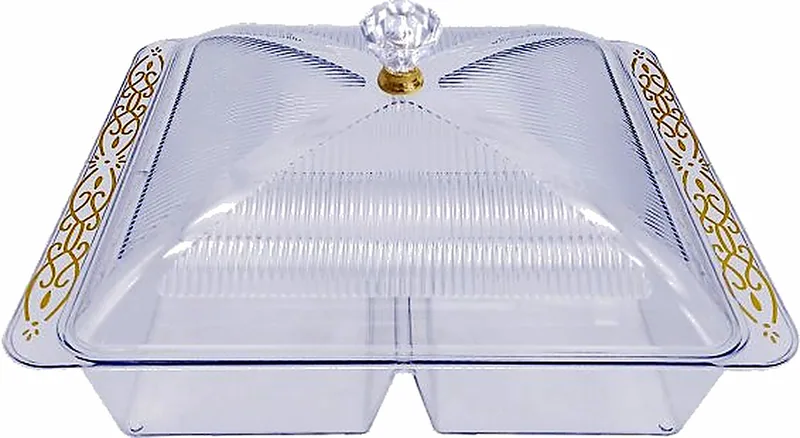
| TVD-2480 Divided Snack Tray with Gold-Trim Cover | Gold side trim on a clear cover | Does the trim touch food or only the cover's outside? |
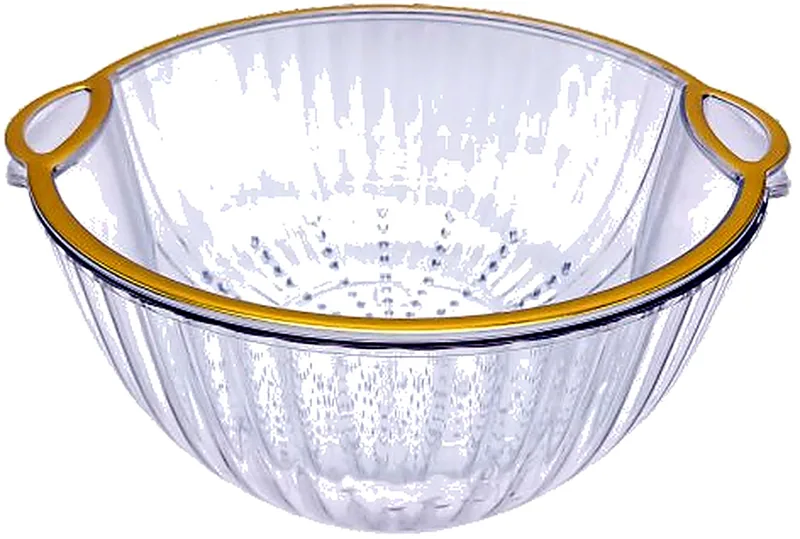
| TVD-2500 Ribbed Fruit Bowl – Gold Handles | Gold-tone side handles | Are handles a coating or a separate part, and are they away from food? |
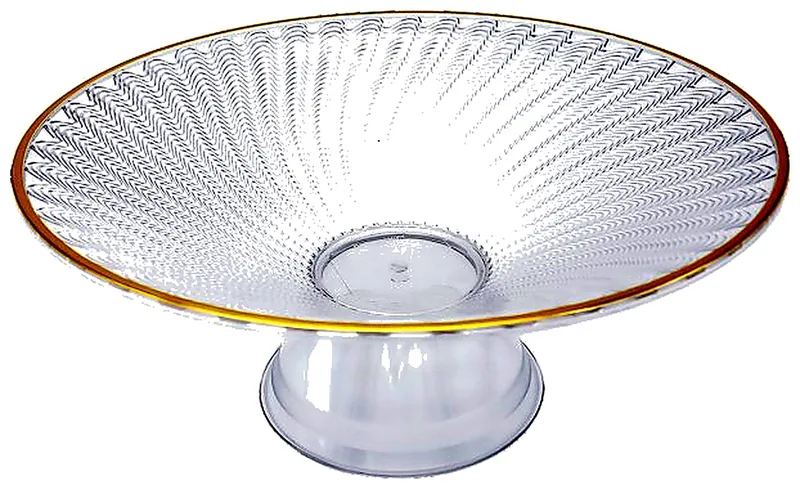
| TVD-2515 Footed Fruit Bowl – Gold Rim | Gold rim on a wide bowl | Rim decoration on the lip: ask for a lead and cadmium report. |
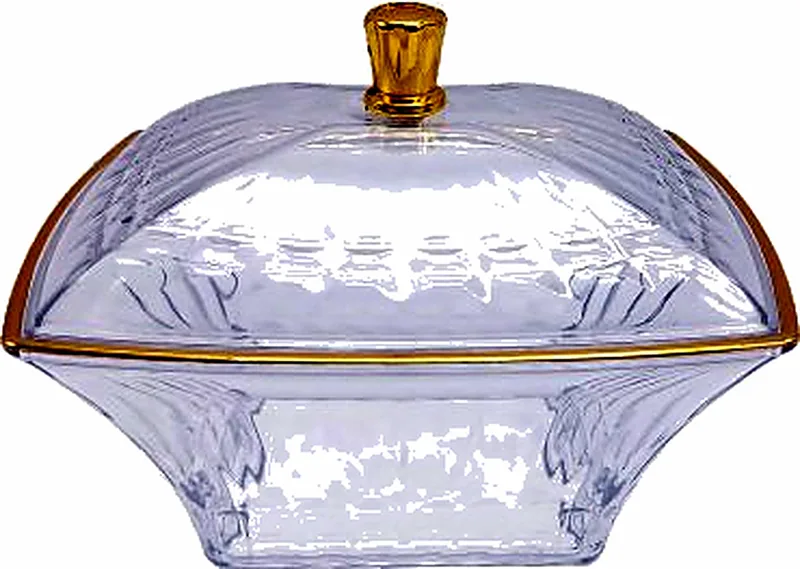
| TVD-2523 Square Candy Dish – Gold Knob | Gold knob lid, gold rim | Knob is away from food; the rim needs the report. |
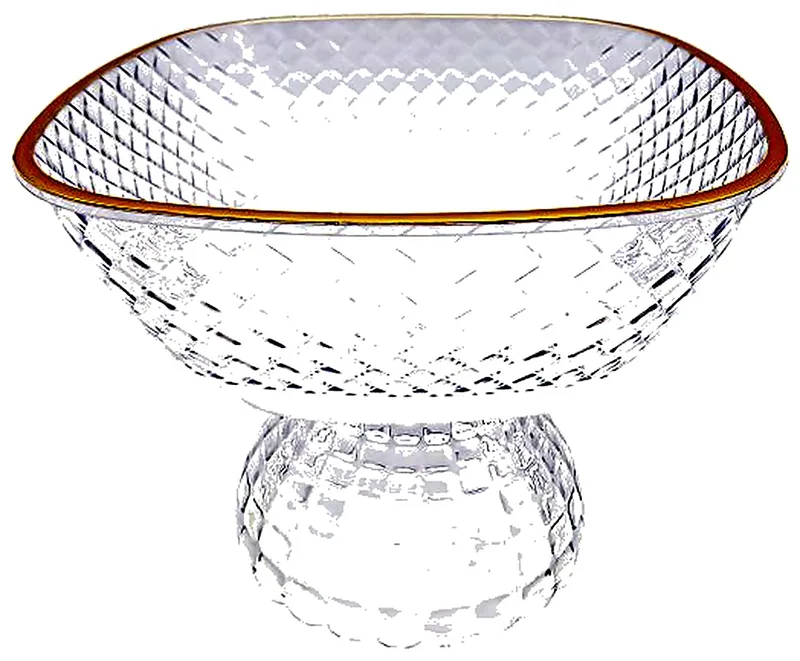
| TVD-2531 Diamond-Cut Square Bowl – Gold Rim | Gold rim, footed options | Decoration on the lip; confirm for each foot option. |
| TVD-2556 Gold-Handle Candy Jar – Crystal Cut | Gold handle on the lid | Lid handle metal finish; confirm it is not near the contact surface. |
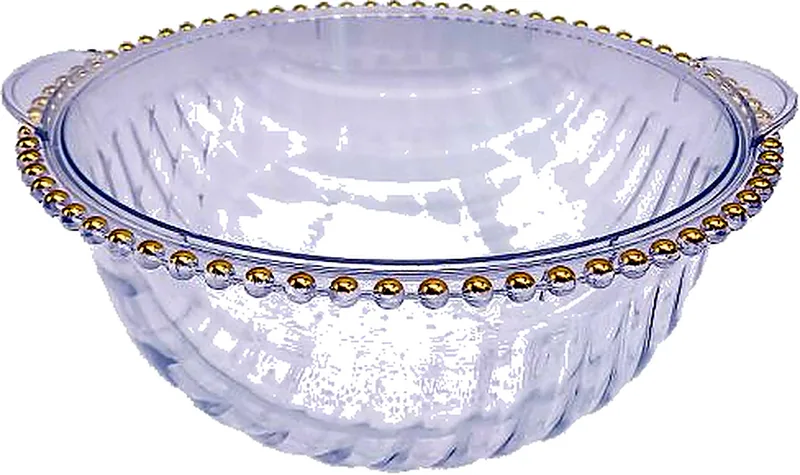
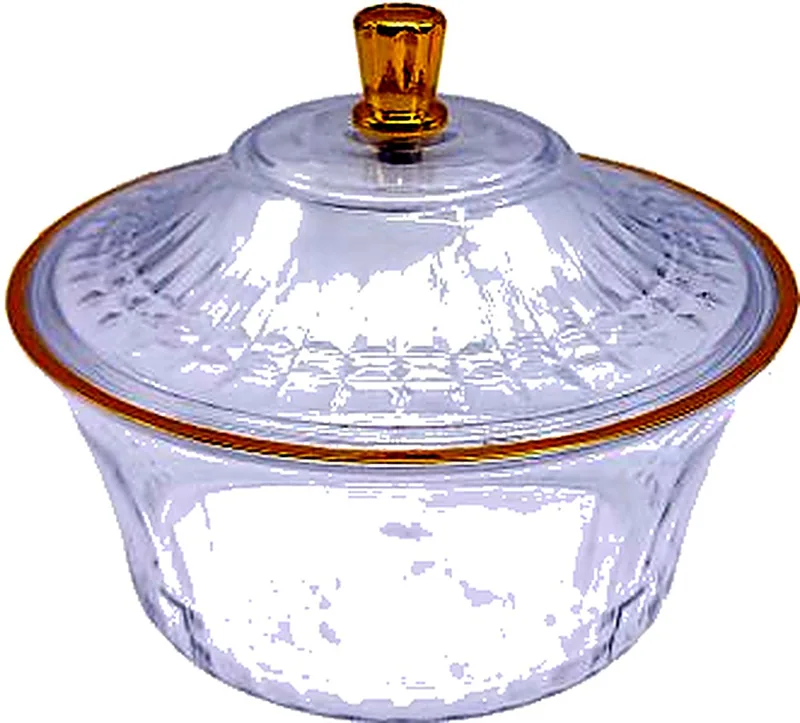
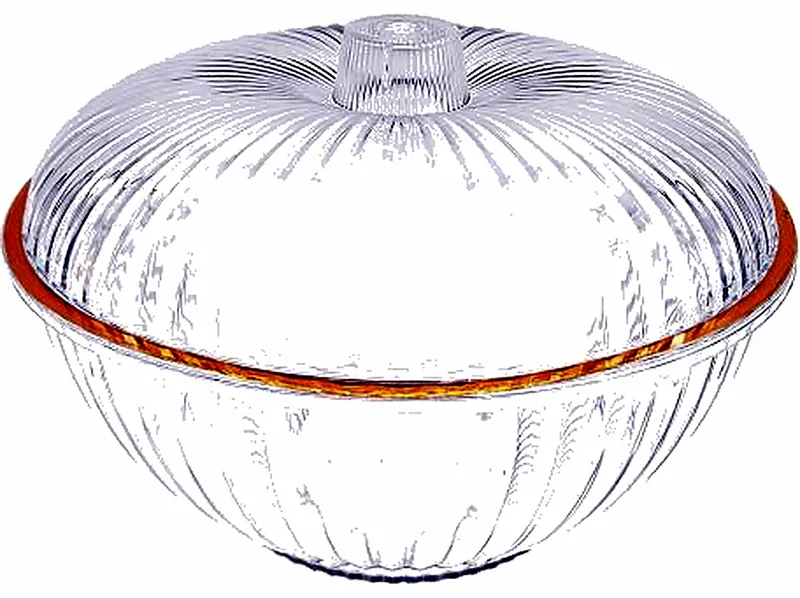
The group also includes TVD-2501 (Bead-Rim Serving Bowl with Handles), TVD-2524 (Round Candy Dish – Gold Knob), TVD-2526 (Ribbed Candy Bowl – Gold Rim Lid), TVD-2532 (Diamond-Cut Square Bowl with Lid), TVD-2533 (Round Candy Bowl – Gold-Rim Handle Lid), TVD-2553 (Gold-Base Candy Bowl with Dome Lid) and TVD-2565 (Footed Fruit Bowl – Gold Scallop Rim). Individual guides are available for TVD-2500, TVD-2501 and TVD-2556, and for the footed gold-rim bowls, gold-knob candy dishes, gold-rim lidded candy bowls and diamond-cut square bowls. The single-piece guide for TVD-2480 is the divided snack tray.
Which Canadian rules apply
Food and Drugs Act
Food must not be sold in or with materials that may make it harmful. Health Canada does not pre-approve kitchenware; it offers voluntary Letters of No Objection for food packaging materials only. Buyers therefore ask the factory for food-contact test reports, such as FDA or EU migration tests, for the base material and, for decorated pieces, for the decoration.
Glazed Ceramics and Glassware Regulations
These Canada Consumer Product Safety Act regulations set limits on lead and cadmium that can leach from glazed ceramics and glassware that contact food. Decorated rims and printed or metallic decorations near the lip are a known risk. Whether they apply to a piece depends on its material, which we confirm on the quote: if the version you order is glass or glazed ceramic, ask for a lead and cadmium test report on the decorated surfaces. If it is a plastic, the same report is still what a careful retailer asks for.
Consumer Products Containing Lead Regulations
These set lead limits that include kitchen utensils and products for young children. A candy dish is not always a utensil, but a candy dish sold in a children's party range is a different conversation, so ask us which description fits the product you plan to sell.
Canada Consumer Product Safety Act and labelling
The Act prohibits consumer products that are a danger to human health or safety, requires incident reporting and allows recalls, with Health Canada enforcing it. The Consumer Packaging and Labelling Act requires bilingual English and French product identity and net quantity on prepackaged consumer products, plus the dealer's name and place of business. In Quebec, labels, instructions and warranty papers must be available in French.
Document checklist for decorated food-contact pieces
| Document | Why you need it | Who issues it |
|---|---|---|
| Food-contact migration test report for the base material | Shows the material is suited to food contact | Third-party laboratory, via the factory |
| Lead and cadmium test report on the decorated surfaces | Covers rims, trim and metallic finishes near the lip | Third-party laboratory, via the factory |
| Material and grade statement | Decides which rules apply to the piece | Factory, confirmed on our quote |
| Care and use rating (dishwasher, microwave, freezer) | Metallic finishes can wear or react; the rating sets your care label | Factory |
| Bilingual retail label artwork | Prepackaged goods need English and French identity and quantity | You or us, agreed on the quote |
What happens if something is missing
A missing report is a problem that shows up at the buyer's end. A national chain's compliance team may refuse to list a decorated piece without a lead and cadmium report. A product that exceeds a limit can be recalled under the Canada Consumer Product Safety Act at the importer's expense. Insurers and health units ask the same questions. The easiest time to ask for the paperwork is before the order, not after the cartons have landed.
How we handle it
For each piece, the written quote states the material and grade, the type and position of the decoration, the care rating, and the documents available. We confirm certification status and supply the documents with the quote before you order. If a report is missing, we say so, and you decide whether to order, request a test or choose a plain piece from the same line. Our customs broker confirms the tariff classification before we quote a delivered cost.
Duty depends on classification and origin, and GST, HST, PST or QST apply by province of delivery; the sales tax guide explains the differences, and the landed cost calculator helps you plan. Samples are available on most items, with the sample cost usually credited to the first order, and payment is 30% deposit and 70% before release. Request a quote on the quote page or see how ordering works. Rules change, so confirm with Health Canada, your health unit or your customs broker. This is not legal advice.