Certification guide ·
Tiered Trays and Storage Carts in Canada: Certification, Food-Contact and Import Rules
Tray stands, racks and rolling carts are simple products, but the surfaces, finishes and wood-look panels raise real questions for Canadian buyers. Here is what to ask for, and why.
What kind of rules apply to a tray stand
Most tiered trays and storage carts in our line are metal frames with tray shelves, sold for kitchen, bath or vanity storage. None of the products in this guide is described as plugged in, battery powered or gas fired, so there is no electrical or gas certification mark to chase. If a version you order includes lights, an electrical mark from a Standards Council of Canada accredited body is then required; see our guide to CSA, cUL and cETL marks. The rules that matter for these products are consumer product safety, food contact, coatings, composite wood, labelling and tax. No certification mark is on file for any product discussed here. We confirm certification status and supply the documents with the quote before you order.
Canada does not recognise the European CE mark as proof of compliance for consumer products, so a CE-marked stand still has to meet the Canadian requirements below.
Consumer product safety
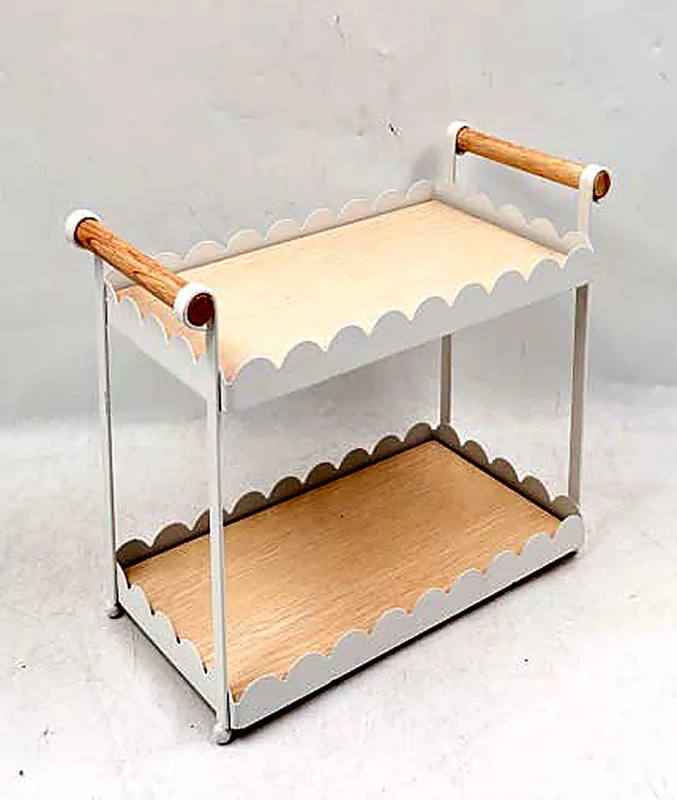
The Canada Consumer Product Safety Act applies to consumer products. It prohibits products that are a danger to human health or safety, requires incident reporting and allows recalls. Health Canada enforces it. For a stand or trolley, the practical points are sharp or burred metal and wire ends, mirror or glass edges, tipping when loaded unevenly, and small parts. Ask the factory how edges are finished and what load the stand carries. A trolley such as Two-Tier Trolley – White, Wood Handles (TVD-2318), with scalloped edges and wood handles, should be checked for splinters and handle fixings.
Food contact: when a tray serves food
The listed use is storage, but buyers often serve cakes, canapés or fruit from these stands. Provincial food premises regulations and local public health inspectors expect food equipment to be durable, easy to clean and sanitary, and many inspectors, landlords and franchisors ask for NSF/ANSI or an equivalent sanitation certification on commercial food equipment. Decide before you buy whether the product is a display piece or a food-handling piece, and check what your health unit and landlord require.
The Food and Drugs Act prohibits selling food in or with materials that may make it harmful. Health Canada does not pre-approve kitchenware. Buyers commonly ask the factory for food-contact test reports. If the trays are glazed ceramic or glass, the Glazed Ceramics and Glassware Regulations limit lead and cadmium that can leach, and decorated rims or printed and metallic decoration near the lip are a known risk: ask for a lead and cadmium test report. Bamboo shelves, such as those on 3-Tier Rolling Cart – Black Metal (TVD-5790) and 3-Tier Rolling Cart – Round Bamboo Corners (TVD-5788), call for food-contact tests on finishes and glues, and melamine-bamboo blends are not for microwave use.
Surfaces that need a specific question
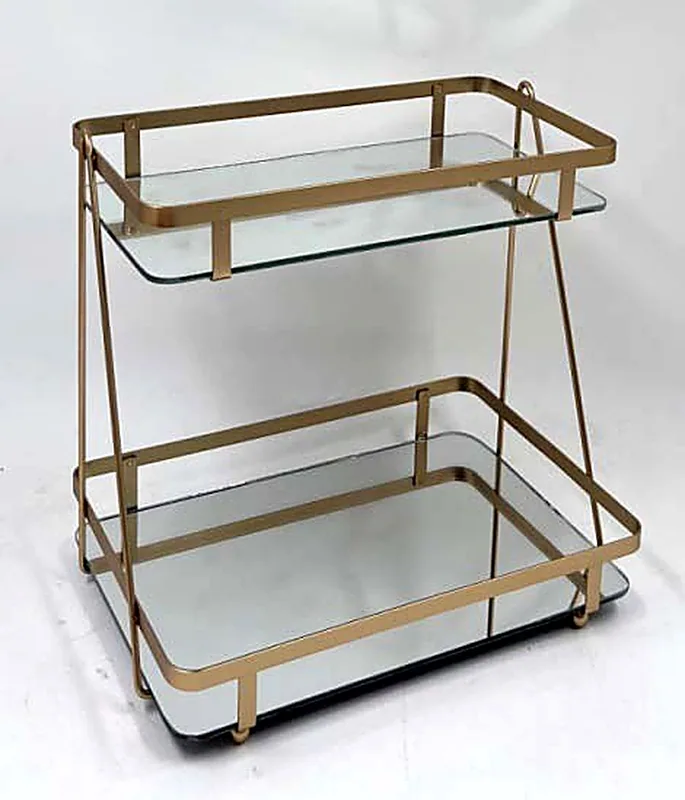
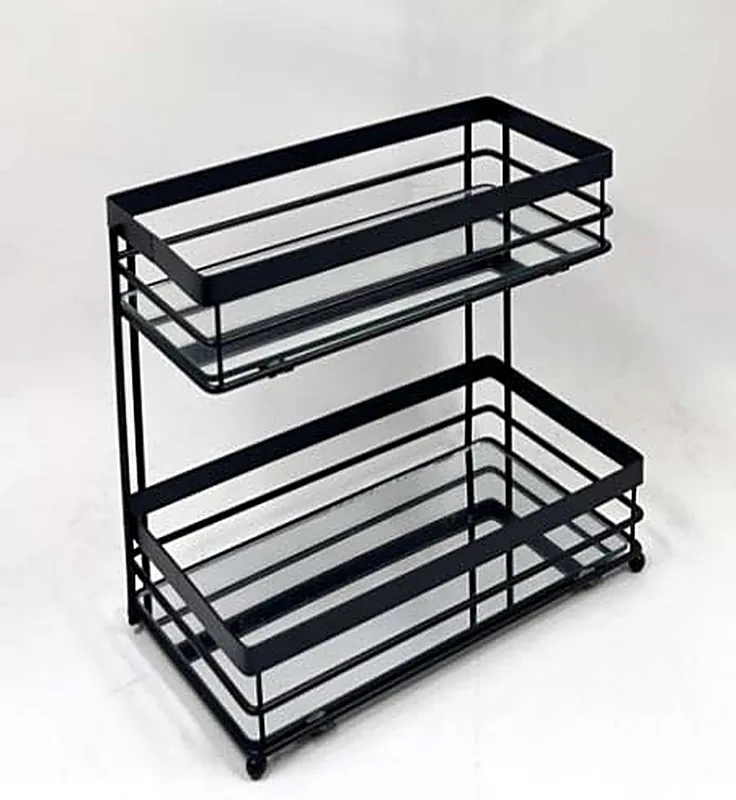
- Mirror trays such as Two-Tier Mirror Tray Trolley – Champagne (TVD-2313) and Two-Tier Tray Trolley – Champagne Mirror (TVD-2342): is the surface glass, acrylic or film, and how are the edges finished?
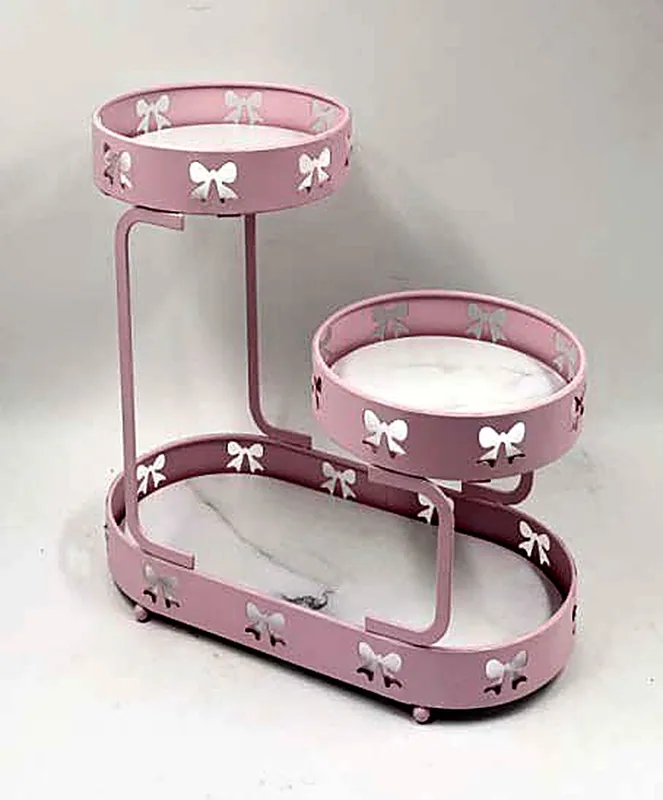
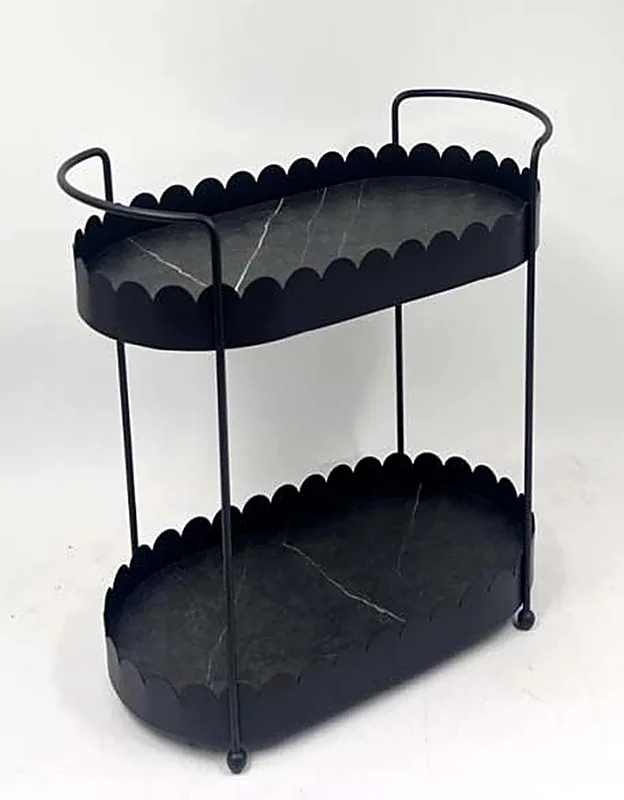
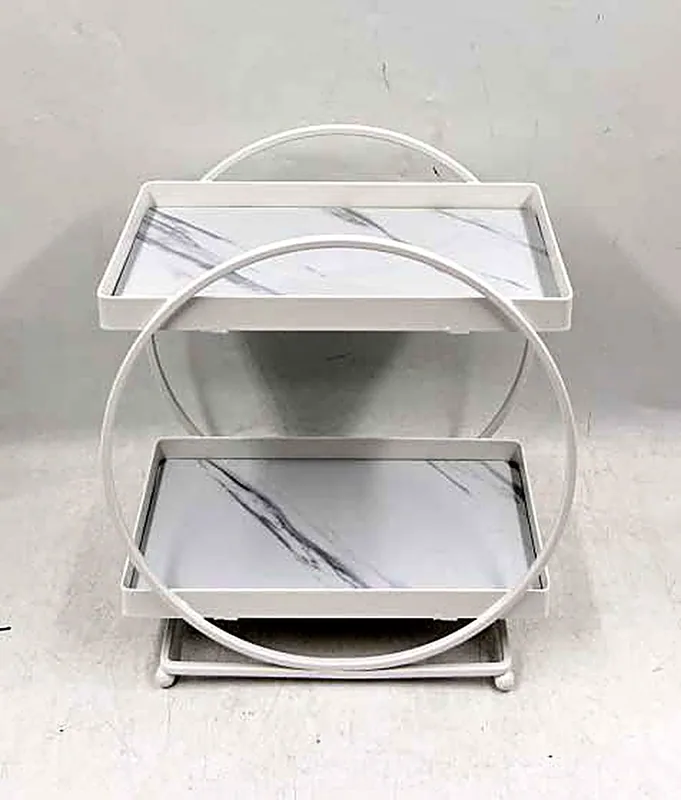
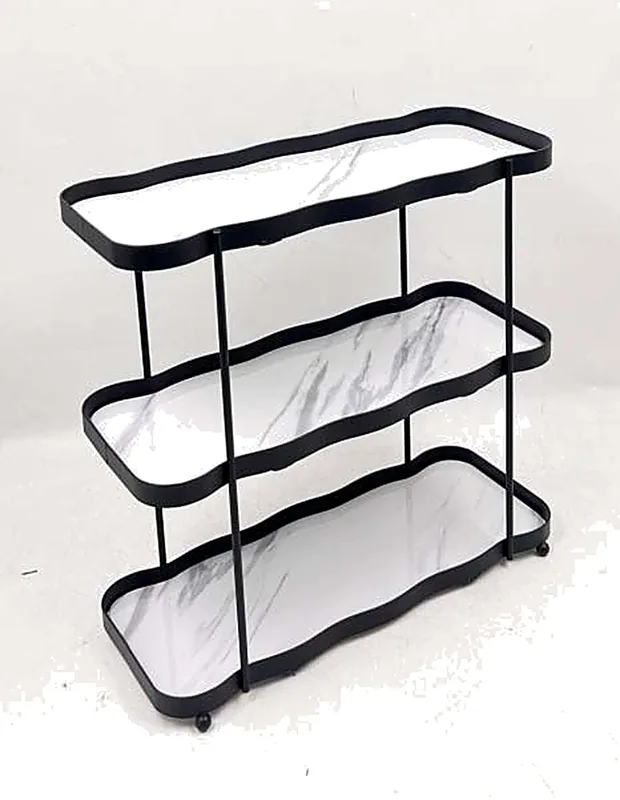
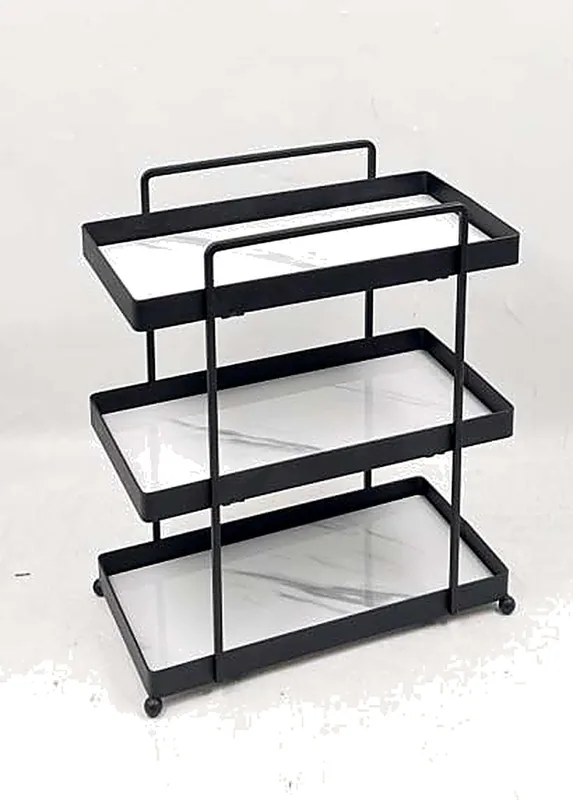
- Marble-look trays such as Two-Tier Ring Tray Stand – White Marble (TVD-2326), Three-Tier Tray Stand – Marble & Black (TVD-2337) and Three-Tier Tray Stand – Black & Marble (TVD-2338): stone, ceramic, resin or printed finish? Weight, edge safety and food-contact paperwork depend on the answer.
- Wood-look shelves and handles such as those on Two-Tier Tray Stand – Black Scalloped (TVD-2314) or Two-Tier Rack – Black Wire (TVD-2320): solid wood, laminate, composite panel or plastic?
- Coloured and metallic finishes such as pink, sage green, rose gold or gold: paint, powder coat or plating?
Canada limits lead and mercury in paints and coatings on furniture and on children's products under the Surface Coating Materials Regulations, and the Consumer Products Containing Lead Regulations cover kitchen utensils and products for young children. If a stand is sold for a child's room, ask for a coating report. Hardwood plywood, particleboard, MDF and laminated products must meet formaldehyde emission limits, be certified by an approved third-party certifier and be labelled under the Formaldehyde Emissions from Composite Wood Products Regulations; ask for the compliance certificate where a panel is used. Rolling carts with a drawer or cabinet, such as Bamboo Kitchen Cart with Cabinet (TVD-5700), are more likely than a simple stand to use composite panels.
Document checklist
| Document | Why you need it | Who issues it |
|---|---|---|
| Food-contact test report | Shows surfaces that touch food do not release harmful substances | Testing laboratory, via the factory |
| Lead and cadmium report for glazed or decorated surfaces | Needed if any tray is glazed ceramic or glass, or decorated near the rim | Testing laboratory, via the factory |
| Coating declaration or test report | Lead and mercury limits on coatings for furniture and children's products | Factory or testing laboratory |
| Composite wood compliance certificate | Formaldehyde emission rules for panels | Approved third-party certifier |
| Written material and finish description | Settles what the wood-look, marble-look or mirror surfaces really are | Our written quote |
| Packing and carton details | Planning breakage protection and shelf-ready packaging | Our written quote |
Differences between products in the line
Simple two-tier stands with metal trays carry the fewest questions. Mirror and marble-look trays add edge, weight and food-contact questions. Wood-look shelves add the formaldehyde question. Three-tier rolling carts with bamboo-lined tiers and swivel wheels, such as 3-Tier Rolling Cart – Round Bamboo Corners (TVD-5788) and 3-Tier Rolling Cart – Black Metal (TVD-5790), add questions about castors, brakes, stability and bamboo finishes. Bamboo Kitchen Cart with Cabinet (TVD-5700) adds a drawer, a louvre cabinet and fruit baskets, which brings in the question of food contact on the baskets and the shelf. Single-product guides go deeper, for example the pink bow stand, the white marble ring stand and the sage green oval stand guides.
Provincial differences
Federal rules apply across Canada. Quebec adds the Charter of the French language: labels, instructions, manuals and warranty documents must be available in French, with French at least as prominent. Provincial health units differ in what they ask of food equipment, so ask your own. Quebec repealed its stuffing permit and label law on 9 December 2021, so no permit number is needed; if a cushioned fabric version is added, the Textile Labelling Act is the federal rule to check.
Labels and packaging
The Consumer Packaging and Labelling Act requires bilingual English and French product identity and net quantity on prepackaged consumer products, plus the dealer's name and place of business. A boxed stand on a shelf counts. Ask how mirror or ceramic trays are protected in the carton.
What happens if documents are missing
A food inspector can refuse equipment that is not durable or easy to clean, and a landlord or franchisor may refuse it without a sanitation certificate. A retailer may decline to list a product with no test reports, and a product found to be a danger to health or safety can be recalled. Duty and tax add cost: classification and origin set import duty, and GST, HST, PST or QST follow the province of delivery. Our customs broker confirms classification before we quote a delivered cost. See the sales tax guide and the landed cost calculator.
How we handle it
Each quote states price for the quantity, specification, certification status and documents, packing, lead time and delivered cost. We confirm certification status and supply the documents with the quote before you order. Rules change, so confirm with the authority, your inspector or your customs broker. This is not legal advice. Samples are available on most items, with the cost usually credited to the first order, and payment is 30% deposit and 70% before release. See how ordering works, the tiered trays and storage carts line or ask for a quote. Related single-product guides include black scalloped stands and mirror trolleys.