Certification guide ·
Restaurant Glassware Regulations in Canada: What Applies to Stemware, Tumblers and Decorated Glass
Plain stemware, patterned tumblers and boxed gift sets do not carry the same paperwork risk. This guide sorts our glassware and drinkware line by what a Canadian importer should request.
Where the line stands on certification
None of the glassware products discussed here has a certification mark on file. For glassware the questions are what can leach from it, whether it suits food contact and how it is labelled, rather than a single product mark. We therefore do not describe any item as certified or approved. We confirm certification status and send the documents we hold with each written quote, before you order. The line in question is our glassware and drinkware range: stemware, tumblers, dessert cups, glass jars and boxed gift sets, 79 products in all.
The rules that apply to glassware in Canada
- Glazed Ceramics and Glassware Regulations. Made under the Canada Consumer Product Safety Act, they limit the lead and cadmium that can leach from glazed ceramics and glassware that contact food and drink. Printed, painted or metallic decoration close to the lip is the recognised risk. Buyers ask for a lead and cadmium test report.
- Food and Drugs Act. Food may not be sold in or with materials that may make it harmful. Health Canada does not pre-approve glassware; buyers usually obtain food-contact test reports from the factory.
- Canada Consumer Product Safety Act. Products that are a danger to health or safety are prohibited, incidents must be reported and recalls are possible. Chipped or fragile glass is where this arises.
- Consumer Packaging and Labelling Act. A boxed or shrink-wrapped set sold at retail needs bilingual product identity and net quantity and the dealer's name and place of business.
- Quebec. Labels, instructions and any warranty document must be available in French, with French at least as prominent as English.
The European CE mark is not proof of compliance in Canada. A factory that supplies European test reports has given you useful evidence, but your buyer decides whether it satisfies their specification.
How the risk differs across the line
The table sorts representative items by feature, and what that feature means for the paper you ask for.
| Product | Feature from the product sheet | What to request |
|---|---|---|
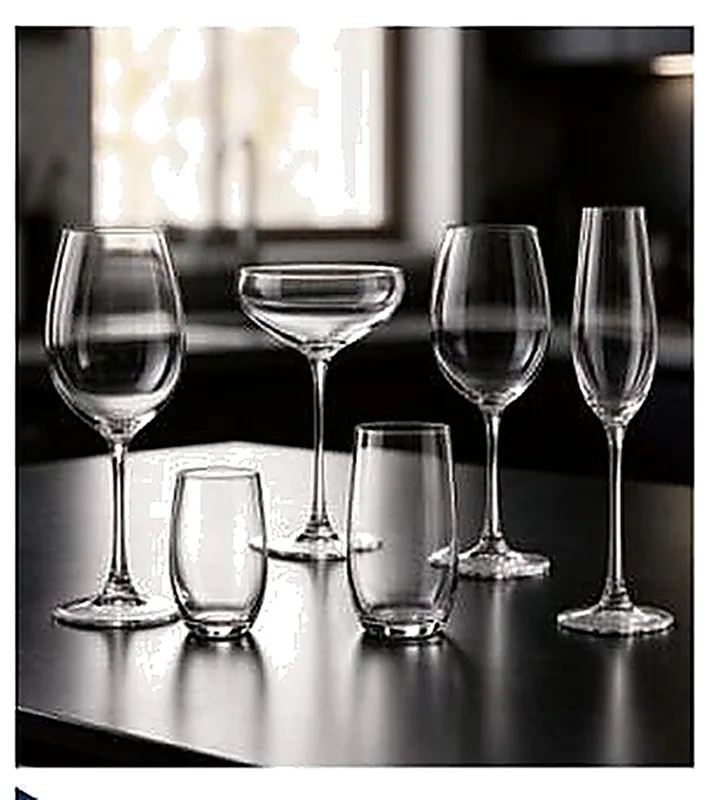
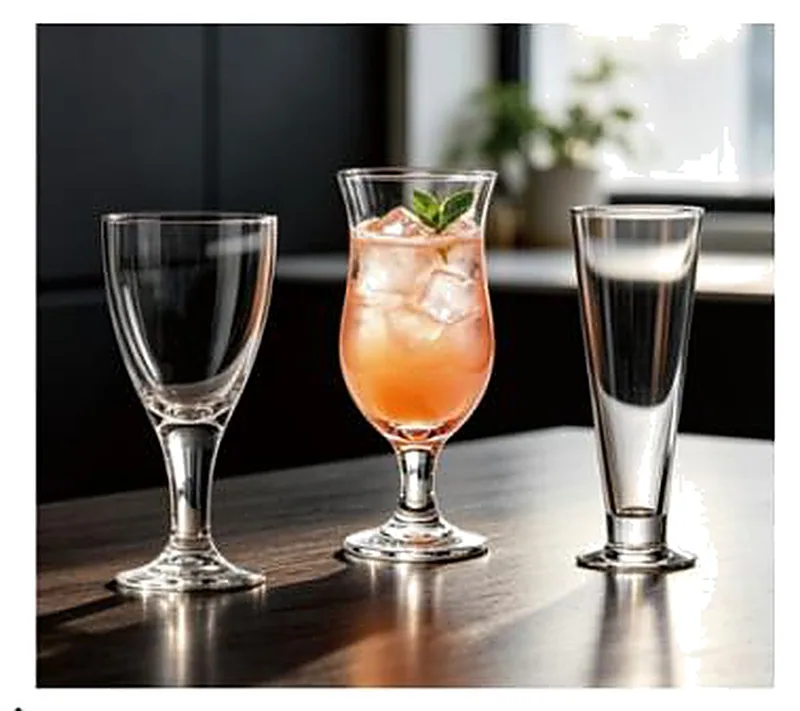
| TVD-4119 Premium Dining Stemware | Wine, champagne, coupe and cocktail; clear glass, minimalist shapes | Food-contact report; lead and cadmium report; rim finish description |
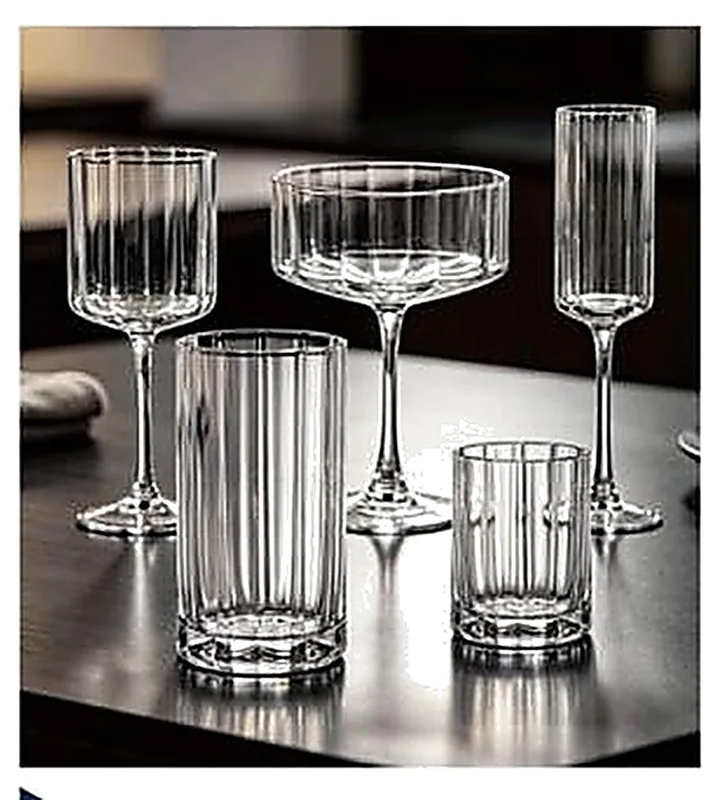
| TVD-4120 Fluted Glass Tumblers and Coupes | Vertical flute pattern moulded into the glass | Same as above; confirm the pattern is formed in the glass, not applied as a coating |
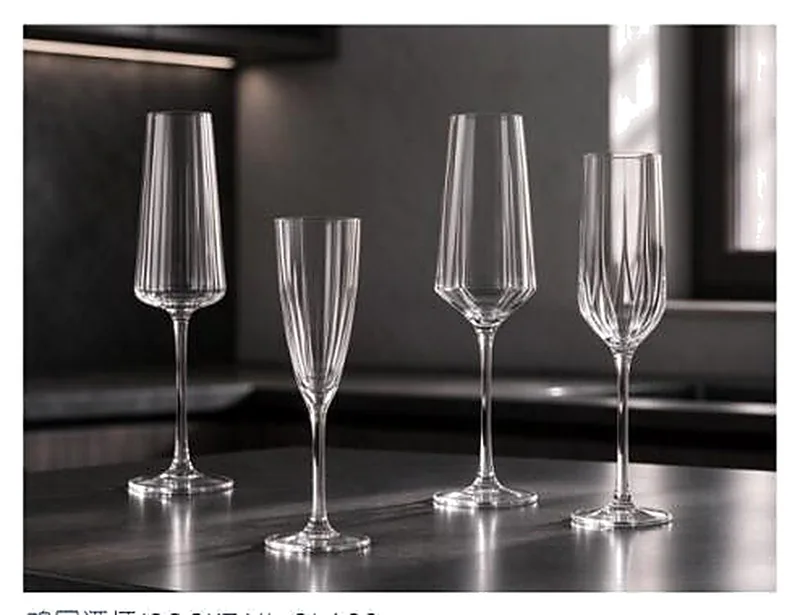
| TVD-4125 Champagne Flutes and Cocktail Glasses | Machine-made, two-piece jointed; flutes, martini, margarita | Same; ask how the stem joint is formed and about breakage in packing |
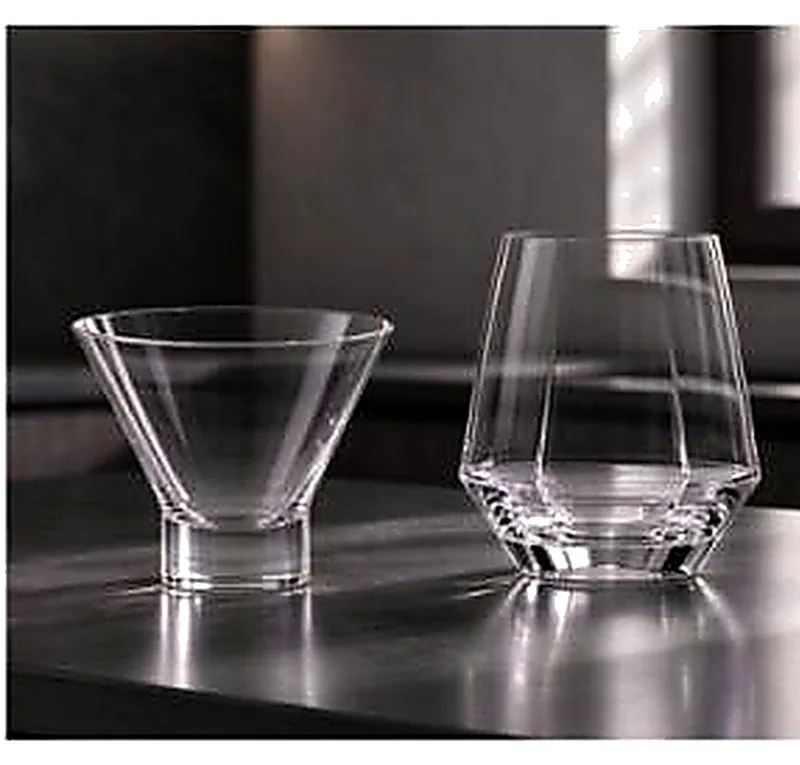
| TVD-4129 Machine-Blown Tumblers and Water Glasses | Machine-blown clear glass, stemless | Same; capacity tolerance and stacking packaging |
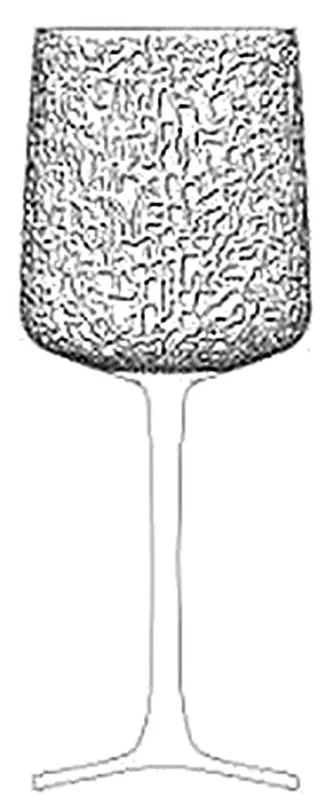
| TVD-4126 Textured Wine Glass, Speckle | Embossed and ribbed patterns | Same, plus confirmation that any speckle is in the glass and not painted on |
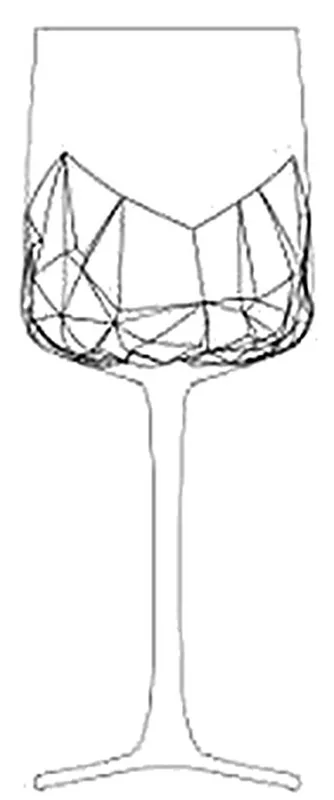
| TVD-10775 Geometric Band Wine Glass | Embossed and ribbed patterns; a band design in the name | Confirm the band is moulded in the glass; if any colour or print is added, a lead and cadmium report on that decoration |
Plain glass, patterned glass and decorated glass
Clear stemware and tumblers. These are the easiest to qualify. The questions are material, rim finish and capacity, and the test reports sit on file at the factory. Hotels and restaurants buying clear glass in volume should focus on breakage rates, pack-out and capacity consistency.
Moulded patterns. Fluting and ribbing formed in the glass do not add a coating, so the paperwork is close to clear glass. Verify this in writing, because a coloured speckle effect can be painted or sprayed.
Applied decoration. If you add or choose any printing, painted bands, gilding or metallic finish, that is where a lead and cadmium report is non-negotiable, especially if the decoration reaches the rim or lip area. Ask to see the report for the exact decorated item, not for a similar plain model. Items on the product sheets named for a pattern are described as embossed or ribbed, and we confirm on the quote whether anything is applied on top.
Machine-made versus stretch-formed. Machine-made two-piece stemware has a joined stem, while stretch-formed stemware such as TVD-4123 Stretch-Formed Juice and Goblet Glasses has an integrated stem. This affects how the glass breaks in service and in transit, so ask about strength and packing, though neither feature changes the regulatory category.
Restaurants, hotels and health units
Restaurants and hotels operate under provincial food premises rules and local public health inspectors, who expect equipment and tableware that are durable, easy to clean and kept sanitary. Glassware itself is rarely the issue; what they check is that it is clean, intact and fit for use. Event rental firms mostly worry about breakage and uniform capacity. If your landlord or franchisor names a specification, such as a particular test report, send it with your quote request so we can check it against what the factory can supply.
What happens if the paperwork is missing
- Retail chains, franchisors and tenders can refuse the product until reports are provided.
- A product that leaches excess lead or cadmium can be a safety problem for the importer and may lead to a recall.
- Labels without French can block Quebec shelves.
- Customs delays can follow if classification is wrong; our broker confirms the tariff classification before we quote a delivered cost.
How we handle it
You tell us the items, quantity and delivery address through the quote form. The written quote states certification status, the test reports we can supply, packing, label language, lead time and delivered cost. The process is described in how ordering works: samples on most items, low trial minimums on many lines and payment of 30% deposit, 70% before release.
For a single-product view of the stemware, read the buying guide for TVD-4119. If you are in British Columbia, see our restaurant glassware guide for BC for freight and tax detail, and our wholesale guide for the full range. Rules change, so confirm with Health Canada, your health unit or your customs broker. This is not legal advice.