Certification guide ·
Bear-Shape Plate and Bowl Set (TVD-10694): Children's Tableware Rules in Canada
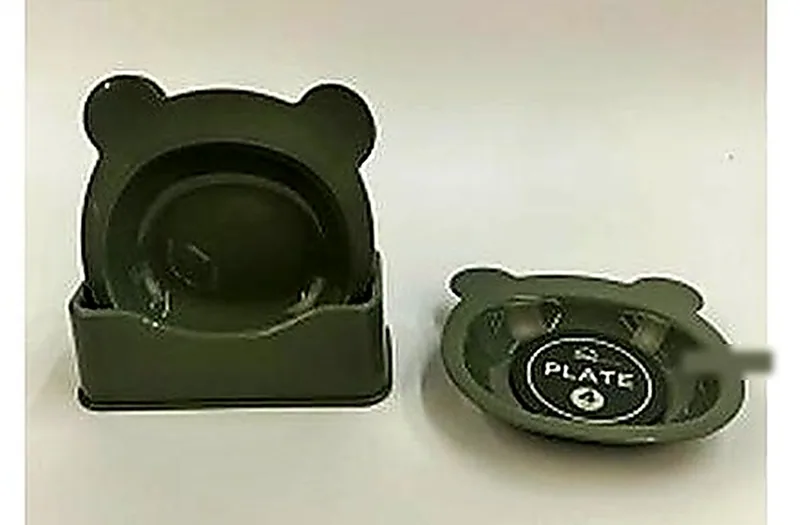
A bear-shaped kids plate at 154 mm sits in this set, which puts it under children's product rules as well as food-contact rules. This is the checklist we use before quoting it.
Children's tableware is where small mistakes get noticed fast, because the buyer is a parent and the user is a toddler. The Bear-Shape Plate and Bowl Set (TVD-10694) is described in our product listing as handled plates and bowls with a bear-shaped kids plate at 154 mm. Because the listing says kids, we treat it as a children's product from the first conversation. Who typically buys it: gift shops, toy and baby retailers, online sellers building a nursery or lunchtime range, and daycare or family cafés that want something friendly for small guests.
Certification status: none on file
There is no certification mark, test report or approval on file for TVD-10694 today. We therefore do not call it certified, compliant or approved. We confirm certification status and supply the documents with the quote before you order, and you can ask for the children's-product documents listed below at the same time as the price.
Rule 1: the product must not be dangerous
The Canada Consumer Product Safety Act applies to consumer products, and a kids plate is one. It prohibits products that are a danger to human health or safety, requires incident reporting and allows recalls, and Health Canada enforces it. For a bear-shaped plate, the practical questions are the edges, any small detachable part, and how the shape holds up to a child hitting it on a tray. Ask the factory about all three and approve a sample.
Rule 2: lead limits for young children
The Consumer Products Containing Lead Regulations set lead limits that cover kitchen utensils and products for young children. A kids plate sits in both groups at once. Ask for a lead test report that covers the colour and decoration on the bear plate, not a generic report for a different item.
Rule 3: coatings and paint
If any piece has paint or a surface coating, the Surface Coating Materials Regulations limit lead (90 mg/kg) and mercury in coatings on children's products. If the bear's face or other markings are printed, ask whether the print is a coating and what it was tested for. If the plate is glazed ceramic, the Glazed Ceramics and Glassware Regulations also limit lead and cadmium that can leach from food-contact surfaces, and decorated or metallic areas near the lip are a known risk.
Rule 4: soft vinyl and phthalates
Phthalate limits apply to soft vinyl in childcare articles and toys. Our listing does not say the set contains soft vinyl, so we do not assume it. If the version you order has a flexible vinyl part, a rubber-like rim or a soft handle cover, tell us and we will ask for the phthalate test result.
Rule 5: food-contact materials
Under the Food and Drugs Act, food may not be sold in or with materials that may make it harmful. Health Canada does not pre-approve kitchenware. Ask for food-contact test reports for the real material; the material itself is confirmed on your written quote because our listing does not state it. Buyers sometimes also ask whether the set is rated for microwave, freezer or dishwasher use. We confirm that as the factory rates it, and a bear plate that warps in a dishwasher is a returns problem for you.
Document checklist for TVD-10694
| Document | Why it matters | Who issues it |
|---|---|---|
| Food-contact test report | Shows the actual material was tested for migration into food | Accredited laboratory, through the factory |
| Lead test for children's items | Lead limits cover products for young children and kitchen utensils | Accredited laboratory, through the factory |
| Coating and paint test (lead, mercury) | Applies to coatings on children's products | Accredited laboratory, through the factory |
| Lead and cadmium test for glazed pieces | Applies if the plate or bowl is glazed ceramic | Accredited laboratory, through the factory |
| Phthalate result | Needed only if there is soft vinyl | Accredited laboratory, through the factory |
| Bilingual pack artwork | Identity, net quantity and dealer details in English and French | You, with our carton guidance |
| Customs classification | Fixes duty and delivered cost | Our customs broker |
Labelling and packaging for a kids set
Prepackaged consumer products need bilingual product identity and net quantity under the Consumer Packaging and Labelling Act, plus the dealer's name and place of business. For a gift shop or online seller, the pack is part of the sale: a clear window on the bear plate sells it. In Quebec, the Charter of the French language requires labels, instructions and any warranty text to be available in French, with French at least as prominent. Quebec retailers ask for this first.
Electrical and textile rules
As described, this set has no powered or battery part, so electrical marks such as CSA, cUL or cETL do not come into it; our marks explainer is for other purchases. It is also not a fabric item, so textile fibre labelling does not apply unless you add a fabric accessory such as a placemat.
What happens if the paperwork is missing
- A retailer's buyer or an online marketplace may refuse the listing until reports are provided.
- A product found to be dangerous can be recalled, and the importer carries the incident-reporting duty.
- Parents notice smell, peeling print and chips quickly, so a missing report often goes hand in hand with returns.
How ordering works
We send a written quote with the quantity, specification, certification status and documents, packing and delivered cost. Samples are available on most items and the sample cost is usually credited to the first order. Payment is a 30% deposit and 70% before release, delivered to your site, store or warehouse. See how ordering works and request your quote. If you also want the plain handled set, the Matte Green Handled Bowl Set guide covers the same product description in an adult-tableware setting, and the Matte Green Handled Dish Set collection covers the buying side. Rules change, so confirm with Health Canada, your provincial authority or your customs broker. This is general information, not legal advice.