Certification guide ·
Commercial Deep Fryer Certification in Canada: Gas, Electric and Paperwork
A gas fryer and an electric fryer follow different Canadian rules. This is what to confirm for the cabinet fryer before anything ships.
One fryer, two rulebooks
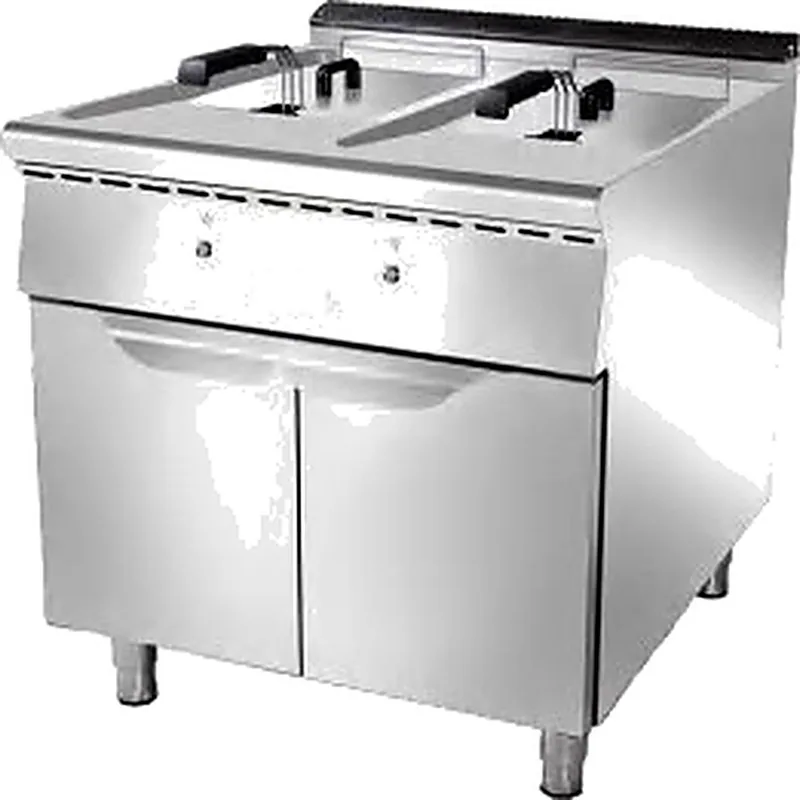
The Cabinet Fryer – Gas & Electric (TVD-2069) is a twin-tank fryer on a cabinet, sold in gas and electric versions at 800x900x850 mm. Because the two versions run on different energy, they follow different Canadian rules, and a quote has to say which version it covers. No certification mark is on file for TVD-2069 at the time of writing. We confirm certification status for the exact version you want, and send the documents with your written quote before you order.
If you order the gas version
Commercial gas cooking equipment needs a recognised certification to the gas food-service equipment standard, written as CSA/ANSI Z83.11 and CSA 1.8. Installation is regulated provincially and must be done by a licensed gas fitter: TSSA in Ontario, Technical Safety BC, the Régie du bâtiment du Québec in Quebec, and other provincial gas safety branches elsewhere. Equipment without a recognised gas certification can be refused at inspection. Field approval is sometimes possible, but it is costly. Confirm natural gas or propane, and the gas pressure, before ordering, because the orifices differ.
If you order the electric version
Electrical equipment sold or installed in Canada must carry a mark from a certification body accredited by the Standards Council of Canada, such as CSA, cUL or cETL, or a field evaluation label. Commercial cooking appliances are certified to a CSA C22.2 standard for commercial cooking appliances. Provincial electrical safety authorities enforce it, and an inspector can refuse uncertified equipment. A US-only mark, UL or ETL without the small “c”, is not enough. Our post on CSA, cUL and cETL marks explained explains what each looks like.
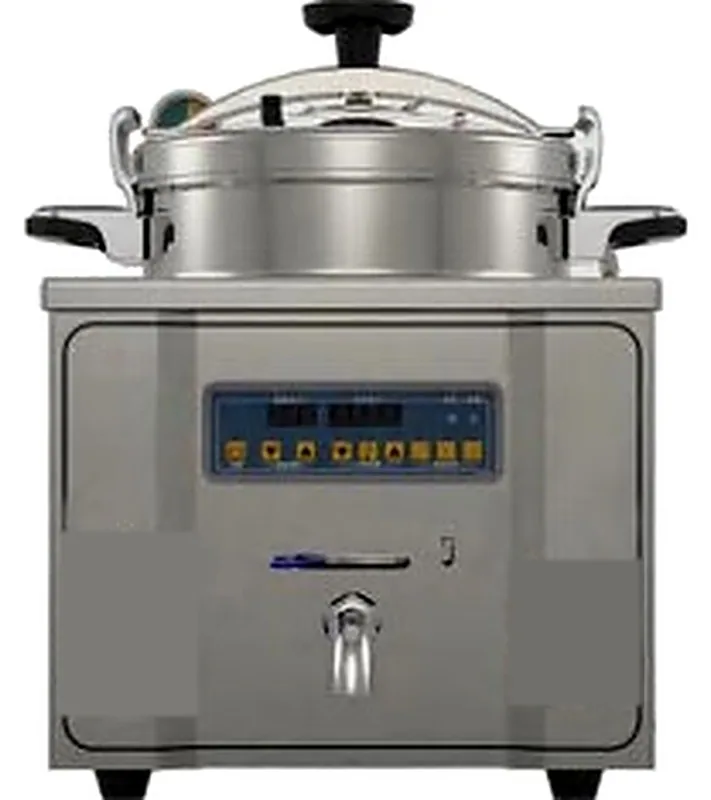
Voltage is the second trap. Canadian supply is 120 V and 240 V single-phase, and 208 V or 600 V three-phase, at 60 Hz. Some fryers in the same line are rated 220 V / 50 Hz, such as the Countertop Pressure Fryer (TVD-2070). Equipment with that rating must be confirmed as built for Canadian voltage and 60 Hz before ordering. The product page for TVD-2069 does not state a rating, so we confirm voltage, phase, frequency and amperage on the quote.
Food premises and sanitation
Provincial food premises regulations and local public health inspectors require equipment that is durable, easy to clean and sanitary. Many inspectors, landlords and franchisors ask for NSF/ANSI or equivalent sanitation certification, and NSF/ANSI 4 is the one for cooking equipment. Ask your health unit and your landlord what they require before you place an order.
Document checklist for a fryer
| Document | Why | Issued by |
|---|---|---|
| Gas certification report (gas version) | Shows recognised certification to the gas food-service equipment standard so the fitter and inspector can pass it | A recognised certification body |
| Electrical certification report (electric version) | Shows a Canadian mark, or a field evaluation label, for the electrical inspector | An accredited certification body |
| Gas type, input rating and connection size | Lets the gas fitter size the line and set the correct orifices | Manufacturer; confirmed on our quote |
| Voltage, phase, frequency, amperage | Lets your electrician size the circuit and confirm 60 Hz | Manufacturer; confirmed on our quote |
| Sanitation certification | Answers a health inspector, landlord or franchisor | An accredited sanitation certifier |
| French manual and labels (Quebec) | Quebec requires instructions, labels and warranty documents to be available in French | Manufacturer; requested on your behalf |
| Tariff classification and duty confirmation | Duty depends on classification and origin | Our customs broker |
What if a CE mark is all you are shown
Canada does not recognise the European CE mark as proof of compliance for gas, electrical or consumer products. A CE-marked fryer still needs the Canadian requirements above.
Provincial differences that matter for a fryer
- Ontario. Gas installation goes through TSSA; electrical through the Electrical Safety Authority.
- British Columbia. Gas work is regulated by Technical Safety BC.
- Quebec. The Régie du bâtiment du Québec regulates gas, and French labels, manuals and warranty documents are required to be available.
- Other provinces. Each has its own gas safety branch and electrical authority; ask yours before you order.
Rules change, so confirm with the authority, your inspector or your customs broker. This is not legal advice. Ventilation and fire-protection requirements for a fryer line are also set locally, so involve your designer and the fire authority early.
What happens if a mark is missing
The inspector may refuse to sign off the gas or electrical work, the fryer cannot be used, and your opening date slips. A field approval or evaluation can sometimes rescue the situation but adds cost and delay. That is why we put certification status in writing before you pay a deposit.
How we handle it
We confirm certification status and documents on the quote, ask for the French documents when Quebec delivery is involved, and have our customs broker confirm the classification before we quote a delivered cost. If the version you want has no recognised mark, we say so, and we discuss a source with a mark or a field evaluation. For layout and sizing, see the sibling article on buying TVD-2069 wholesale, or browse the Fryers line. Payment on every order is a 30% deposit and 70% before release; read how ordering works or send a quote request.