Certification guide ·
Gold-Trim Cake Stands and Dome Servers in Canada: Food-Contact, Decoration and Import Rules
Four dome servers in our cake stand range carry gold-tone decoration: a finial, a bead edge, a handle. Gold on a food-serving piece is where Canadian buyers should ask for test reports, and this guide shows which piece raises which question.
Why decorated stands need a different file
The plain cake stands in our Cake Stands & Tiered Servers range raise the standard food-contact questions. The four pieces in this guide raise one more: they carry gold-tone decoration. Metallic decoration on glassware and ceramics is a known risk area for lead and cadmium, and Canadian regulators, retailers and inspectors all know it. For plain stands see our food-only cake stand compliance guide.
None of the four has a certification mark on file with us, and we make no certification claim for any of them. Before you order, we confirm certification status and supply the documents with the quote. This guide explains what to ask for, and why.
The four decorated pieces
| Product | Listed features | Where the decoration sits | What to ask for |
|---|---|---|---|
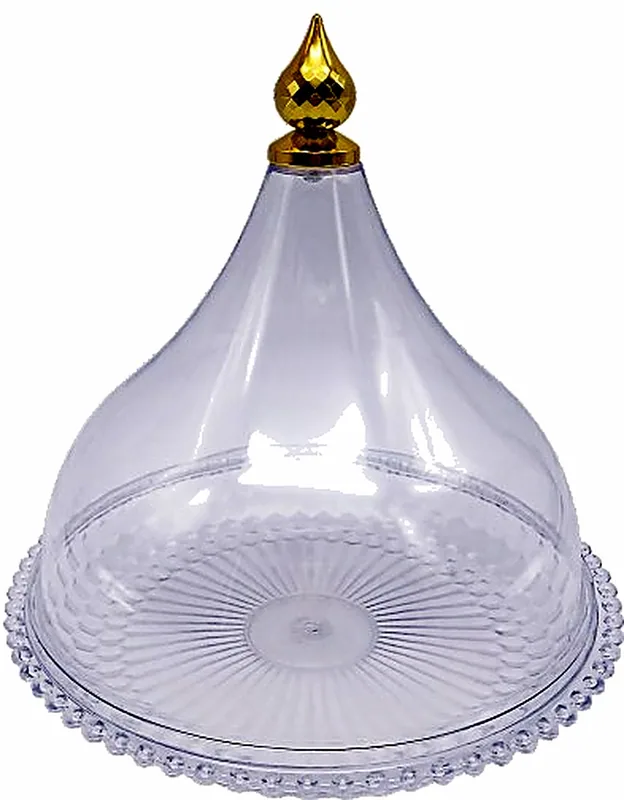
| Teardrop Dome Server (TVD-2484) | Teardrop-shaped cover with gold finial, round base plate | On top of the cover, away from the food | What the finial is made of, and a test report for it |
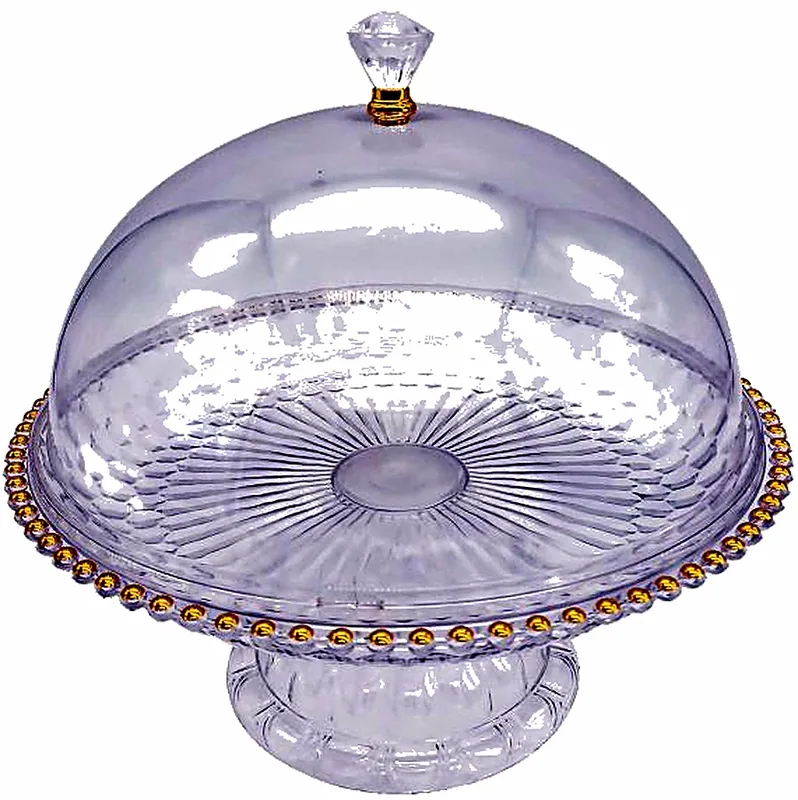
| Footed Cake Stand with Dome – Bead Edge (TVD-2534) | Clear dome on pedestal, gold bead edge | On the edge, where cover and plate meet | Lead and cadmium report for the edge decoration, and whether it can touch food |
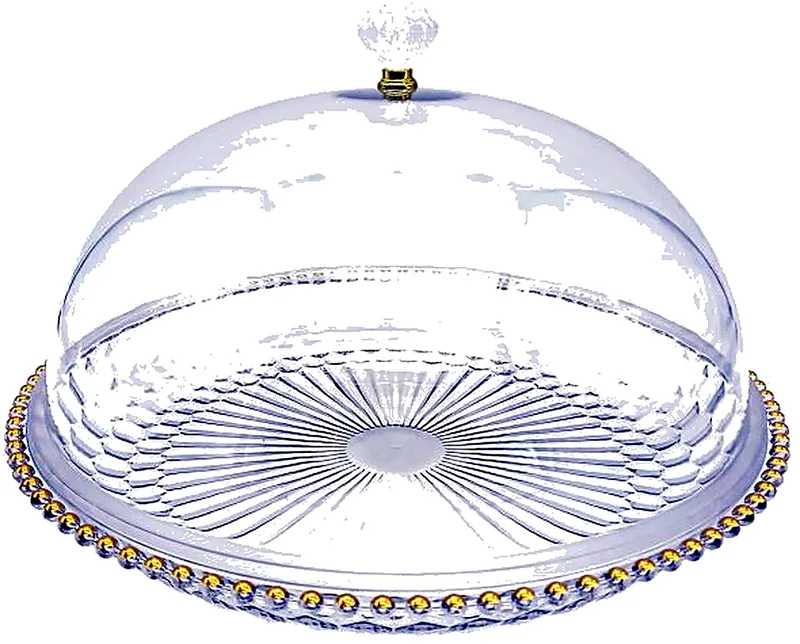
| Bead-Edge Round Cake Plate with Dome (TVD-2539) | Flat plate, clear dome, gold bead edge | On the edge of the plate and dome | Same as above; confirm whether the plate edge is where food is served |
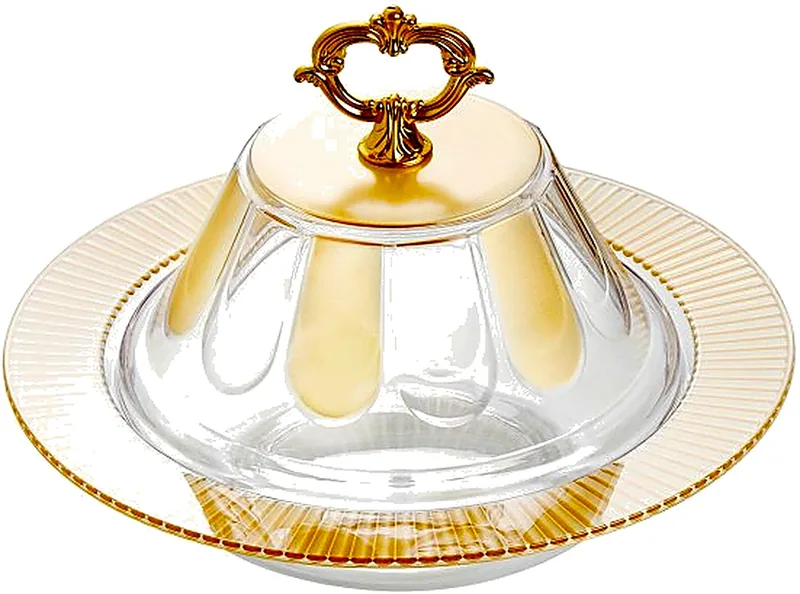
| Gold-Handle Dome Server on Plate (TVD-2554) | Gold-tone dome and handle, ribbed plate | On the dome and the handle | Coating or plating details, wear resistance and a test report |
We have a guide for each of the teardrop dome server, the bead-edge cake stand and the gold-handle dome server.
The rules behind the checklist
Food contact
The Food and Drugs Act prohibits selling food in or with materials that may make it harmful. Health Canada does not pre-approve kitchenware, but it does offer voluntary Letters of No Objection for food packaging materials. In practice, buyers ask the factory for food-contact test reports, such as FDA or EU food-contact migration tests. The listed features describe a clear dome on some items, but they do not name the material; we confirm it on the quote, because the right report depends on whether the dome and plate are glass, ceramic or a plastic.
Lead and cadmium on decoration
The Glazed Ceramics and Glassware Regulations under the Canada Consumer Product Safety Act limit the lead and cadmium that can leach from glazed ceramics and glassware that contact food. Decorated rims and printed or metallic decorations near the lip are the known risk. That is exactly the position of a gold bead edge, so TVD-2534 and TVD-2539 raise the question most directly. On TVD-2484 the finial is on top of the cover, and on TVD-2554 the gold-tone is on the dome and handle; both are further from the food, and both still deserve a report. The Consumer Products Containing Lead Regulations also include kitchen utensils.
Where the gold is a coating
If the gold-tone is a paint or plating on a metal part, ask what it is and how it wears. A coating that flakes under washing becomes a food-contact problem. Ask whether the factory states dishwasher suitability; do not assume it.
Labelling and packaging
Prepackaged consumer products need bilingual (English and French) product identity and net quantity plus the dealer's name and place of business. In Quebec, the Charter of the French language requires labels, instructions, manuals and warranty documents to be available in French, and Quebec retailers will ask for it.
Document checklist
| Document | Why it matters | Who issues it |
|---|---|---|
| Material declaration for dome, plate and decorated parts | Determines which test applies | Factory |
| Food-contact test report | Evidence the product is not made with materials that may harm food | Accredited lab, via the factory |
| Lead and cadmium test report on decorated surfaces | The known risk on gold and printed decoration | Accredited lab, via the factory |
| Washing and care instruction | Tells you whether decoration is dishwasher safe | Factory |
| Bilingual label and carton draft | Needed before any prepackaged sale | You, with our wording check |
| Tariff classification and origin | Sets duty and delivered cost | Our customs broker |
Provincial and retailer differences
- Quebec: French on labels, instructions, manuals and warranty, with French at least as prominent as English.
- Food premises across Canada: provincial regulations and local public health inspectors expect equipment that is durable, easy to clean and kept sanitary. Beaded or ribbed edges can collect residue, so ask your health unit what it expects.
- Franchisors, landlords and large retailers: many ask for NSF or equivalent sanitation certification on commercial food equipment, or a lead and cadmium report on decorated tableware. Ask your buyer what their file requires. We do not claim NSF for any of these items.
A CE mark does not stand in for any of this: Canada does not recognise the European CE mark as proof of compliance for consumer products. If a version you order has lighting or a mains plug, it is an electrical product and needs a recognised Canadian mark; the listed features show none.
If documents are missing
A retailer can decline to list decorated tableware without a lead and cadmium report. A health inspector can object to hard-to-clean equipment. If a decorated item sheds metal into food, the Canada Consumer Product Safety Act gives Health Canada powers over products that are a danger to health or safety, including incident reporting and recalls. Missing paperwork also makes an insurer's questions harder to answer.
How we handle it
We confirm certification status on the written quote and supply the documents with it, before you order. If a report is missing we request it from the factory or suggest a different item, such as a plain version from the cake stands range. Orders run on our ordering process: 30% deposit, 70% before release, samples on most items with the sample cost usually credited to the first order. Compare the printed three-tier stand compliance guide, read the crown-edge stand guide for an undecorated alternative, or send a list to the quote page. Rules change; confirm with Health Canada, your inspector or your customs broker. This is not legal advice.