Certification guide ·
Commercial Convection Oven Certification in Canada: What to Have Before It Ships
A convection oven that looks right on a spec sheet can still be refused at inspection. Here is what Canadian authorities look for on TVD-2072, and which documents we confirm with you before you order.
Where TVD-2072 stands today
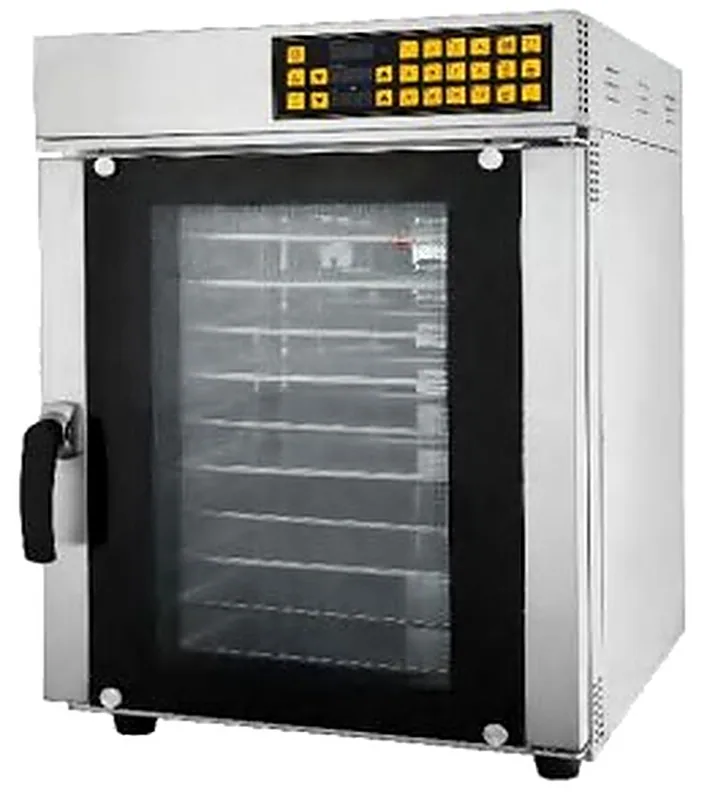
The Computer-Control Convection Oven (TVD-2072) comes in 5 and 10 tray models with computer board control, and its basic rating is 220 V / 50 Hz. No Canadian certification mark is on file for this product at the time of writing. That is not a verdict that it cannot be sold in Canada. It means you should not assume it will pass inspection, and it means we do the checking for you: we confirm certification status and supply the documents with the quote before you order.
This page explains the rules that apply to a commercial electric oven, so you can judge the answer you get from us, or from any other seller. It is general information, not legal advice. Rules change, so confirm with your provincial electrical safety authority, your health unit, your inspector or your customs broker.
The three questions every oven has to answer
1. Is there a Canadian electrical mark?
Electrical products sold or installed in Canada must carry a certification mark from a body accredited by the Standards Council of Canada, for example CSA, cUL or cETL, where the small "c" means Canada. The other route is a field evaluation or special inspection label from an accredited body. Provincial and territorial electrical safety authorities enforce this; in Ontario that is the Electrical Safety Authority. Inspectors can refuse uncertified equipment, and insurers may question it after a fire or claim. Our guide to CSA, cUL and cETL marks explained shows how to read each mark.
A mark without the "c", such as plain UL or plain ETL, is a United States mark and is not enough. Commercial cooking appliances are certified to a CSA C22.2 standard written for commercial cooking appliances, so a household-appliance mark does not answer the question either.
2. Does it suit Canadian power?
Canadian supply is 120 V or 240 V single-phase, and 208 V or 600 V three-phase, all at 60 Hz. Commercial buildings commonly have 208 V or 600 V three-phase. A rating of 220 V / 50 Hz must be confirmed as built for Canadian voltage and 60 Hz before ordering, because motors, timers and control boards can misbehave on the wrong frequency. For an oven with a computer control board and a circulation fan, that confirmation is the first item on our list. Larger convection ovens often need three-phase power, so check your electrical service before you commit.
3. Will the health inspector accept it?
Provincial food premises rules and local public health inspectors expect food equipment to be durable, easy to clean and kept sanitary. Many inspectors, landlords and franchisors ask for NSF/ANSI or an equivalent sanitation certification on commercial cooking equipment; NSF/ANSI 4 is the one that covers cooking. Whether yours asks depends on your health unit and your lease, so ask them before you order, not after the oven lands.
Document checklist for TVD-2072
| Document | Why you need it | Who issues it |
|---|---|---|
| Electrical certification mark and file number | Shows the oven meets the Canadian commercial cooking standard | A certification body accredited by the Standards Council of Canada |
| Field evaluation label (if no mark) | Lets an uncertified unit be inspected on site | An accredited body, after an on-site review |
| Rating plate showing voltage, phase, frequency and amperage | Lets your electrician size the breaker and wiring | Printed on the oven; confirmed on our quote |
| Sanitation certification, if your health unit asks | Satisfies inspectors, landlords and franchisors | A recognised sanitation certifier |
| Manual and labels in English and French | Required for Quebec delivery; useful everywhere | Confirmed on the quote |
| Customs classification and import documents | Sets duty and tax and clears the border | Our customs broker |
CE is not the answer
Canada does not recognise the European CE mark as proof of compliance for electrical, gas or consumer products. A CE-marked oven still needs the Canadian marks above. If a listing says "CE approved" and nothing else, treat that as the start of the conversation rather than the end of it.
Provincial differences that change the paperwork
- Ontario: the Electrical Safety Authority enforces electrical certification; gas work, if you ever pair the oven with a gas line for other equipment, goes through TSSA.
- British Columbia: Technical Safety BC covers electrical and gas installations.
- Quebec: labels, instructions, manuals and warranty documents must be available in French under the Charter of the French language, and the Régie du bâtiment du Québec regulates gas installation.
- Other provinces: each has its own safety branch and its own health-unit practices; ask your local office what it wants to see.
What happens if the paperwork is missing
An inspector can refuse to approve the installation, and your electrician may decline to connect the oven. Your insurer may question a claim involving uncertified equipment. A landlord or franchisor can ask for the oven to be removed. Field evaluation is sometimes possible, but you pay for it and it takes time, so it is a rescue option rather than a plan.
How we handle certification on a quote
Every order is quoted in writing. The quote states the specification, the certification status and the documents we can supply, so you see the real position before any money moves. Where a mark is missing we tell you, and we tell you whether a field evaluation is the way forward or whether a different model in the line is a better fit. Payment is a 30% deposit with the balance before release, so settle the certification question first. The full sequence is on how ordering works.
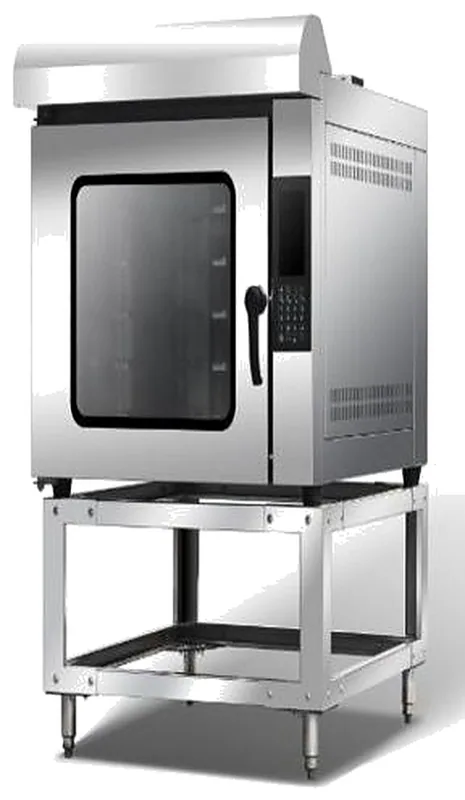
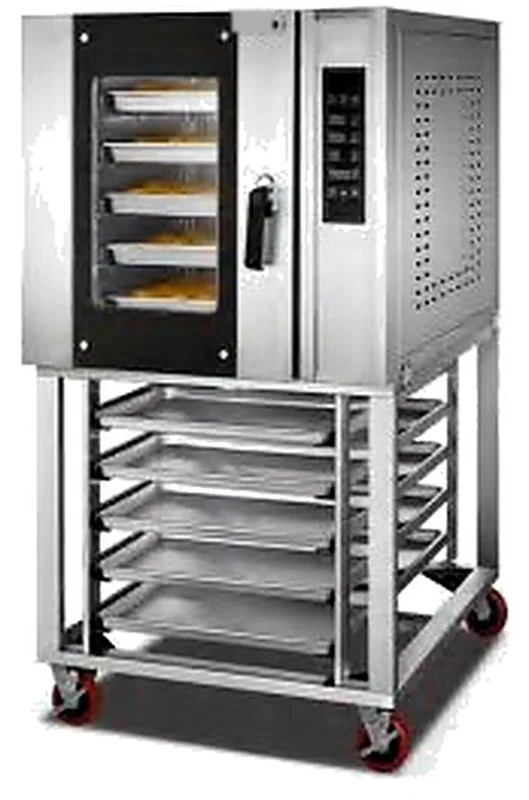
The rest of the line has different electrical profiles. The Rotary Convection Oven (TVD-2073) is electric with steam spray, while the Hot-Air Convection Oven with Stand (TVD-2074) comes in gas and electric versions, which adds gas certification, fuel type and pressure to the checklist. Browse them on the ovens and combi steamers page.
For the buying side of this oven, such as tray count, specification points and ordering, read the TVD-2072 wholesale guide. To start, send your province, power supply and quantity through the quote request.