Certification guide ·
Floral Glass Platter – Wide Rim: Canadian Certification and Compliance Checklist
No mark is on file for this printed glass platter. Here is what Canadian rules apply, what documents to request, and how we confirm them before you order.
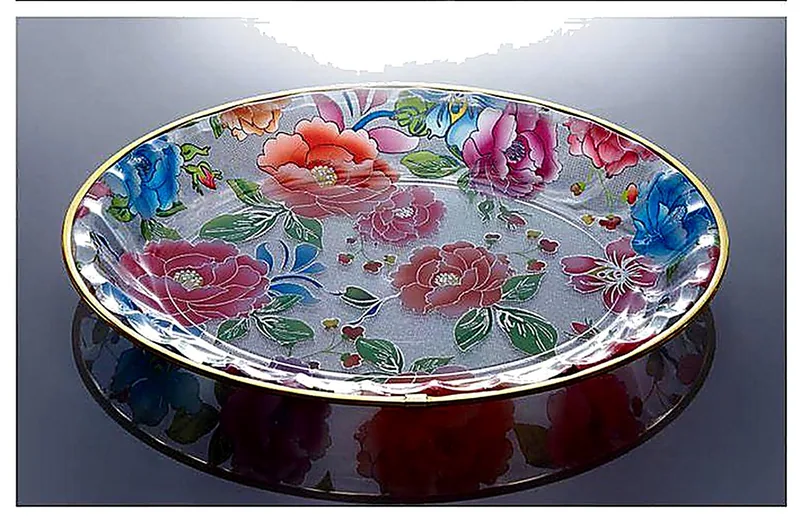
The Floral Glass Platter – Wide Rim (TVD-10311) is a floral-print clear platter, with gold-edge options and footed bowls shown with it. For a Canadian buyer, a printed, possibly gold-edged glass piece that carries food raises a specific set of questions. This guide explains which Canadian rules matter, what paperwork to request, and what we do and do not have on file.
Where this platter stands today
No certification mark or test report is on file for TVD-10311. That is a plain statement of where we are, not a warning against the product. For tableware like this, buyers commonly rely on test reports and on what their retailer, franchisor or health unit asks for, rather than on an electrical-style mark. We confirm certification status and supply the documents with the quote before you order, and we say clearly when something does not exist.
Which Canadian rules touch a decorated glass platter
- Glazed Ceramics and Glassware Regulations (under the Canada Consumer Product Safety Act): these set limits on lead and cadmium that can leach from glazed ceramics and glassware that contact food. Decorated rims and printed or metallic decorations near the lip are a known risk, and a floral print with gold-edge options is precisely that kind of decoration. Ask for a lead and cadmium test report that covers the decorated area of the version you will receive.
- Food and Drugs Act: it prohibits selling food in or with materials that may make it harmful. Health Canada does not pre-approve kitchenware, so buyers commonly ask the factory for food-contact test reports, such as FDA or EU food-contact migration tests.
- Consumer Products Containing Lead Regulations: lead limits that include kitchen utensils; ask whether a serving piece falls within them and what the factory report covers.
- Consumer Packaging and Labelling Act: prepackaged consumer products need bilingual product identity and net quantity plus the dealer's name and place of business.
- Quebec: under the Charter of the French language, labels, instructions and warranty documents must be available in French, and Quebec retailers will ask for it.
Rules change, so confirm current requirements with the authority, your health unit or your customs broker. This is not legal advice.
Document checklist
| Document | Why you want it | Who issues it |
|---|---|---|
| Lead and cadmium leaching test report on the decorated area | Shows the print and any gold edge sit within the limits for glassware that contacts food | Accredited test laboratory, requested through the factory |
| Food-contact test report (migration) | What retailers and inspectors usually ask for on serveware | Test laboratory, via the factory |
| Written specification: glass type, size, capacity, decoration method | So the report matches the exact version you receive | Factory, confirmed on our written quote |
| Heat and dishwasher statement, if you need one | Nothing in our listing states a rating; decorated glass can behave differently when hot or washed repeatedly | Factory, confirmed in writing |
| Labelling and packaging confirmation | Bilingual identity and net quantity, dealer details, French for Quebec | Us, with your retailer or compliance contact |
| Our statement of certification status | States plainly that no mark is on file and what documents are supplied instead | Thames Valley Distribution, on the quote |
The European mark question
Buyers sometimes ask whether a CE mark is enough. In Canada the CE mark is not recognised as proof of compliance for electrical, gas or consumer products. For a glass platter the relevant evidence is the test reporting above, not a CE logo. If a supplier offers one, treat it as a starting point and still ask for lead and cadmium results.
What happens if documents are missing
A retailer's compliance team can refuse to list the platter, a franchisor can reject it for service, and a regulator can act under the Canada Consumer Product Safety Act if a product is a danger to health or safety, including through recall. For a printed platter, the practical risk is a rejected shipment when a buyer's own lab tests the decorated lip and the results do not match the paperwork. Ask for documents before you commit.
How we handle it
We request the reports from the factory, check that they refer to the version you are buying, and put the findings on the quote with the price, quantity, packing and lead time. Samples are available on most items, and the sample cost is usually credited to the first order. You can read the marks in our CSA, cUL and cETL explainer, though most are for electrical products and do not apply to glass.
Related reading and next steps
The sister piece is covered in the floral glass platter guide for TVD-2711 and the certification guide for the gold-rim platter. If your project also involves seasonal printed trays, compare the holiday oval tray certification guide. The line is described in the compliance and import rules for printed and anti-slip trays and on the product line page. For delivery and tax, see the Canada delivery hub and the sales tax guide. When you are ready, read how ordering works and use the quote request; payment is 30% deposit and 70% before release.