Certification guide ·
Acrylic Serving Trays and Plates in Canada: Food-Contact, Finish and Import Rules
Twelve handle trays, plates and platters share the same food-contact questions but differ in finish. Here is what to check before importing them.
One line, many surfaces
Our acrylic serving trays and plates line covers handle trays, round plates, platters and rectangular trays. The listed features are about shape and surface: engraved patterns, moulded or cut-out handles, ribbed and crackle textures, beaded and wavy edges, and an iridescent finish. None of the products in this guide is shown with a plug, a heating element or a battery, so the rules that matter are food contact, decoration, labelling and import duty. This guide is the starting point for buyers who are comparing several of these trays before they ask for a quote.
Status: no certification mark or test report is on file for any product in this guide at the time of writing, so we make no certification claim for them. We confirm certification status and supply the documents with the written quote before you order.
Food contact is the first rule
The Food and Drugs Act prohibits selling food in or with materials that may make it harmful. Health Canada does not pre-approve kitchenware, but it offers voluntary Letters of No Objection for food packaging materials. For serving trays and plates, a buyer usually asks the factory for food-contact test reports, such as FDA or EU migration tests, that name the material of the tray. Ask for the report to state the material and grade, test conditions and date. A tray used under hot food, for example, needs different conditions from a display tray, so say how you will use it.
Where the products differ
The compliance work is not identical across the line, because the surface features differ.
| Product | Listed features | What changes in the paperwork |
|---|---|---|
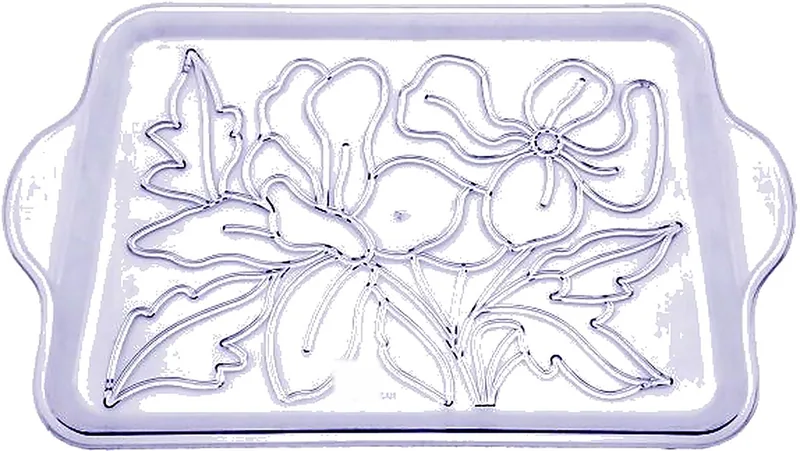
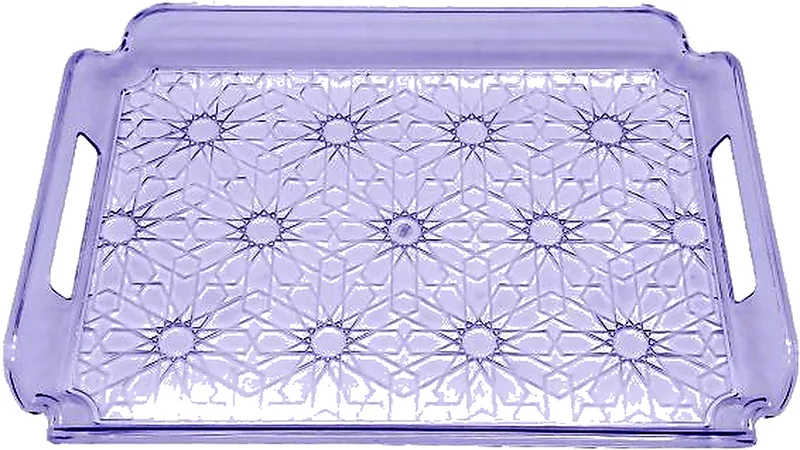
| TVD-2469 Floral-Engraved Handle Tray | Engraved floral pattern, moulded side handles | Engraving depth and cleaning; no applied decoration shown |
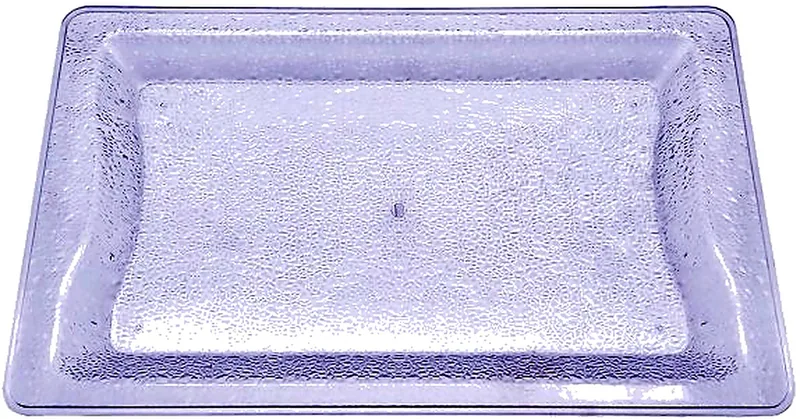
| TVD-2470 Glitter-Texture Rectangular Tray | Sparkle-textured surface, raised edge | Ask what the sparkle effect is and whether it is inside or on the surface |
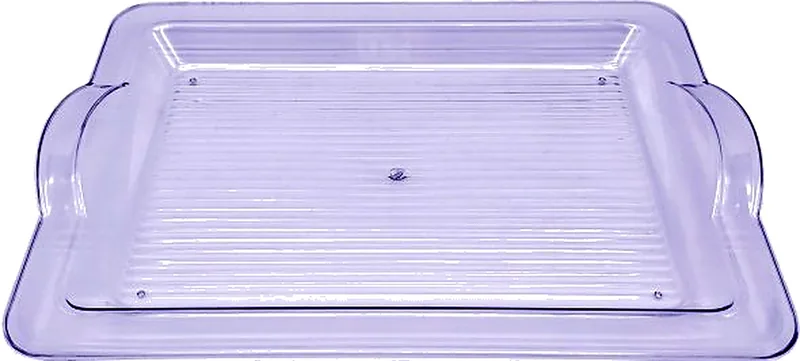
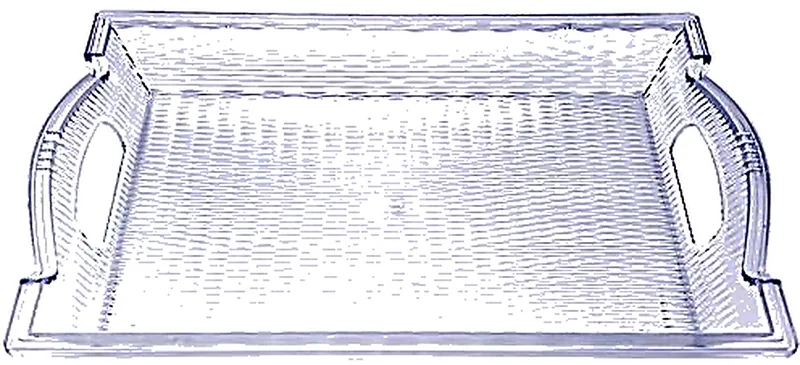
| TVD-2472 Ribbed Handle Tray | Fine ribbed surface, wing-style handles | Cleaning of ribs; standard food-contact report |
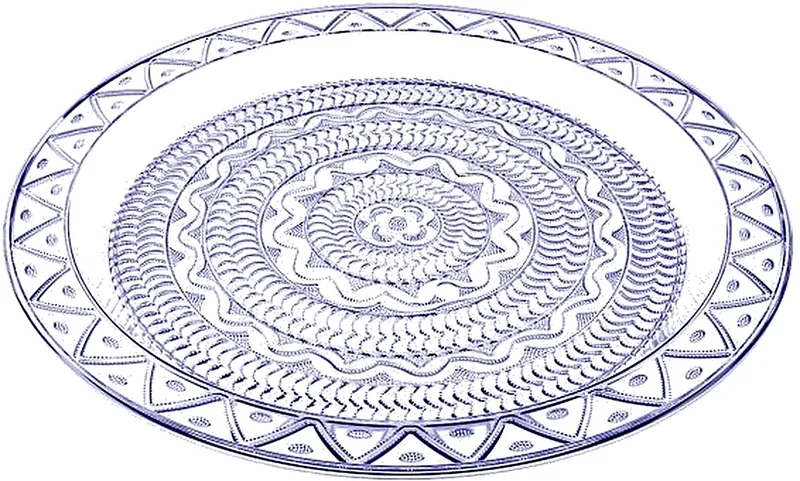
| TVD-2475 Engraved Round Plate | Engraved mandala pattern, round serving plate | A plate is more likely to touch food directly; ask for the report by shape |
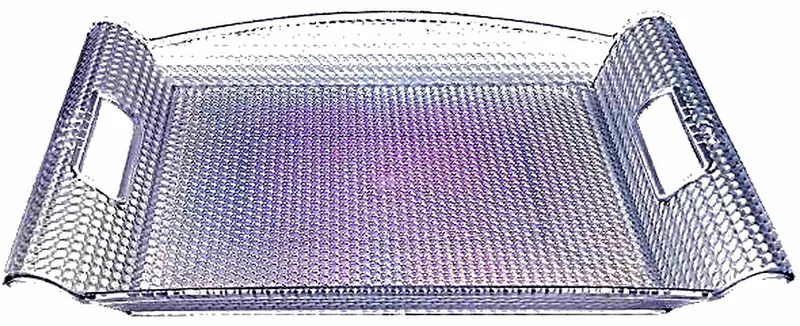
| TVD-2504 Iridescent Handle Tray | Rainbow-sheen finish, slot grip handles | Ask whether the sheen is a coating and where it sits relative to the food |
| TVD-2509 Scalloped Round Tray with Handles | Scalloped beaded edge, star cut-out centre | Cut-out centre: confirm it does not let liquid through |
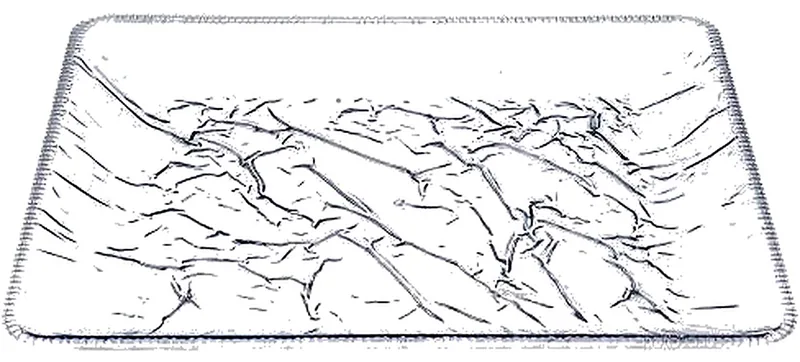
Also in this guide are the Geometric-Pattern Handle Tray (TVD-2477), the Rectangular Handle Tray – Slot Grip (TVD-2503), the Crackle-Pattern Serving Tray (TVD-2505), the Wavy-Edge Handle Tray (TVD-2507), the Engraved Round Plate – Floral (TVD-2508) and the Iridescent Rectangular Tray (TVD-2544). The last is the only one with a stated size, 26 x 17.5 x 2.5 cm; sizes for the others are confirmed on the quote.
Coatings and decoration: the iridescent and sparkle finishes
An iridescent or rainbow-sheen finish, and a sparkle-textured surface, can be achieved in several ways: in the plastic, as a thin film or as a coating. Ask the factory which method is used, because a surface coating is the part a retailer or inspector may ask about. If any decoration is metallic or printed and sits near the rim or on the food-contact face, ask for a lead and cadmium test report. The Consumer Products Containing Lead Regulations set lead limits that include kitchen utensils and products for young children. The Surface Coating Materials Regulations also limit lead (90 mg/kg) and mercury in paints and coatings on furniture and on children's products, which is relevant if the tray is sold as a children's party product.
Document checklist for the line
| Document | Why it matters | Who issues it |
|---|---|---|
| Food-contact migration report by material | Evidence the material suits food contact | Factory or accredited laboratory |
| Material and grade statement | Answers retailers and inspectors | Factory, shown on our written quote |
| Finish statement for sheen, sparkle or gold effects | Tells you whether a coating is present | Factory |
| Lead and cadmium report on any decorated or coated surface | Supports limits that apply to food-contact decoration | Independent laboratory |
| Care instructions | Acrylic is usually hand wash only; the label should say so | Factory text, checked by you |
| Bilingual retail packaging artwork | Required for prepackaged consumer products | You, approved on a sample |
Labelling, Quebec and CCPSA
The Consumer Packaging and Labelling Act requires prepackaged consumer products to show bilingual English and French product identity and net quantity, plus the dealer's name and place of business. In Quebec, the Charter of the French language requires labels, instructions and warranty documents to be available in French, with French at least as prominent, and Quebec retailers will ask for it. The Canada Consumer Product Safety Act prohibits consumer products that are a danger to human health or safety, requires incident reporting and allows recalls, and Health Canada enforces it.
The CE mark and electrical marks
Canada does not recognise the European CE mark as proof of compliance for consumer products, so a factory CE declaration does not replace the documents above. CSA, cUL and cETL marks, covered in our certification marks guide, apply to powered products and not to plain serving trays.
What happens if the paperwork is missing
A retailer can refuse to list an item with no food-contact evidence, a marketplace can remove a listing after a complaint, and a caterer can be told by an inspector to stop using unsupported serveware. Rules change, so confirm requirements with Health Canada, your health unit or your customs broker. This is not legal advice.
How we handle it
List the codes you are considering on the quote form. We confirm the material, certification status and documents with the factory and show them on the written quote with price, packing and lead time. Duties and taxes depend on tariff classification and origin; our customs broker confirms classification before we quote a delivered cost, and the sales tax guide explains GST, HST, PST and QST. Payment is 30% deposit and 70% before release; how ordering works covers the steps. Individual guides: TVD-2469, TVD-2470, TVD-2472, TVD-2475, TVD-2477, TVD-2503, TVD-2505 and TVD-2507.