Product guide ·
Floral Round Plate, Deep Plate and Oval Platter: A Wholesale Guide for Hotels and Restaurants
A flat plate, a deep scalloped plate and an oval platter share one floral specification. Here is how to match each piece to a venue and what to confirm first.
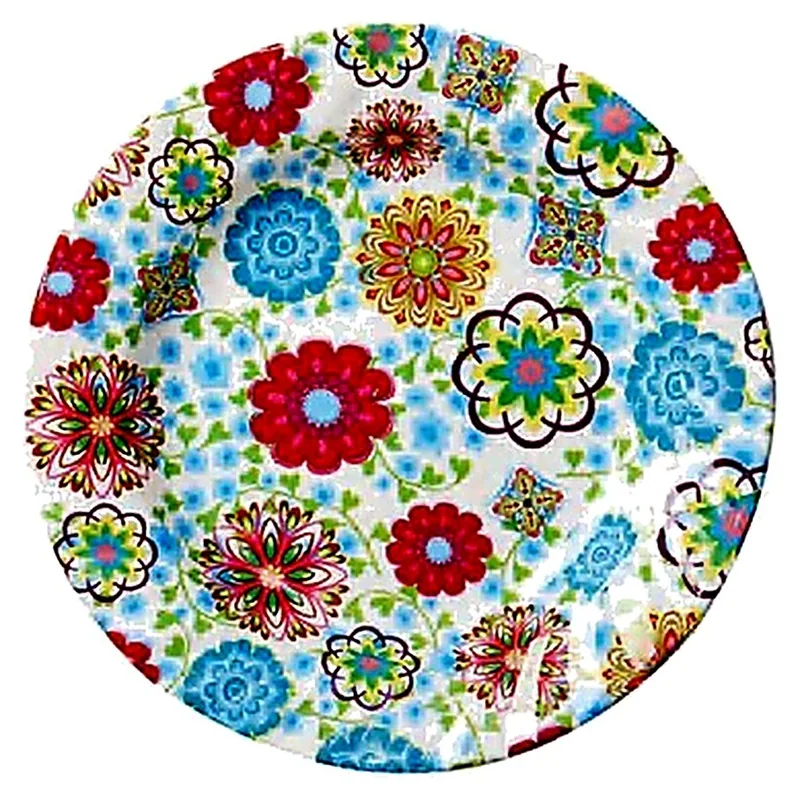
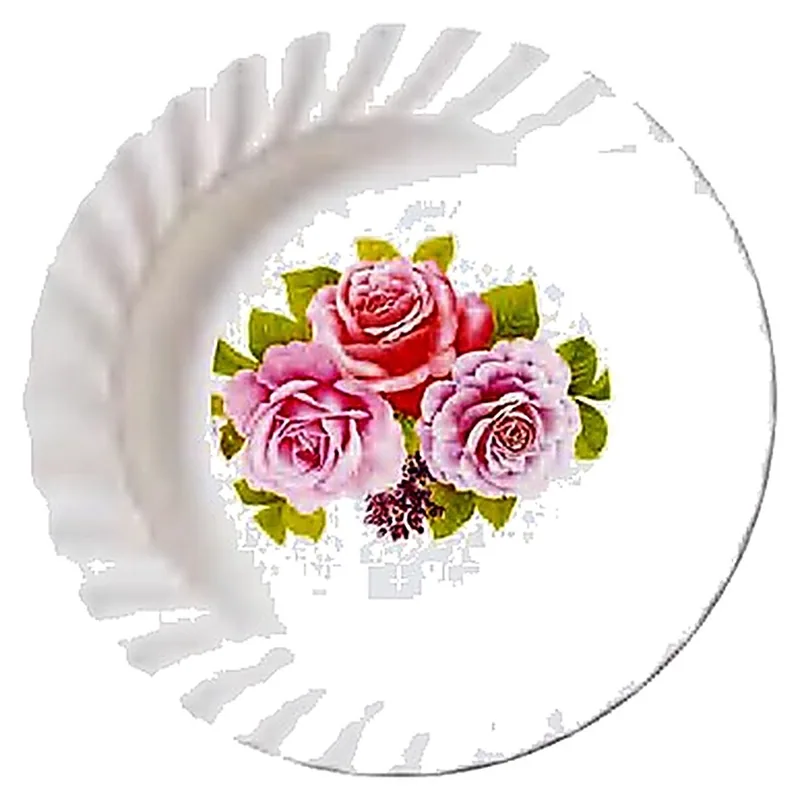
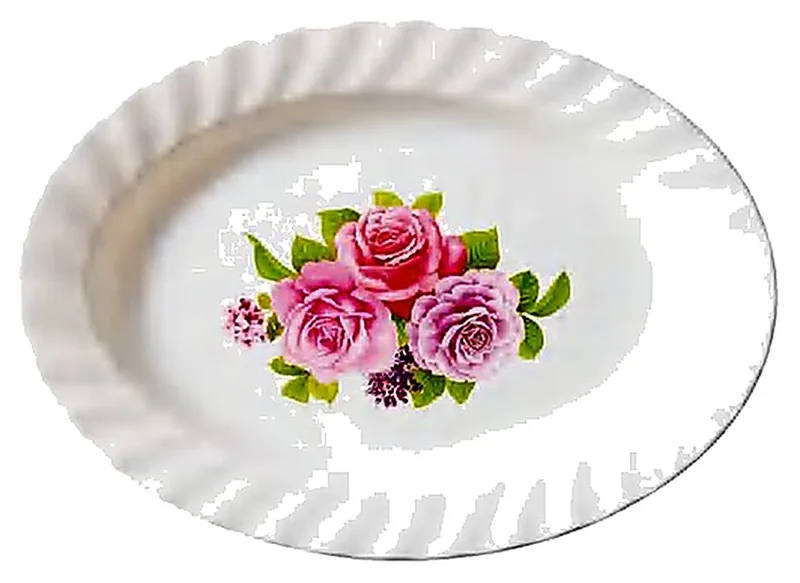
A banquet plate and a platter are not the same buying decision, even when they share a print. This group puts both in one specification: the Floral Round Plate (TVD-2732), the Rose Scalloped Deep Plate (TVD-10320) and the Rose Scalloped Oval Platter (TVD-10321). Hotels, restaurants and event planners who want one floral look from plate to platter will find the comparison below useful.
What is shared and what separates the three
Our product listing gives all three the same description: a floral IML print, round plates and oval platters, and white swirl-rim styles. They therefore share one specification. What separates them is the piece: a flat round plate, a deep plate with a scalloped edge and an oval platter with a scalloped edge, as the names indicate. The shared description does not give diameters, depth or capacity, so the full size of each is confirmed on your written quote. Do not plan a menu around a portion size until you have it in writing.
| Code | Name | Piece | Where it works |
|---|---|---|---|
| TVD-2732 | Floral Round Plate | Round plate | Everyday service and side plates |
| TVD-10320 | Rose Scalloped Deep Plate | Deep plate, scalloped | Pasta, salads, desserts with sauce |
| TVD-10321 | Rose Scalloped Oval Platter | Oval platter, scalloped | Sharing platters and buffet lines |
The white swirl-rim styles
The shared description mentions white swirl-rim styles. That tells you the floral print sits within a white frame, which is useful at a table: the white rim gives the eye a place to rest and makes the print look intentional rather than busy. It also matters on a buffet, where a white rim helps the platter sit beside plain white service. We do not know from the listing which codes carry the swirl rim, so ask which versions of each code have it, and approve the artwork before production.
Choosing by venue
- Hotels: use the flat plate for breakfast and the deep plate for room-service bowls; the platter serves the buffet. Ask for a stack height and the packing plan, as hotels receive many cartons at once.
- Restaurants and cafés: the deep plate suits soup-and-salad lunches; ask whether the factory rates the plate for commercial dishwashers, as that decides how long it lasts in a busy kitchen.
- Caterers and event planners: the oval platter carries the sharing food; the plates carry the individual portion. Together they cover plated and family-style service.
- Gift shops and homeware retailers: a floral plate-and-platter pairing sells as a hostess gift; the scalloped edge is a visible selling point.
- Discount and variety chains: a floral print with a white rim reads well from the aisle; one specification across three pieces simplifies replenishment.
Questions about the print and the edge
A scalloped edge is more fragile in transit than a plain one, and a deep plate adds weight to a carton, so settle carton quantity and size on the quote and ask about dividers. The rim is also where decoration meets the mouth, so ask whether the print comes close to the rim. A printed or metallic decoration near the lip is the known risk area for lead and cadmium, which is why buyers ask for a lead and cadmium test report for decorated tableware.
Canadian rules a tableware buyer should know
The Food and Drugs Act prohibits selling food in or with materials that may make it harmful. Health Canada does not pre-approve kitchenware, and buyers commonly request food-contact test reports from the factory. If the version you order is glazed ceramic or glassware, the Glazed Ceramics and Glassware Regulations set limits for lead and cadmium that can leach. For plastic or other materials, the base material decides which reports are relevant, so ask for the material and grade. We do not claim certification for any of these pieces; we confirm status and supply documents with the quote before you order. Rules change, so confirm with the authority or your inspector. This is not legal advice. For context across the full line, see the Canadian rules guide for decorated trays and plates.
Bilingual labels and Quebec
Prepackaged tableware needs bilingual identity and net quantity and the dealer's name and place of business. Quebec buyers expect French on labels and documents. If you supply hotels, check whether their purchasing specification asks for documents beyond these; that is a buyer specification, not federal law.
Related plates and trays
If your customers prefer a lighter print, the dessert-print plate guide covers flower-shape plates, and the rose-print tray guide covers rose-print trays. The tea-print tray guide covers display-style trays with handle details.
Ordering
Use the quote request to list codes, quantities and your delivery address. Every order is quoted in writing, with pricing for your quantity and delivery. Samples are available on most items; the sample cost is usually credited to the first order. Many lines have low trial minimum orders. Payment is a 30% deposit and 70% before release, and mixed codes can share a container with products from other factories. Read how ordering works, the sales tax by province guide, the Canadian tableware overview and the wholesale guide for this line for more.