Certification guide ·
Commercial Meat Slicer Certification in Canada: What to Confirm Before You Import
A frozen meat slicer is a plug-in machine that touches food. Check the electrical mark, the voltage, the sanitation question and the guards before it reaches your butcher counter.
The short answer for a slicer
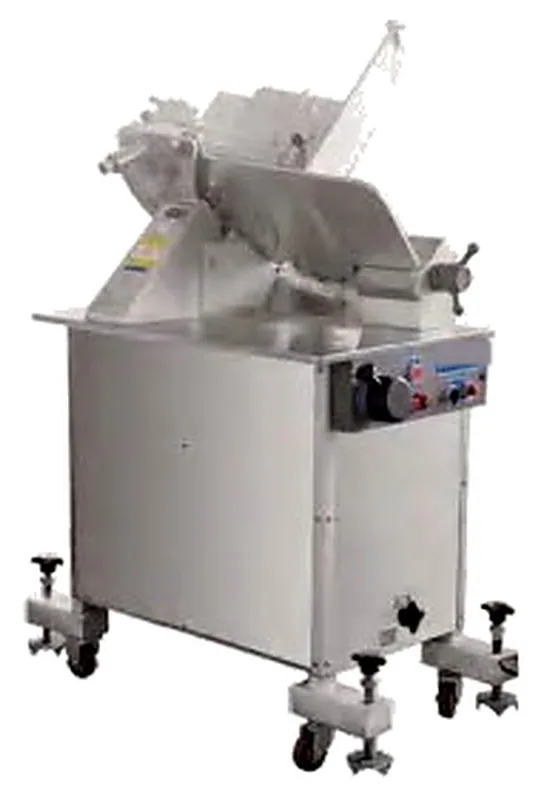
The Frozen Meat Slicer (TVD-2089) is rated at 220 V and 750 W, cuts frozen meat and sits on castors. It is a plug-in electrical machine that touches food, so the questions are electrical marks, supply voltage, sanitation and guarding. No certification mark is on file for TVD-2089 at the time of writing. We confirm certification status and send the documents with your written quote before you order.
Electrical certification
Electrical products sold or installed in Canada must carry a certification mark from a body accredited by the Standards Council of Canada, such as CSA, cUL or cETL, or a field evaluation or special inspection label from an accredited body. The lowercase “c” means Canada. A US-only mark, UL or ETL without the “c”, is not enough. Provincial and territorial electrical safety authorities enforce this, for example the Electrical Safety Authority in Ontario, and insurers may question uncertified equipment. Our post on CSA, cUL and cETL marks explained shows how to read each mark.
The 220 V rating needs checking
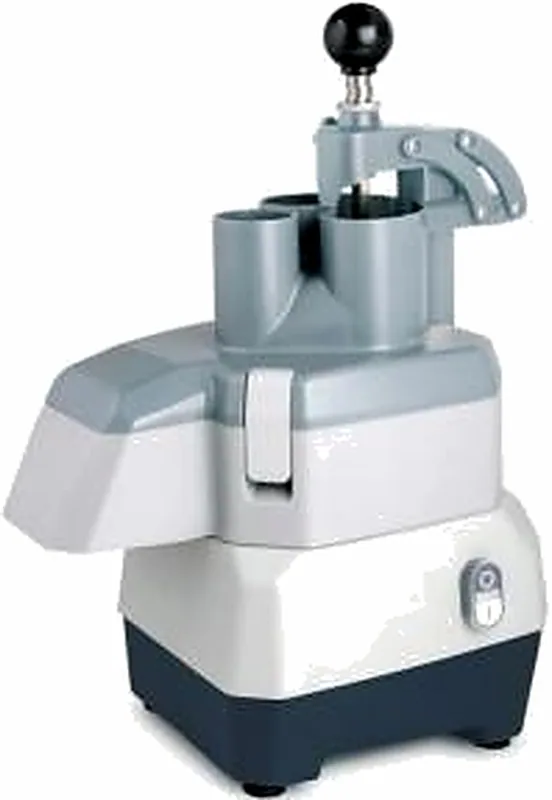
This is the point that surprises most buyers. A rating of 220 V is not the same as the Canadian supply, which is 120 V and 240 V single-phase, and 208 V or 600 V three-phase, all at 60 Hz. The product page for TVD-2089 does not state the frequency. Equipment rated for 220 V and 50 Hz must be confirmed as built for Canadian voltage and 60 Hz before ordering, because motors can misbehave on the wrong frequency. In practice, we ask the factory to confirm the motor, the plug and the wiring for your outlet, and we put the answer in the quote. The same check applies to other 220 V machines in the line, such as the Compact Vegetable Cutter (TVD-2094), rated at 220 V / 50 Hz and 735 W.
Sanitation and food premises
Provincial food premises regulations and local public health inspectors require equipment that is durable, easy to clean and kept sanitary. Many inspectors, landlords and franchisors ask for NSF/ANSI or equivalent sanitation certification on commercial food equipment, and NSF/ANSI 2 is the standard for food equipment. A butcher or deli should ask the health unit what it expects before buying.
For food-contact surfaces, the Food and Drugs Act prohibits selling food in or with materials that may make it harmful. Health Canada does not pre-approve kitchenware, so buyers commonly ask the factory for food-contact test reports on the blade, carriage and guards.
Guards, interlocks and cleaning
Our buying tip for this line is to confirm that guards and interlocks are fitted on slicers, saws and grinders, and to ask how the machine strips down for cleaning. These are not certification marks but they decide whether staff can use the machine safely and whether it passes a workplace review. Your provincial workplace safety rules and your insurer may have their own expectations; ask them.
Document checklist
| Document | Why you need it | Who issues it |
|---|---|---|
| Canadian electrical certification report, or field evaluation label | Lets the machine be used and inspected as electrical equipment in Canada | An accredited certification body |
| Voltage and frequency confirmation for 60 Hz | Shows the motor suits Canadian supply | Factory; confirmed in our quote |
| Plug and cord details | Matches your outlet; a wrong plug is a common delay | Factory; confirmed in our quote |
| Sanitation certificate or test report | For a health inspector, landlord or franchisor | An accredited sanitation certifier |
| Food-contact test report | Blade, carriage and surfaces that touch meat | Factory or test laboratory |
| Guard and interlock description | For your safety officer and insurer | Factory |
| French manual and labels (Quebec) | Quebec requires instructions and labels to be available in French | Factory; requested for you |
| Tariff classification | Duty depends on classification and origin | Our customs broker |
CE and Canadian marks
Canada does not recognise the European CE mark as proof of compliance for electrical or consumer products. If a slicer arrives with CE and nothing else, it still needs the Canadian requirements above.
Where provinces differ
The electrical authority is provincial, and so is public health inspection, which is often handled at the local health unit. Quebec adds French-language requirements under the Charter of the French language: labels, instructions, manuals and warranty documents must be available in French. Taxes follow the province of delivery; see our sales tax by province guide.
What happens when something is missing
The electrical inspector may refuse the installation or the health unit may ask you to replace the machine. A field evaluation is sometimes possible, but it costs time and money. A wrong-voltage machine is worse: it may need a transformer or a motor change, or it may simply not be usable.
How we handle it
We confirm certification status, the voltage and frequency and the available documents on the quote. Our customs broker confirms classification before we quote a delivered cost. If TVD-2089 has no Canadian mark when you ask, we tell you plainly and talk through the options. Rules change, so confirm with the authority, your inspector or your customs broker. This is not legal advice. For specification and use, read the sibling post on buying TVD-2089 wholesale, browse the Meat & Food Preparation line, or send a quote request. Payment is 30% deposit and 70% before release; see how ordering works.