Certification guide ·
Gold Serving Trays: Certification and Compliance Paperwork for Canada
A gold electroplated tray is part tableware, part decoration. Which Canadian rules apply depends on how it will be used, and the paperwork you collect should match.
Why a gold tray raises a different question from electrical goods
People searching for gold serving trays certification in Canada often expect a single mark to look for. There is none for plated tableware. The familiar CSA, cUL and cETL marks, which we explain in our guide to CSA, cUL and cETL marks, belong to electrical and gas equipment. A tray has no plug and no burner, so those marks do not apply to it. What a careful buyer collects instead is a short file of test reports, labelling proof and a clear statement of intended use.
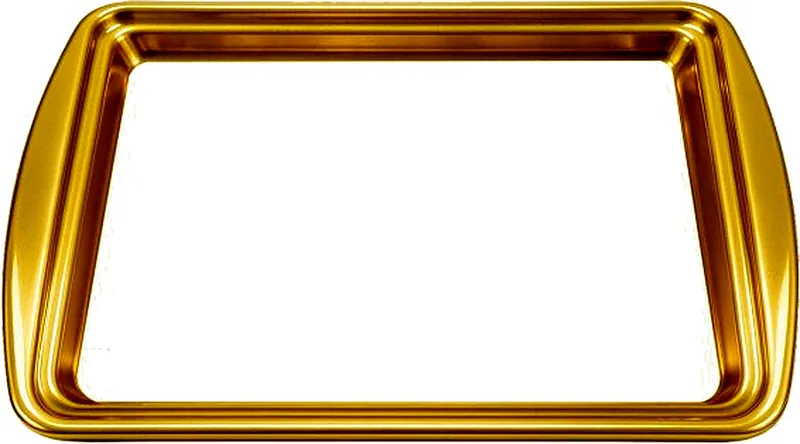
This article looks at the Gold Plain-Rim Serving Tray (TVD-2612), a rectangular tray with a smooth gold finish and a raised rim, part of our gold electroplated trays and baskets range. We hold no certification mark or test report on file for this tray today. We therefore describe what a Canadian buyer should ask for, and we supply whatever documents exist with your written quote before you order.
Decide first: décor piece or food surface
The most useful question comes from our own buying notes for this range: is the plated surface meant for direct food contact, or is it decorative? Event planners use these trays under candles and florals, caterers put canapés straight on them, and retailers sell them as gifts.
If you sell it as décor and say so on the packaging, your food-law exposure is smaller, though general product safety still applies. If you present it as serving ware, the plated surface is a food-contact material and you should expect to be asked for evidence.
Canadian rules that can apply to a plated serving tray
- Canada Consumer Product Safety Act. It prohibits consumer products that are a danger to human health or safety, requires incident reporting and allows recalls. Health Canada enforces it, and it covers a tray sold to the public as much as any other household item.
- Food and Drugs Act. Selling food in or with materials that may make it harmful is prohibited. Health Canada does not pre-approve kitchenware. It offers voluntary Letters of No Objection for food packaging materials, which is a different route from the one a tray would take.
- Lead limits. The Consumer Products Containing Lead Regulations set lead limits that include kitchen utensils. For plated metalware, a lead test report on the finished, plated item is the sensible request.
- Ceramic and glass neighbours. If your order also includes ceramic or glass pieces with gold rims or printed decoration, the Glazed Ceramics and Glassware Regulations add limits on lead and cadmium that can leach. Decoration near the lip is a known risk, so ask for a lead and cadmium report on those pieces too.
- Consumer Packaging and Labelling Act. Prepackaged consumer products need bilingual English and French product identity and net quantity, plus the dealer name and place of business.
- Duties and taxes. Import duty depends on the tariff classification and origin, and GST, HST, PST or QST apply by province of delivery. Our customs broker confirms classification before we quote a delivered cost. Our sales tax by province guide covers the tax side.
Document checklist for TVD-2612
| Document | Why you want it | Who issues it |
|---|---|---|
| Food-contact test report on the plated surface | Evidence for caterers, event companies and retail compliance teams that the finish is suitable for the stated use | Factory or an independent laboratory |
| Lead test report (and cadmium for decorated ceramic or glass add-ons) | Supports the lead rules for kitchen items and the ceramic and glassware limits | Independent laboratory |
| Base material and plating description | Lets you describe the tray accurately and lets the broker classify it | Factory, confirmed on the written quote |
| Written statement of intended use | Fixes whether you sell it as décor or serving ware | Factory, agreed with you |
| Bilingual packaging and label proof | Consumer Packaging and Labelling Act; Quebec retailers expect French | You, with our help on artwork |
| Customs classification confirmation | Sets duty and tax for the delivered cost | Our customs broker |
Marks from other markets do not carry over
A European CE mark is not recognised in Canada as proof of compliance for electrical, gas or consumer products. A factory that tells you its trays are "CE tested" has not told you anything a Canadian buyer can use on its own. What does help is a migration test report to a recognised food-contact method, such as those issued for the US or EU markets, because buyers commonly ask for exactly that..
Provincial and retail differences
Quebec. Under the Charter of the French language, labels, instructions and warranty documents must be available in French, with French at least as prominent. A Quebec retailer will ask for this before listing. Our product pages and quotes are in English, with French support on request. Food premises. A caterer or restaurant uses the tray inside a regulated kitchen. Provincial food premises rules and local public health inspectors expect equipment that is durable and easy to clean. A plated finish can show scratches and fingerprints, and a worn surface may be harder to keep sanitary, so ask your health unit what it accepts before buying volume.What happens if the paperwork is missing
A retail buyer can refuse to list a product that arrives without reports or French labelling, and a health inspector can question a plated surface in a food area. If a product proves dangerous, the Canada Consumer Product Safety Act allows a recall.
How we handle compliance on this tray
Every order starts with a written quote that sets out the specification, certification status and documents, packing, lead time and delivered cost to your address. For TVD-2612 the quote will state plainly that no mark is on file and list which test reports we have requested from the factory. We ask for those before you commit, and samples are available on most items, with the sample cost usually credited to your first order. Payment is 30% deposit and 70% before release, as set out in how ordering works.
For the commercial side of this tray, including how it compares with the handled and lace-border designs, see our companion article, the wholesale buying guide to the Gold Plain-Rim Serving Tray. Rules change, so confirm current requirements with Health Canada, your provincial or municipal health unit and your customs broker. This article is general information, not legal advice.