Product guide ·
Rose Print Lace-Edge Tray and Its Covered Siblings: A Wholesale Guide
Three hollow-out decorative trays with covers share one specification. Here is how to choose between them, what the gold panel means and how to order for Canada.
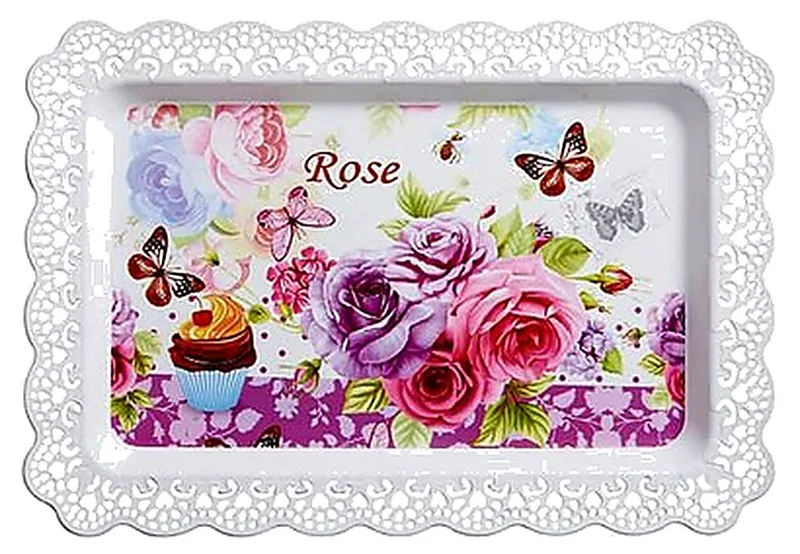
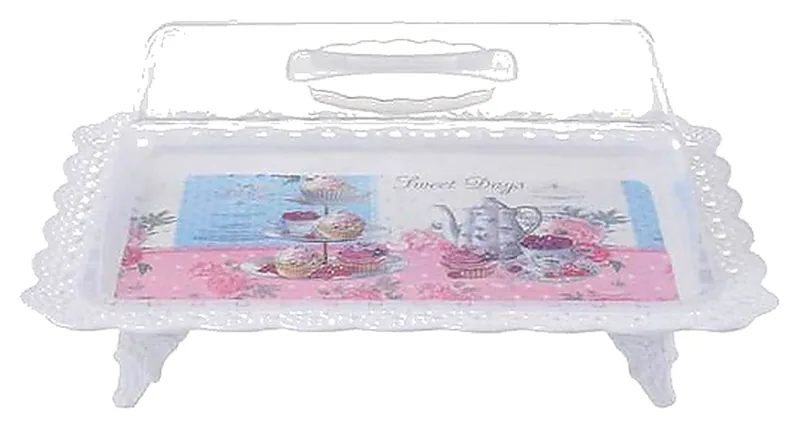
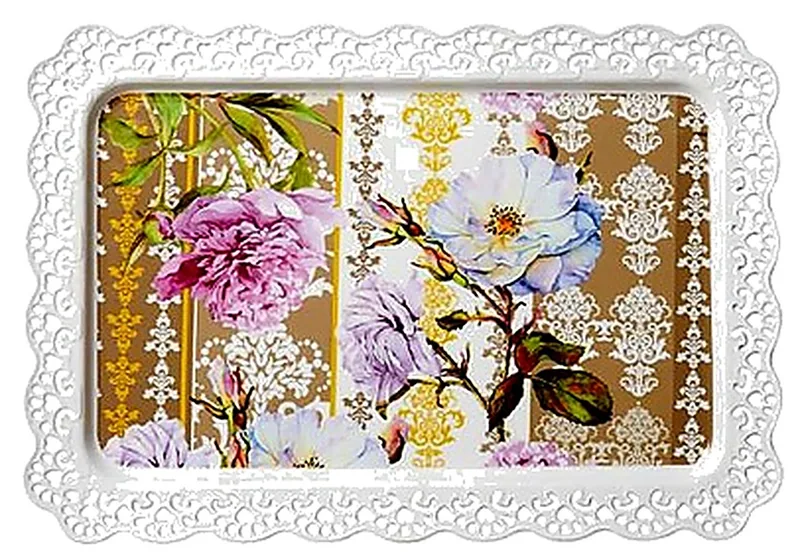
A cover turns a tray from a display piece into something you can hold food on, carry to a table and keep presentable. That is the idea behind this group of three: the Rose Print Lace-Edge Tray (TVD-2734), the Covered Tray on Feet – Tea Print (TVD-10324) and the Floral Lace-Edge Tray – Gold Panel (TVD-10325). It is aimed at bakeries, gift-hamper makers, caterers and hotels who want a decorative covered tray.
Shared specification, three looks
Our product listing gives all three the same description: a hollow-out decorative design, rectangular trays with covers, and round floral plates. They share one specification. The names mark the look: a rose-print lace-edge tray, a covered tray on feet with a tea print, and a floral lace-edge tray with a gold panel. Sizes, shapes and materials are not given in the listing, so the full size of each piece is confirmed on your written quote. If you need a particular cover fit or tray depth, state it on the quote request.
| Code | Name | Distinguishing feature | Typical use |
|---|---|---|---|
| TVD-2734 | Rose Print Lace-Edge Tray | Rose print, lace-style edge | Gift and baked-goods presentation |
| TVD-10324 | Covered Tray on Feet – Tea Print | Tea print, on feet, with cover | Counter display of covered items |
| TVD-10325 | Floral Lace-Edge Tray – Gold Panel | Floral print, gold panel | Giftable premium-look presentation |
Why the cover matters
A cover does three jobs: it keeps dust and fingers off food, it lets a counter hold stock longer between service, and it makes a tray a self-contained gift. Ask whether the cover seats firmly, whether it is the same material as the tray and how it is packed so it does not rub against the base in transit. For food sold to the public, local public health inspectors expect food equipment and display to be kept sanitary; a covered tray supports that, but it does not replace your own food safety plan. Ask the factory what the cover and base are made of, as the answer drives the test reports you request.
Choosing the right one for your trade
- Bakeries and confectioners: the covered tray on feet raises the display off the counter and protects pastries; ask whether the feet are part of the piece or separate.
- Gift-hamper makers and gift shops: the gold-panel tray reads as premium in a hamper; confirm packaging and barcode for retail.
- Caterers: rectangular covered trays travel better than open ones; ask about stacking with the covers on.
- Hotels: room-service and amenity trays; check carton quantities and storage.
- Online sellers: state clearly in your listing which version has the cover and the gold panel, and quote only confirmed sizes.
The gold panel: a decoration question
The gold panel on TVD-10325 is a decoration. Gold and metallic finishes are a known question for tableware. If the panel is on or near a surface that touches food or the mouth, buyers should ask for a lead and cadmium test report, and if the version is glazed ceramic or glassware, the Glazed Ceramics and Glassware Regulations set limits on lead and cadmium that can leach from decorated rims and surfaces. Ask the factory what the panel is made of, where it sits and whether it is on the food side of the tray. If the answer is that it is on the underside or the cover exterior, record that on the quote.
Food contact and certification
The Food and Drugs Act prohibits selling food in or with materials that may make it harmful, and Health Canada does not pre-approve kitchenware. Buyers commonly request food-contact test reports, such as FDA or EU migration tests, for the product and market. We claim no certification for these trays. We confirm status and supply the documents with the quote before you order, and we tell you before you pay a deposit if something is missing. Rules change; confirm with the authority or advisor. This is not legal advice. The wider rules are in the Canadian rules guide for the printed tray line.
Packaging, labels and shipping
A lace-edge cut-out and a separate cover are the two most breakable parts of this group, so ask about inner cartons, dividers and stack height. Retail packs need bilingual English and French identity and net quantity plus the dealer's name and place of business under the Consumer Packaging and Labelling Act. Quebec retailers expect French on labels and any inserts. In winter, ask about carton handling, since cold freight is rough on thin edges.
Related guides
The tea-print tray guide covers open hollow-out trays with handles, the rose-print tray guide covers simple rose-print shapes and the gold-rim floral platter guide covers gold-edge clear platters if you want a gold look without a cover.
Ordering covered trays
Send the codes, quantities and delivery address through the quote request. Pricing is quoted in writing for your quantity and delivery, with samples on most items and the sample cost usually credited to the first order. Many lines have low trial minimum orders, so you can start with one code. Payment is 30% deposit and 70% before release. Mixed codes can share a consolidated container. For more see how ordering works, the sales tax by province guide, the Canada delivery hub and the wholesale guide.