Certification guide ·
Round Electric Chafing Dish (TVD-2167): Electrical and Food-Contact Rules in Canada
A plug-in chafing dish is an electrical appliance first and a piece of food equipment second. Here is what Canada expects of each, and what we confirm before you order.
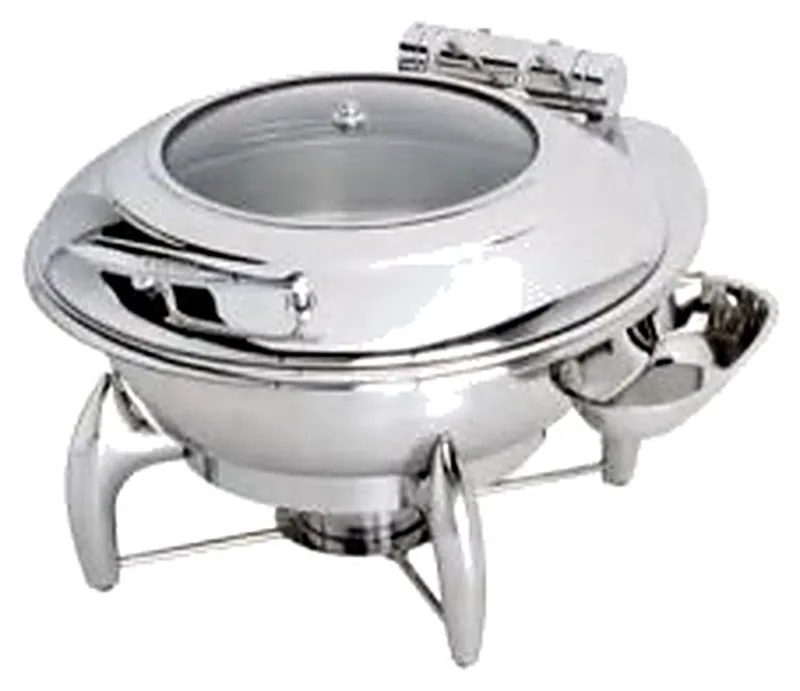
The Round Electric Chafing Dish (TVD-2167) has a glass lid, stainless steel construction and an electric meal warmer base, and it is meant for buffets and catering. It comes from our banquet and catering equipment family. We hold no certification or listing mark for it. This page does not say it is certified; it explains what a Canadian buyer must see before putting it into service, and promises only that our quote states where certification stands and which documents come with it, all before an order is placed.
Think of the base first
The part that carries the regulatory weight is the electric warmer base: the element, the thermostat or control, the cord and the plug. Electrical products sold or installed in Canada must carry a certification mark from a certification body accredited by the Standards Council of Canada, such as CSA, cUL or cETL (the small c means Canada), or a field evaluation or special inspection label from an accredited body. Provincial and territorial electrical safety authorities enforce this, and inspectors can refuse uncertified equipment. Insurers may question it as well.
A mark with no small c (UL or ETL alone) is a US mark and is not enough. Nor is a CE mark. Our explainer on reading CSA, cUL and cETL marks shows how to read them.
Voltage and 60 Hz
Canadian supply is 120 V or 240 V single-phase, and 208 V or 600 V three-phase, all at 60 Hz. A warmer rated for 220 V and 50 Hz has to be confirmed as built for Canadian voltage and 60 Hz before it is ordered, since motors, timers and compressors can misbehave on 60 Hz. For a heating base with a simple element the risk is smaller, but the rating plate still has to match your outlet. The voltage, phase, frequency, amperage and plug type for TVD-2167 are confirmed on the written quote; we do not publish guesses.
What is on the rating plate and why it matters
| Item to read | Why it matters | Where it comes from |
|---|---|---|
| Certification mark with a small c, or field label | Electrical authority acceptance | Accredited certification body |
| Voltage, frequency, watts or amps | Matches the venue outlet and circuit | Rating plate and our written quote |
| Plug and cord type | Whether it fits Canadian outlets | Our quote and sample |
| Wet-area or splash guidance in the manual | Chafers sit above water pans | Factory manual |
| French manual and warranty text | Quebec requirements | Prepared with the order |
The water pan, the food pan and the glass lid
Chafing dishes combine heat, water and glass in a short space, so ask the questions in the right order. First, what is in the stack: the listing names stainless steel and a glass lid. Whether a water pan, a food pan or both are included is a quote item. Second, what touches food: the stainless pan, and the underside of the glass lid. Provincial food premises rules and public health inspectors expect food equipment to be robust, readily cleaned and hygienic, and many ask for sanitation certification, NSF/ANSI or the equivalent. Third, the lid: glassware that contacts food falls under the Glazed Ceramics and Glassware Regulations, which limit lead and cadmium; decorated or metallic details near the lip are the known risk, so ask for a test report if there is any rim decoration.
Energy rules for commercial appliances
Some commercial equipment can fall under Natural Resources Canada's Energy Efficiency Regulations. Whether a plug-in warmer of this kind is a regulated category is something we check rather than assume.
Where it might be refused
- On site: an electrical inspector can refuse a unit with no recognised mark.
- By the venue: a hotel or banquet hall may require proof of marking before letting an outside caterer plug in.
- By a retailer: a store will not list a plug-in appliance without a recognised mark.
- After an incident: an insurer may ask for the documents, and a product found to be a danger can be recalled under the Canada Consumer Product Safety Act.
Field evaluation as a route
If a unit arrives without a recognised mark, a field evaluation or special inspection label from an accredited body is sometimes possible. It is a separate cost and time step, so we raise it on the quote when it applies instead of after the container arrives.
Provincial notes
The Electrical Safety Authority in Ontario and the equivalent bodies elsewhere enforce electrical rules, and each province has its own food premises rules. Quebec also needs French manuals and labels. Tell us the delivery province when you request a quote.
Ordering
Each order starts with a written quote showing the price for your quantity, specifications, certification, papers, packing, timing and delivered cost. See how ordering works , which has the payment terms: a 30% deposit, then 70% before release, and the sales tax guide for GST, HST, PST and QST. Begin with the quote request. If you plan to buy several shapes, read the electric chafing dish collection guide. Rules change, so confirm with your authority, inspector or customs broker; this is not legal advice.