Certification guide ·
Soft Serve Machine, Slim Model, in Canada: Certification and Food-Safety Paperwork
A soft serve machine freezes and dispenses a perishable mix, so it faces both electrical and food-premises scrutiny. Here is the paperwork trail for TVD-10827.
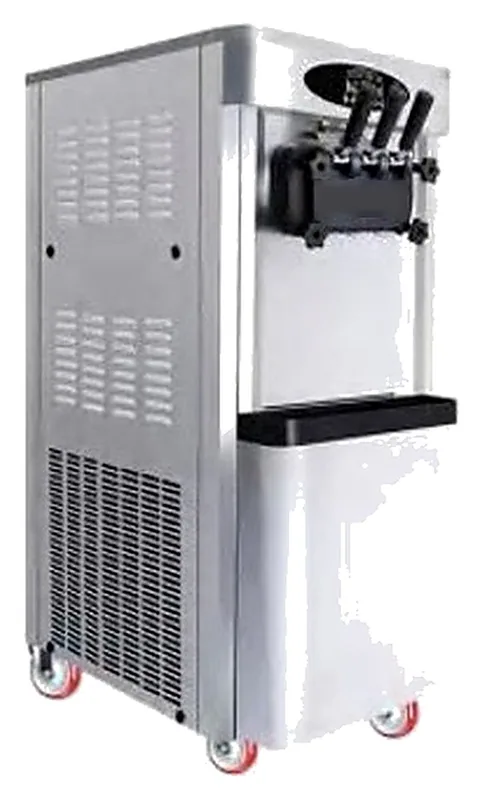
The Soft Serve Machine, Slim Model (TVD-10827) is a dessert machine offered in single and twin flavour versions, for countertop or floor placement. Buyers are ice cream parlours, cafés, restaurants with a dessert station and hospitality operators. No certification mark is on file for TVD-10827. We confirm status and supply documents with the quote before you order. This page covers what to expect and what to ask for.
What makes a soft serve machine different
Compared with a cabinet that merely stores chilled goods, a soft serve machine is processing food. Mix goes in, a refrigeration system freezes it as a motor churns, and the product leaves through a dispensing valve into a cone or cup. Four consequences follow for compliance:
- Moving parts in contact with food. The dispensing head, door, valve and agitating parts touch the product, so the food-contact materials question is sharper than on a storage fridge.
- Disassembly for cleaning. Inspectors want to see how operators take the machine apart, wash and sanitise parts and put them back. The manual's cleaning instructions are part of the paperwork.
- Motor and refrigeration on one supply. A drive motor and a compressor load a circuit differently from a simple cabinet, which is why the electrical data sheet has to be read by an electrician.
- Two flavours, two circuits of product. On a twin model the mix paths are separate, so each needs its own cleaning and food-contact assurance.
Electrical mark and supply
Electrical products sold or installed in Canada must carry a mark from a certifier accredited by the Standards Council of Canada, or a field evaluation or special inspection label. CSA, cUL and cETL are the common ones; US-only marks without the small "c" are not enough. A product marked for Europe still has to satisfy Canadian requirements. For help reading marks, see the CSA, cUL and cETL explainer.
Supply is a key point for a motor-driven freezer. Canadian supply is 120 V or 240 V single-phase and 208 V or 600 V three-phase, all at 60 Hz. A model designed for 220 V and 50 Hz must be confirmed as built for Canadian voltage and 60 Hz, because motors, timers and compressors can misbehave on the wrong frequency. Since the unit can be placed on a counter or on the floor, ask what the cord and plug look like and whether a dedicated circuit is needed.
Food-premises view
Provincial food premises regulations and local public health inspectors expect equipment that is durable, easy to clean and kept sanitary. Many inspectors, landlords and franchisors ask for NSF/ANSI or equivalent sanitation certification on commercial food equipment; NSF/ANSI 2 covers food equipment generally. Soft serve is the kind of product where a health unit will often look closely, so ask what yours wants in writing.
The Food and Drugs Act prohibits selling food in or with materials that may make it harmful. Health Canada does not pre-approve kitchenware, but buyers commonly ask the factory for food-contact test reports. For this machine the list to ask about is: the dispensing valve and door, seals and gaskets, the agitator, the mix hopper and the drip tray.
Document table for TVD-10827
| Document | Purpose | Source |
|---|---|---|
| Canadian electrical mark or field evaluation label | Inspector approval to connect and operate | Accredited certification body |
| Electrical data sheet and rating plate | Motor and compressor suit 60 Hz; circuit size known | Factory, reviewed on the quote |
| Sanitation certificate (NSF/ANSI 2 or equivalent) if requested | Health-unit view of a food-processing machine | Sanitation certification body |
| Food-contact material report for valve, seals, agitator and hopper | Parts that touch mix must not harm food | Factory test reports |
| Cleaning and sanitising procedure with parts list | Shows how the machine is stripped and washed | Factory manual |
| Refrigerant and compressor description | Helps installers and technicians | Factory |
| French manual and labels | Quebec buyers and staff | Factory |
Countertop or floor: why placement changes the questions
The same model can be set on a counter or the floor, and each choice raises its own questions. On a counter, weight and vibration affect the counter and the ventilation clearance behind and beside the unit. On the floor, the question is access for cleaning underneath and whether the machine needs levelling feet. Either way, an air-cooled machine needs open space around it so the condenser can breathe, and that clearance should be written on the quote. Ask also whether the drip tray drains or is emptied by hand.
Provincial differences
- Quebec: French on manuals, labels and warranty papers is expected by the Charter of the French language, and a dessert shop that serves the public will want operating instructions its staff can read.
- Ontario: the Electrical Safety Authority oversees electrical product safety; food premises are inspected by public health units.
- Elsewhere: each province has its own electrical and food authorities, and seasonal outlets such as summer ice cream stands should check opening-day inspection timing.
If paperwork is missing
Seasonal dessert businesses have little slack. An inspector who will not connect an uncertified machine in May can cost the first weeks of trading. Health units can also refuse to sign off a food-processing machine whose cleaning method they cannot see. Insurers may query an uncertified electrical product after an incident.
Our process
Our written quote sets out certification status, documents and delivered cost; if no mark is on the machine we say so and discuss a field evaluation first. Deposit is 30%, with 70% before release; see how ordering works. Dessert operators often also need a gas or electric cooking line, so read about the Open Fryer, Single Tank (TVD-594) or browse the kitchen category for Canada. This is general information, not legal advice; rules change, so check with your authorities and customs broker.