Certification guide ·
Table and Floor Lamps in Canada: What an AC85-265V Driver Proves About Voltage, and What It Does Not
Most of our LED table and floor lamps list an AC85-265V driver. That range matters for Canadian voltage and 60 Hz, but it is not the whole compliance story.
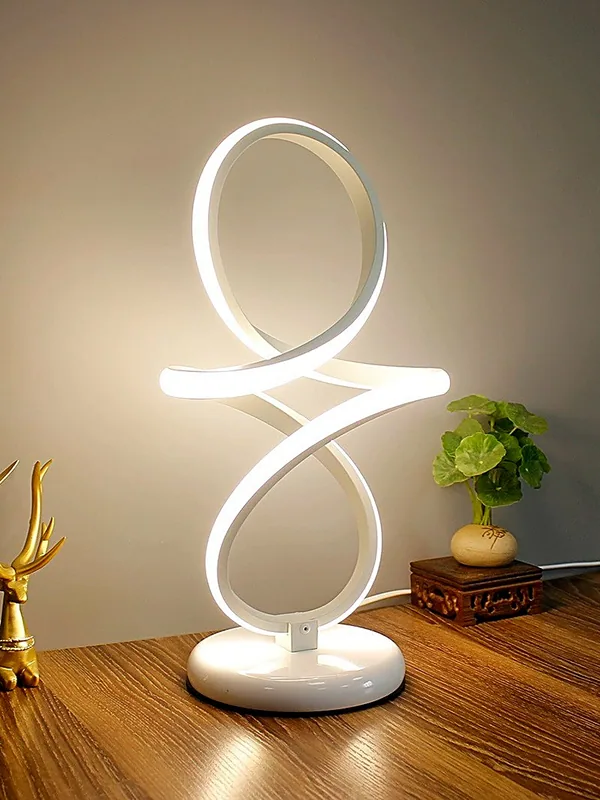
If you read the specification of a lamp such as the Figure-Eight LED Table Lamp (TVD-9000), you will see a short line: 3000K, 4000K or 6000K, AC85-265V. To a Canadian buyer that line answers one question, will it run on our supply, and leaves open a second, will an inspector, retailer or insurer accept it. This guide treats the two separately, and explains where the drivers listed on our lamps help and where they stop. We hold no Canadian electrical certificate for any of the lamps named here, so we do not call any of them certified.
Canadian supply, in numbers
Canada supplies 120 V and 240 V single-phase at 60 Hz in homes and small premises. Commercial buildings commonly have 208 V or 600 V three-phase supply, also at 60 Hz. A table or floor lamp that plugs into a wall outlet in a house or hotel room is on a 120 V circuit. Equipment designed for 220 V and 50 Hz must be confirmed as built for Canadian voltage and 60 Hz before it is ordered, since motors, timers and compressors can misbehave on 60 Hz. For an LED lamp, the component that matters is the driver, and a driver marked AC85-265V usually accepts Canadian voltage.
What AC85-265V tells you
The marking says the driver is designed to accept a wide range of input voltages, from 85 to 265 volts alternating current, which brackets 120 V and 240 V. That is a good sign for a lamp going to Canada, and it is the reason these products can be sold in several regions without a different driver. It does not say that the lamp has been tested by a Canadian certification body, that the cord and plug suit Canada, or that the lamp's wiring and enclosure meet the Canadian standard for luminaires. Those are separate matters, and each needs its own paper.
| Question | Does AC85-265V answer it? | What does |
|---|---|---|
| Will the driver accept 120 V at 60 Hz? | Usually yes | Written confirmation on the quote |
| Does the lamp carry a Canadian mark? | No | Certificate from an accredited body, or a field evaluation label |
| Does the plug fit a Canadian outlet? | No | Cord set description on the quote |
| Is it suited to a damp or wet place? | No | Location rating on the mark or report |
| Will a retailer list it? | No | Mark, bilingual labelling and documents |
The Canadian mark itself
Electrical products sold or installed in Canada must carry a certification mark from a body accredited by the Standards Council of Canada, for example CSA, cUL or cETL, where the small c means Canada, or a field evaluation or special inspection label from an accredited body. Luminaires are certified to the Canadian luminaire standard, and the LED driver is treated as a component of the certified fixture. A US-only mark without the small c is not enough for Canada, and the European CE mark is not recognised as proof of compliance. Provincial and territorial electrical safety authorities enforce all this, for instance the Electrical Safety Authority in Ontario.
How the lamps in the line differ
All the lamps named below list aluminium and silicone as materials, with one exception, and all list 3000K, 4000K or 6000K on an AC85-265V driver. They differ in size and in how they are used.
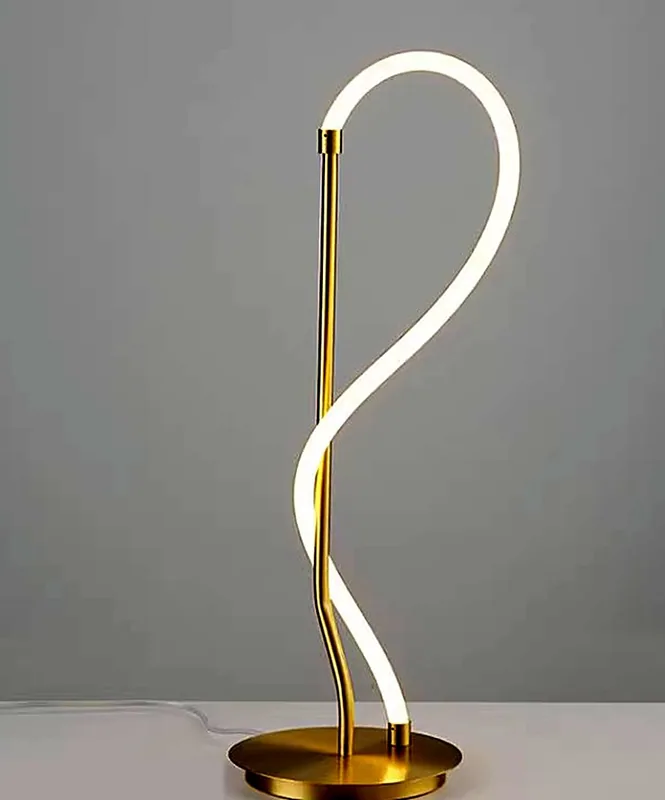
- TVD-9000 is a figure-eight table lamp at D20*H50 cm.
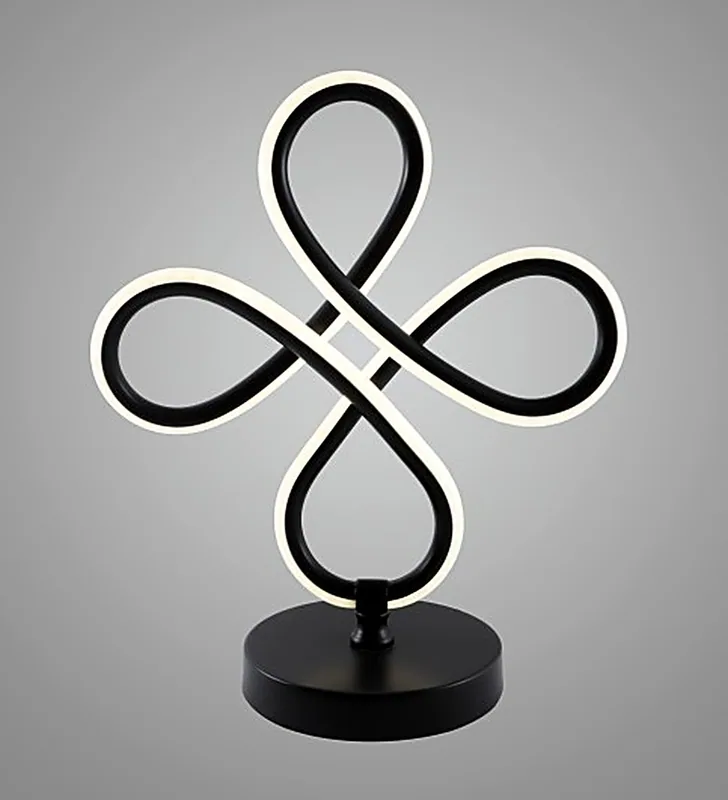
- TVD-9005, the Clover Knot LED Table Lamp, is D20*H34 cm.
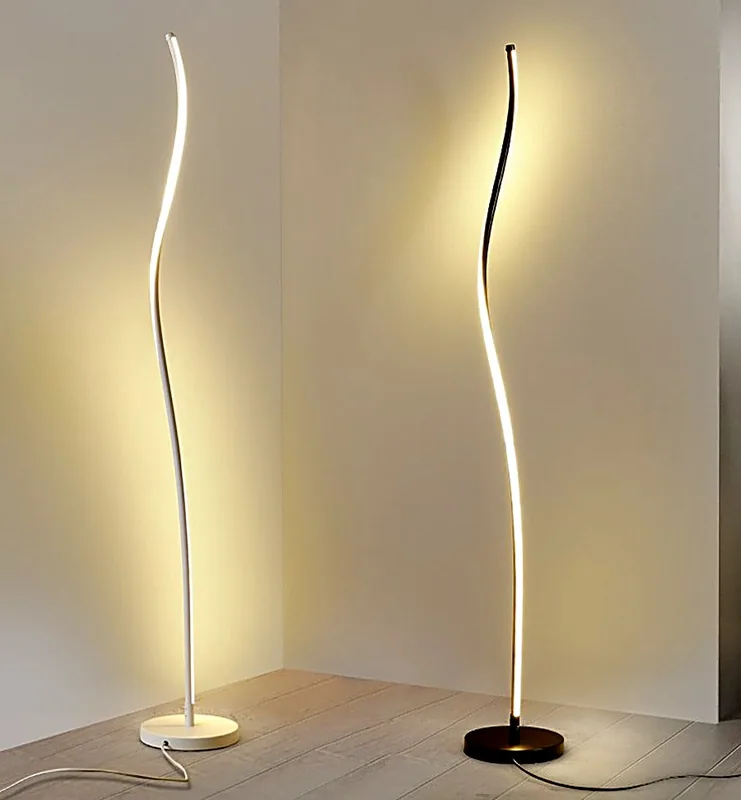
- TVD-9016, the Wave Ribbon LED Floor Lamp, is D20*H150 cm, a floor lamp that stands on its own.
- TVD-9021, the S-Curve LED Table Lamp in gold, is L123*D20 cm, long enough to behave like a floor piece.
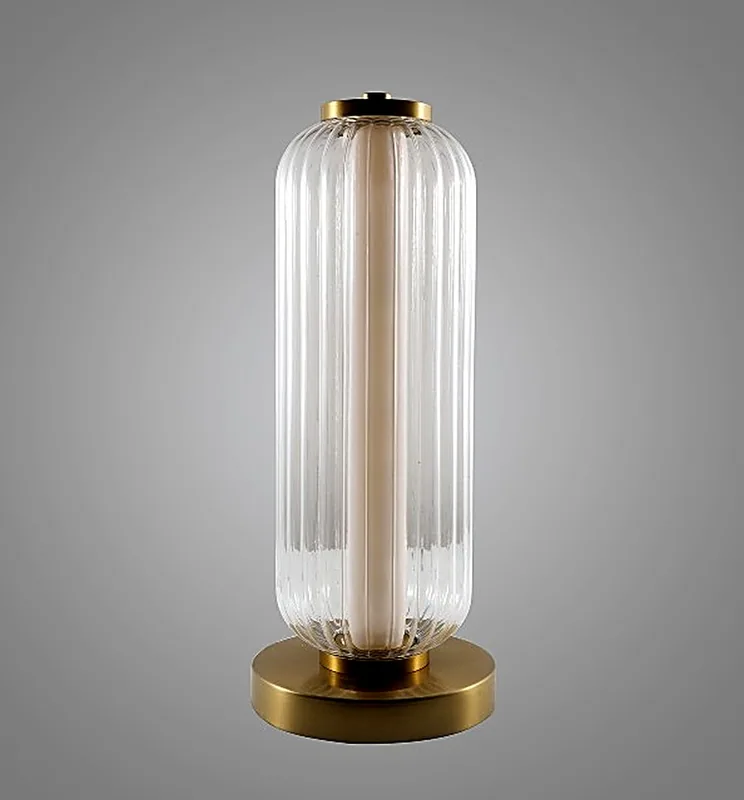
- TVD-9015, a textured glass cylinder lamp, is listed in aluminium and acrylic at L36*12 cm.
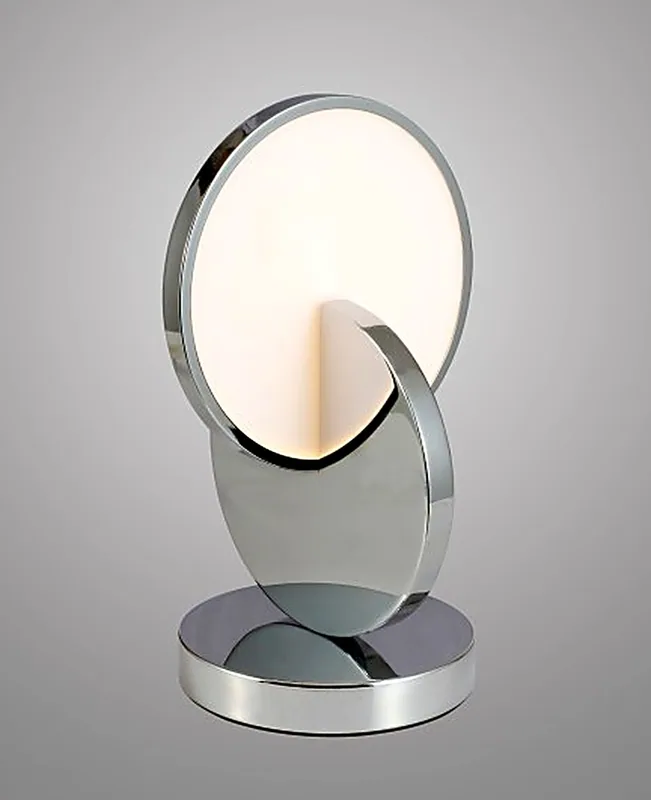
- TVD-9013, the Disc & Mirror LED Table Lamp, is W20*H30 cm.
A taller lamp carries a longer cord, a heavier base and a bigger stability question than a small bedside lamp. A lamp with a mirror or glass element adds a breakage question. The voltage answer is the same for all, but the full set of documents is not.
The outdoor group has a different voltage line
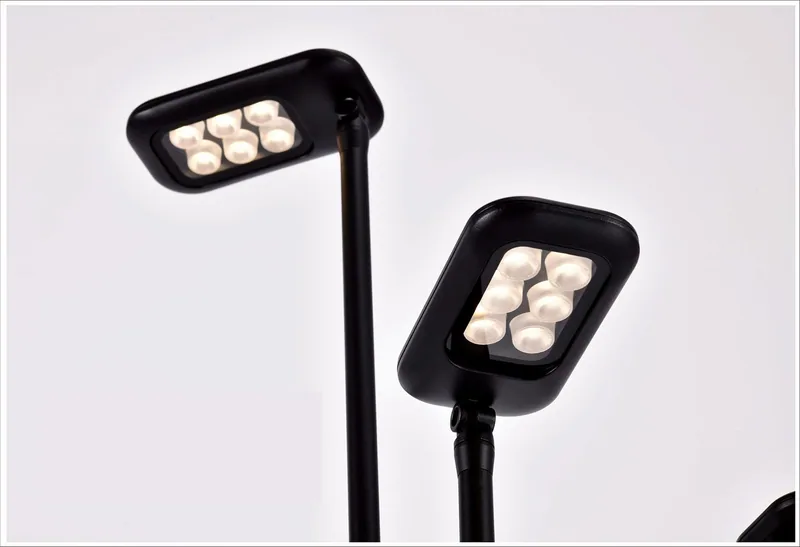
Six other lamps in the line are described for outdoor or weatherproof use. One of them, TVD-6930, the Adjustable-Head Garden Pole Light, lists a supply of AC 220 to 240 V without a frequency. That is a different statement from a wide-range driver, and it is the kind of listing that must be confirmed for Canadian voltage and 60 Hz in writing before ordering. We ask for that confirmation on every such product, and we do not ask you to pay a deposit until you have it.
Document checklist
| Document | Why you need it | Who issues it |
|---|---|---|
| Canadian certification record with file number | Shows an accepted mark | Accredited certification body |
| Driver input specification, with frequency | Proves 120 V and 60 Hz operation | Manufacturer; confirmed by us |
| Cord and plug description | Shows the lamp suits Canadian outlets | Manufacturer; confirmed on the quote |
| Field evaluation report, if no mark exists | Lets an inspector accept the specific unit | Accredited field evaluation body |
| Bilingual labels and French documents | Quebec retailers and the Consumer Packaging and Labelling Act | Us and the manufacturer |
Packaging and labels
Prepackaged consumer products sold in Canada need bilingual product identity and net quantity, plus the dealer's name and place of business. In Quebec, labels, instructions, manuals and warranty documents must be available in French. A retailer who buys a lamp for shelves will ask about both before listing it. We confirm what the supplied packaging and documents carry on the quote, and arrange additions where needed.
What happens when the mark is missing
- An inspector can refuse the lamp in a commercial installation.
- An insurer may question cover for a fire involving uncertified equipment.
- A retailer or hotel group may refuse the product.
- A field evaluation can be arranged, but it takes time and money.
Product safety law also applies: the Canada Consumer Product Safety Act prohibits products that are a danger to health or safety, requires incident reporting, and allows recalls. Health Canada enforces it.
How we handle it
We confirm certification status and documents before quoting, state the position plainly, and discuss a field evaluation or an alternative model if something is missing. This is general information and not legal advice. Rules change, so confirm requirements with your inspector, customs broker or provincial safety authority. Our companion guide on weatherproof and outdoor lamps goes through the IP65 question, and for the marks read CSA, cUL and cETL explained. Request confirmation for your codes through the quote request; the ordering page explains payment, and the wave ribbon floor lamp guide shows a floor lamp in detail.