Product guide ·
Tea-Print Trays with Wing Handles, Lace Handles and Lace Rim: A Buyer's Guide
Three hollow-out tea-print trays share one specification and differ by handle or rim detail. Here is how to choose and what to check before ordering for tea service or display.
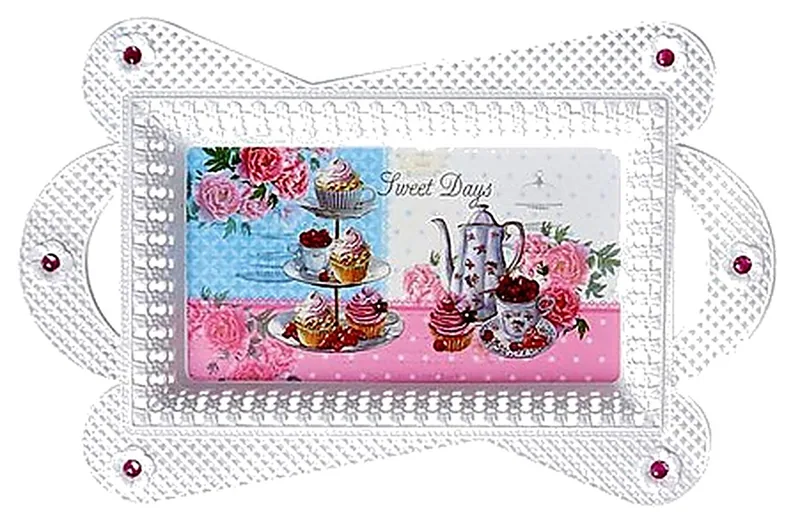
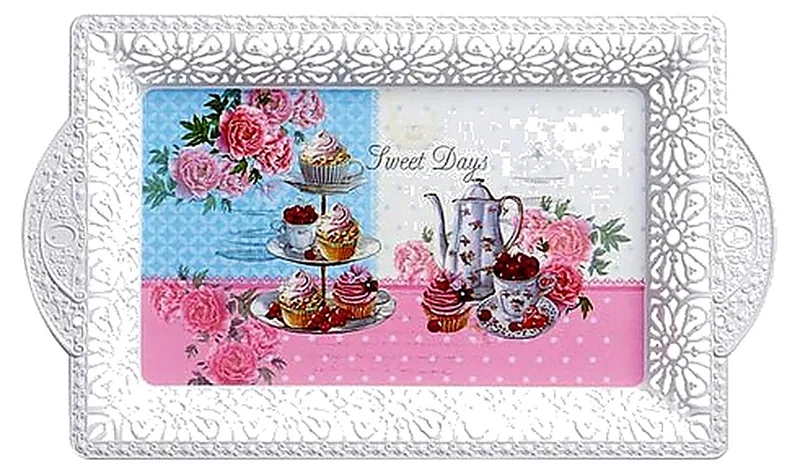
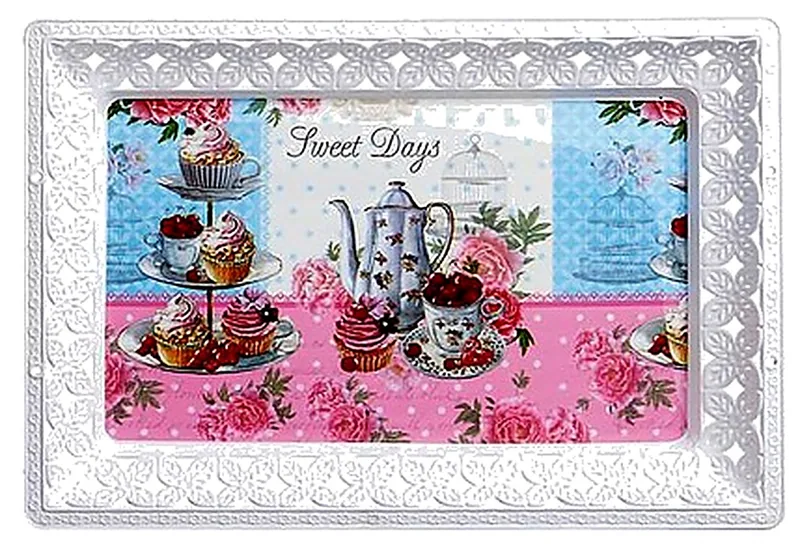
Afternoon-tea service lives or dies on presentation, and these three trays are built around a hollow-out decorative design for serving and display: the Tea-Print Tray – Wing Handles (TVD-2733), the Tea-Print Tray – Lace Handles (TVD-10322) and the Tea-Print Tray – Lace Rim (TVD-10323). This guide is for tea rooms, event planners, gift shops and hotels who want to pick the right handle or rim detail and avoid surprises on delivery.
Same specification, three edge details
Our product listing gives all three one description: a hollow-out decorative design, floral-print plates and trays, and serving or display use. They share one specification. The names say where they differ: wing handles, lace handles or a lace rim. Do not read more into the names than that. Sizes, shapes and capacity are not shown, so the full size of each tray is confirmed on your written quote, and a sample is the surest way to judge how the cut-out detail looks in your own room.
| Code | Name | Detail that sets it apart | Best used for |
|---|---|---|---|
| TVD-2733 | Tea-Print Tray – Wing Handles | Wing-shaped handles | Carrying a tea service across a room |
| TVD-10322 | Tea-Print Tray – Lace Handles | Lace-style handles | Display and passing at events |
| TVD-10323 | Tea-Print Tray – Lace Rim | Lace-style rim | Display on a stand or table centre |
What hollow-out means in daily use
A hollow-out design is a pattern of openings cut through the piece rather than only printed on it. That makes a tray lighter-looking and more decorative, and it changes how you use it. Cut-outs are not a food surface to place loose crumbs or sauces on without thinking, because food can fall through or sit in the openings. They suit dry items such as scones, biscuits, petit fours and sandwiches, and they also suit pure display. Ask whether a liner or a doily is recommended, and ask how the edges of the cut-outs are finished so they are comfortable to hold and clean. A public health inspector looking at a café will expect food equipment to be durable and easy to clean, so test a sample with your own cleaning routine before you order in volume.
Who buys which tray
- Tea rooms and cafés: the wing-handled tray is the working piece; the lace-rim tray works as the display piece on a stand. Ask about dishwasher use before they go into daily rotation.
- Event planners: lace-handled trays pass well at weddings and showers, and the shared print means mixed trays still look like one set.
- Hotels: afternoon-tea services and lobby displays; ask about stackability and carton quantity for storage.
- Gift shops: a lace-detail tray is a display-and-gift item; ask about retail packaging and barcodes.
- Online sellers: describe the cut-out edge honestly in your listing and show it in photographs; buyers want to know if it is a serving or a display piece.
Food contact and decoration questions
The Food and Drugs Act prohibits selling food in or with materials that may make it harmful, and Health Canada does not pre-approve kitchenware. Buyers commonly ask for food-contact test reports. A floral tea print is a decoration, so ask for a lead and cadmium test report where the print or any metallic decoration is near an edge that touches the mouth or food. If the version you order is glazed ceramic or glassware, the Glazed Ceramics and Glassware Regulations set lead and cadmium limits. No certification is claimed for these trays; we confirm status and supply documents with the quote before you order. Rules change; confirm with the authority or advisor. This is not legal advice. For the whole range see the Canada compliance and import guide for printed trays.
Breakage and freight
Cut-out trays have thin bridges between openings, and those are the first parts to fail in a knocked carton. Ask how the factory packs them: dividers, inner cartons, stack height. Winter freight in Canada adds cold and handling, so pack quality matters. Settle carton quantity and size on the quote and check the delivery address can receive pallets.
Labels and Quebec
Retail-packed trays need bilingual English and French product identity and net quantity plus the dealer's name and place of business. For Quebec, labels and instructions are expected in French, and a product with French packaging is easier to place with retailers there.
Where else to look in the line
The rose lace-edge covered tray guide extends the hollow-out look to covered trays. The floral round plate guide is for plates and platters, and the dessert-print plate guide is for single servings.
Ordering
Tell us the codes, quantities and delivery address on the quote request. Everything is quoted in writing, including pricing for your quantity. Samples are available on most items, with the sample cost usually credited to your first order, and many lines carry low trial minimum orders. Payment is 30% deposit, 70% before release. Mixed codes can share one consolidated container with products from other factories. See how ordering works, the sales tax by province guide and the landed cost calculator; the tray line page lists the rest.