Product guide ·
Large-Hopper Vegetable Cutter: Buying Guide for Canadian Prep Kitchens
One machine for slicing, dicing and shredding at volume. Here is how to specify TVD-10818 for a hotel, institution or commissary prep room.
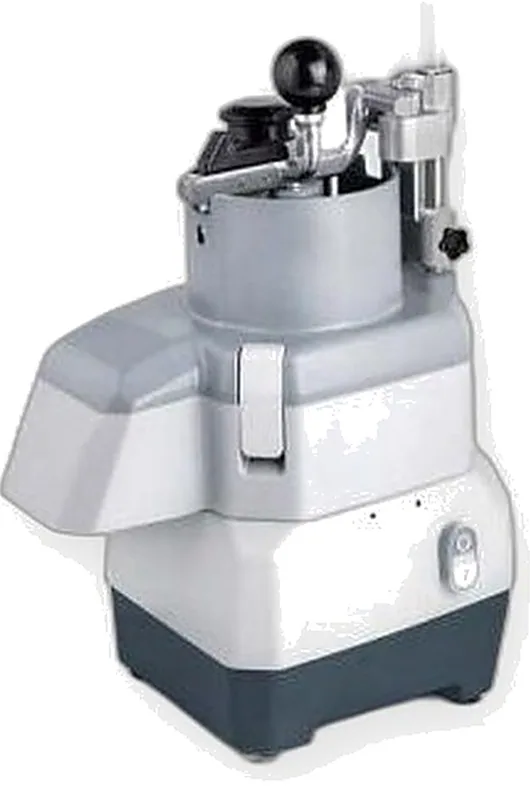
Prep time is where a kitchen quietly loses hours. The Vegetable Cutter, Large Hopper (TVD-10818) is built for the stage before cooking: it slices, dices and shreds, uses interchangeable discs, and is aimed at prep kitchens. It belongs to the Commercial Kitchen Equipment line inside the Commercial Kitchen & Hospitality chapter, which serves restaurants, hotels and institutions. This guide covers what a large hopper changes, how the discs work in practice, and what to confirm before you order.
Who buys a large-hopper cutter
A large hopper suits places that process produce in volume rather than by the handful: hotel banquet kitchens, hospital and school central kitchens, commissaries, salad-bar operators and restaurant groups with a shared prep room. A small cutter makes sense for a cafe; a large hopper makes sense when a cook would otherwise stand at a board for an hour. The hopper size, feed opening and throughput are confirmed on your written quote, since our listing gives none of them.
Slice, dice, shred: what the listed points mean
- Slice, dice, shred: three cuts from one machine. Dicing usually needs a particular disc or grid assembly, so ask exactly which cuts are included.
- Interchangeable discs: you change the cut by changing the disc. Count the discs you need for your menu, ask the thickness or cell size of each, and ask whether spares can be ordered separately.
- Prep kitchens: daily, repeated use, which makes cleaning speed and safe guarding more important than top-end capacity.
Specification checklist
- List your top five vegetables and the cut you want from each. Match them to the discs offered.
- Confirm voltage, phase, frequency and amperage, and whether it uses a plug or is hard-wired.
- Ask what part of the machine touches food, and its material and grade.
- Ask how discs are stored and handled safely; they are sharp.
- Ask about the safety interlock on the hopper lid or pusher, and how the machine stops.
- Confirm overall and crated dimensions, weight and the bench or stand it needs.
- Confirm certification status for electrical and sanitation use.
Cleaning, safety and daily routine
A cutter in a prep room is washed after every shift, often by whoever is on closing duty, so ask how the hopper, pusher and disc holder come apart. Ask where the blades are exposed during cleaning and whether the maker supplies a holder or guard for the discs. Training new staff on one safe changeover routine matters more than any single capacity figure, and a short video or sheet from the factory helps. We pass on what the factory supplies.
Where it fits among other machines in the line
A cutter is the first station and the cooking equipment follows. The Tilting Kettle & Braising Pan (TVD-597) takes the large batches of soups and braises that come out of a prep room, the Combi Oven (TVD-596) handles steaming and convection for prepared trays, and the Gas Range with Oven (TVD-593) covers the back line. Choose the cutter based on what leaves the prep room: if the kitchen cooks in kettles, a large hopper keeps pace; if it cooks to order, a smaller machine may be enough. For a fried-vegetable line, the Open Fryer, Single Tank (TVD-594) is the companion.
Canadian use notes
This is a powered machine, and Canadian electrical rules apply. Canadian commercial buildings commonly supply 120 V or 240 V single-phase, or 208 V or 600 V three-phase, at 60 Hz. A cutter built for 220 V and 50 Hz must be confirmed for Canadian voltage and 60 Hz, because motors can behave badly on the wrong frequency. Certification by a body accredited by the Standards Council of Canada, or a field evaluation label, is what an inspector looks for. No mark is on file for this unit today, so we confirm the status with the quote.
Because this is a food-contact machine, your health unit will care about washability and smooth, durable surfaces. Winter freight is a factor too: electronics can freeze in transit, so tell us your delivery month. Quebec buyers need manuals and labels in French; our quotes and product pages are in English, with French support on request. Provincial guides cover the differences: Ontario guide, British Columbia guide, Alberta guide and Nova Scotia guide.
Ordering
We quote in writing for your quantity and delivery address, with specifications, certification status, packing, lead time and delivered cost. A trial quantity is often possible and samples are available on most items; the sample cost is usually credited to the first order. Payment is 30% deposit and 70% before release. The how ordering works page shows each step, the landed cost calculator gives an early estimate of duties and freight, and the sales tax by province guide explains GST, HST, PST and QST. Begin with a quote request, or read the commercial kitchen equipment wholesale guide first.
Rules change. Confirm electrical and sanitation requirements with your electrical authority, health inspector or customs broker. This is general information, not legal advice.