Certification guide ·
Vertical Churro Filler in Canada: Food-Contact, Sanitation and Safety Papers
No mark is on file for TVD-10817. Here is what delis, butchers and bakeries should ask for, and how we confirm it before you order.
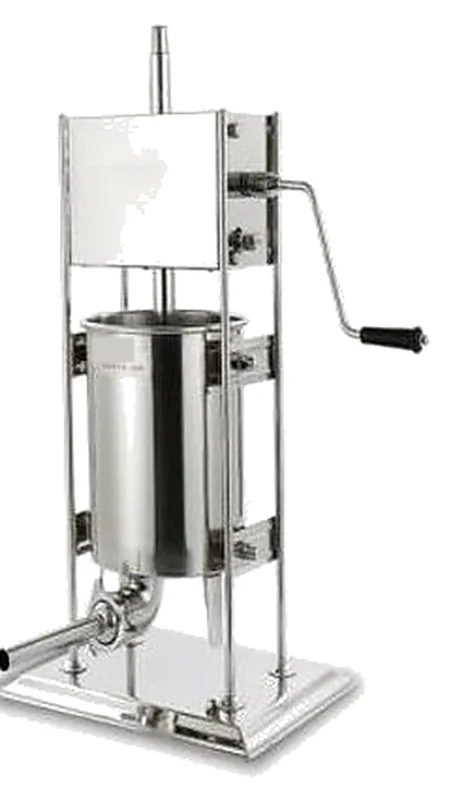
Some commercial kitchen machines have no flame and no refrigerant, and the Vertical Churro Filler (TVD-10817) may be one of them. Its listing names precision slicing, a sausage stuffer option, and delis and butchers as buyers, and the rules that apply are food ones rather than gas or refrigeration. No certification mark is on file. This post walks through what a Canadian deli, butcher or bakery should ask for, in the order that tends to matter.
Start with the question of power
Whether the unit is hand-cranked, air-driven or has an electric motor changes the paperwork. The listed points do not say, so we confirm it on the written quote. If there is a motor, the unit is electrical equipment and needs a Canadian mark from a body accredited by the Standards Council of Canada, or a field evaluation label. Our CSA, cUL and cETL marks explained page explains the marks. If there is no motor and nothing is plugged in, the electrical chapter falls away and the food rules carry the weight.
The food-contact surfaces are the heart of this file
A filler or stuffer touches dough, filling or meat directly. The Food and Drugs Act prohibits selling food in or with materials that may make it harmful, and Health Canada does not pre-approve kitchenware. That leaves the buyer to ask the factory for food-contact test reports. Typical examples are FDA or EU food-contact migration tests on the stainless steel, plastics and seals that touch product. We request these and tell you in the quote what exists and what does not.
Plastic nozzles, hopper liners and gaskets deserve particular attention because they are the parts most likely to be replaced over time. Ask for the material of each food-contact part, not only the main body.
Sanitation: what the inspector will look at
Delis and butcher counters are inspected as food premises. Public health inspectors expect equipment that is durable, easy to clean and kept sanitary, and many inspectors, landlords and franchisors ask for NSF/ANSI or equivalent sanitation certification on commercial food equipment. Because requirements differ between health units, ask yours what they accept before you order. Ask us at the same time whether any sanitation certificate exists for this unit; we will say so plainly rather than imply one.
Documents to request before you order
| Document | Why you want it | Who issues it |
|---|---|---|
| Food-contact test reports (migration tests) for parts touching product | Shows the metal and plastic are suitable near food | Factory test laboratory, requested through us |
| Material list for hopper, tubes, nozzles, seals | Lets you check each part against your health unit | Factory data sheet, confirmed on the quote |
| Sanitation certificate, if your health unit or landlord asks | Often a lease or franchise requirement | Sanitation certifier; we report whether one exists |
| Electrical mark or field evaluation label (only if a motor is fitted) | Needed for electrical inspection and insurer comfort | Accredited certification or field evaluation body |
| Cleaning and disassembly instructions in English and French | Supports staff training and Quebec delivery | Factory manual, French version prepared for Quebec orders |
Reading the factory data sheet
When the data sheet arrives, check three things before anything else: the list of parts that touch product, the material named for each, and whether the drive is manual or powered. Anything vague here is a question for the factory, and we pass it on in writing so the answer is on file with your order.
Quebec and the other provinces
Under the Quebec Charter of the French language, labels, instructions, manuals and warranty documents must be available in French. Retailers and food businesses in Quebec will ask for this. Everywhere else, the difference is mostly in who inspects: provincial health regulations and local health units vary, and electrical safety authorities differ by province if a motor is involved. Check the specific wording with your own authority.
What goes wrong when documents are missing
- A health inspector may question a stuffer with unknown plastics and ask you to stop using it until evidence is produced.
- A franchisor or landlord may refuse equipment without a sanitation certificate.
- A motor with no Canadian mark can be refused at electrical inspection.
- French documents requested after delivery to Quebec delay start-up while translations are prepared.
How we handle certification on this unit
We do not claim any mark for this machine. We confirm its status and supply the documents with the quote before you order, and if a field evaluation is needed, we flag it then. Quotes are in writing and include delivery to your address, with how ordering works explained step by step. Payment is 30% deposit and 70% before release. You can look at the neighbouring items in the Commercial Kitchen Equipment line and the Commercial Kitchen & Hospitality chapter, such as the Open Fryer, Single Tank (TVD-594) for frying and the Combi Oven (TVD-596) for baking and steaming. Use the landed cost calculator to estimate landed cost, and the sales tax by province guide for GST, HST, PST and QST. Ready to ask? Send a quote request.
Rules change. Confirm sanitation, labelling and electrical requirements with your health inspector, electrical authority or customs broker. This is general information, not legal advice.