Product guide ·
Vertical Churro Filler: Wholesale Buying Guide for Canadian Shops
A compact counter machine for precise portions and an optional sausage stuffer. This guide covers what to confirm before you order TVD-10817.
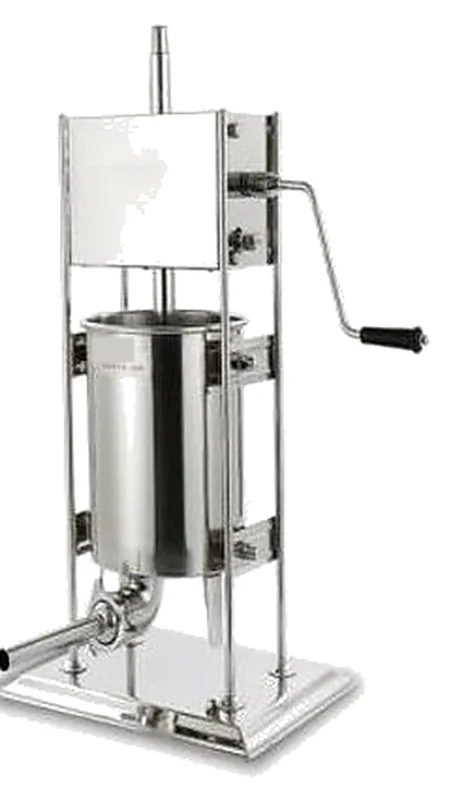
The Vertical Churro Filler (TVD-10817) is a counter-side machine for shops that fill, slice or stuff product by the portion. Our listing describes it with three points: precision slicing, a sausage stuffer option, and delis and butchers as its buyers. It sits in the Commercial Kitchen Equipment line, which serves restaurants, hotels and institutions, and it is a good fit where one compact machine has to cover more than one job. This guide explains what the points mean at the counter and how to specify the unit properly.
Where a vertical filler earns its place
A vertical layout keeps the footprint small and puts the product at a comfortable working height. Typical buyers include small bakeries making filled fried dough, delis portioning sausage, and butcher counters that make their own links. A churro stand that fills in front of the customer wants a clean, consistent portion; a butcher wants the stuffer option and tight control of the cut. The same chassis can serve both, which is the point of the option.
What the three listed points mean in practice
- Precision slicing: repeatable portions, so each serving weighs the same. The slicing range and how you set it are confirmed on your written quote.
- Sausage stuffer option: the unit can be configured for stuffing as well. Ask which tubes, nozzles and fill sizes come with the option, and which are extra.
- Delis and butchers: a meat-handling setting, which means cleaning access and food-contact surfaces deserve as much attention as capacity.
Everything else, including dimensions, weight, hopper capacity, motor details and materials, is confirmed on the quote. We do not publish numbers we have not verified. A free account shows the full specifications on the product page.
How to specify it: a short checklist
- Write down what you will run through it: dough filling, sausage, or both. This decides whether you need the stuffer option.
- Ask whether the unit is hand-operated or motor-driven, and the voltage, phase, frequency and plug type if it has a motor.
- Ask for the stainless steel grade and thickness on the parts that touch food.
- Ask for capacity per load, in litres or kilograms, and the portion range.
- List the removable parts, and check that they can be taken apart without tools for washing.
- Confirm overall and crated dimensions, weight, and the clearance you need around the unit.
- Confirm the certification status for electrical and sanitation use, and what documents arrive with the quote.
Cleaning and hygiene at the counter
Anything that handles dough or meat is cleaned down several times a day, so the practical test is how fast it comes apart. Ask how many removable parts there are, whether the hopper lifts out, and where product can hide at the base of the stuffer tube. Ask staff who will use it to watch a teardown before you commit if samples allow. A machine that is quick to wash gets washed properly, and that is what a health inspector notices.
How it compares with the machines around it
Filling and frying are a pair. The Open Fryer, Single Tank (TVD-594) is the natural companion for a churro line, and the Open Fryer, Double Tank (TVD-10812) lets two batches run at the same time. A counter that finishes product under pressure may look at the Pressure Fryer (TVD-595). None of these replaces the filler; they handle the cooking step after it. If your menu depends on a gas range or oven instead, the Gas Range with Oven (TVD-593) covers the back line.
Canadian use notes
Delis and butcher counters are food premises, so provincial food premises regulations and your local public health inspector set the tone. They expect equipment that is durable, easy to clean and kept sanitary, and some ask for NSF/ANSI or equivalent sanitation certification. Check with your health unit before you order. If the unit is motor-driven, Canadian electrical rules apply too: certification by an accredited body, and a supply that matches your building (120 V or 240 V single-phase, or 208 V or 600 V three-phase, at 60 Hz). Equipment built for 220 V and 50 Hz must be confirmed for Canadian use before it ships.
Cold weather matters for freight. Liquids and electronics can freeze in winter transit, so tell us your delivery month and address when you request the quote. Quebec buyers should expect to need French manuals and labels, with product pages and quotes remaining in English. For province-specific notes, see the Ontario guide, British Columbia guide, Alberta guide and Nova Scotia guide.
How ordering works
Every order is quoted in writing for your quantity and delivery address; we never post prices on the site. The quote covers specifications, certification status and documents, packing, lead time and delivered cost. Many lines accept a low trial quantity, and samples are available on most items, with the sample cost usually credited to the first order. Payment is 30% deposit and 70% before release, and goods can ship together with other items in one consolidated container. See how ordering works, estimate duties and taxes with the landed cost calculator, then send a quote request. The sales tax by province guide explains GST, HST, PST and QST by province, and the Canada delivery hub lists where we deliver.
Rules change, so confirm requirements with your health inspector, electrical authority or customs broker. This is general information and not legal advice.