Product guide ·
Wave Ring LED Chandelier (TVD-8633) and its globe sibling: how to choose
Two multi-ring LED chandeliers share one listed specification and differ in shape and name. This guide shows how to pick between them and how to order both in one shipment.
Two chandeliers that share one specification
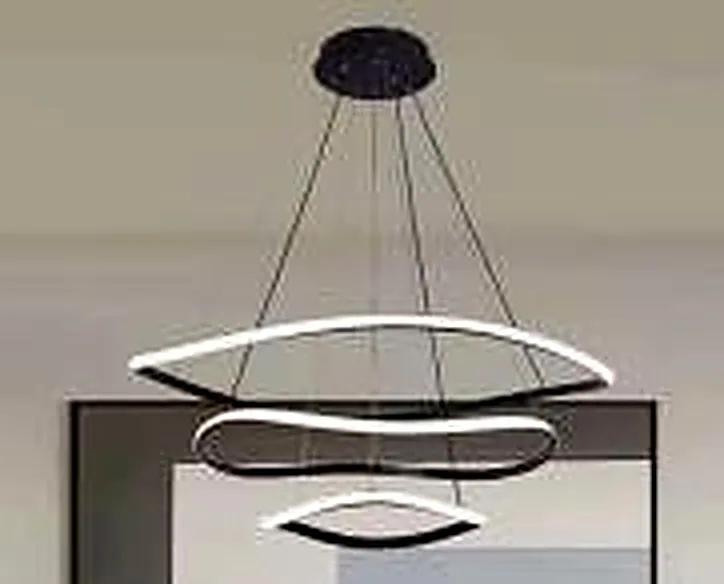
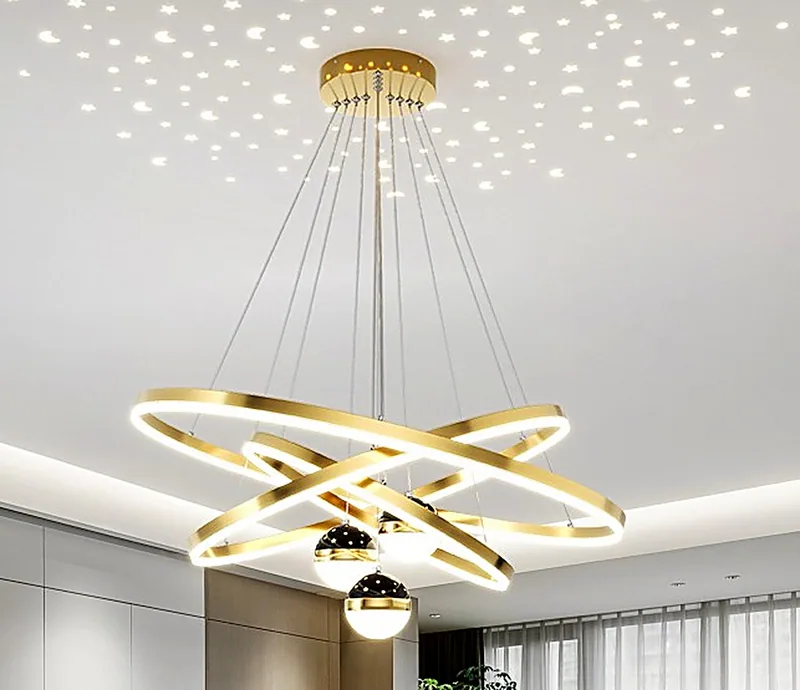
The Wave Ring LED Chandelier (TVD-8633) and the Tilted Ring LED Chandelier with Globe (TVD-8794) come from the same part of our LED pendants and chandeliers line. Our product listing gives both of them the same three facts: aluminium with silicone, a size line of D30+40+70 cm, and a choice of 3000K, 4000K or 6000K with an input range of AC85-265V. Nothing else in the listing separates them, so we will not pretend there is a hidden technical gap. What separates them is the silhouette that the product names describe: a wave-form ring arrangement on one, and tilted rings with a globe element on the other.
That honesty is useful for a buyer. If your drawings only need a multi-ring chandelier of roughly this scale, either model can fill the line item, and the choice becomes a design call. If a client has already seen a photograph of one of them, order that one and treat the other as a companion piece.
What the shared listing means in practice
- Aluminium with silicone. The listed materials point to a light metal frame with a soft silicone element. Whether the silicone forms the diffuser, a sleeve or a trim is confirmed on your written quote, along with the finish colour options.
- D30+40+70 cm. This reads as a group of diameters of 30, 40 and 70 cm. The largest figure, 70 cm, is the one a designer checks against table width or stair void. Overall drop and canopy size are not in the listing, so they are confirmed on the quote.
- Three colour temperatures. 3000K gives the warm light most dining and hospitality schemes ask for; 4000K reads neutral; 6000K is cool. Pick one temperature per room, and keep the same one across every chandelier in a sight line.
- AC85-265V. Our electrical notes say LED drivers marked AC85-265V usually accept Canadian voltage, but the fixture still needs a Canadian certification mark. The range is not a substitute for the mark.
Which one suits which buyer
| Buyer | Likely pick | Why |
|---|---|---|
| Lighting retailer building a display wall | TVD-8633 and TVD-8794 together | Two shapes at one specification keeps the carton count and the reorder simple, and gives shoppers a visible choice. |
| Interior designer specifying a dining room or entry | TVD-8633 for a calm wave-form centrepiece; TVD-8794 where the design calls for a globe accent | The size is identical, so the ceiling plan does not change when the client switches model. |
| Restaurant or cafe owner | Either, in 3000K | Warm light is the common choice over tables; confirm the hanging height against your ceiling and sight lines on the quote. |
Mixing both models in one order
Because the specifications match, a mixed order is straightforward: one voltage question, one temperature decision per room, one certification document request covering both codes. We still quote each code on its own line, because carton dimensions, weight and packing can differ between a wave-form and a globe fixture. Ask for those figures before you plan storage or a delivery appointment. Packaging matters here: multi-ring fixtures are bulky relative to their weight, and retail buyers should ask how the rings are separated inside the carton to prevent scuffing and bent edges.
Canadian electrical points to settle before you order
Electrical products sold or installed in Canada must carry a certification mark from a body accredited by the Standards Council of Canada, such as CSA, cUL or cETL, or carry a field evaluation label. A US-only mark is not enough. Provincial electrical safety authorities enforce this, an inspector can refuse equipment without it, and an insurer may question it afterwards. Our listing for these two chandeliers does not show a certificate on file, so please do not treat either one as marked. We confirm certification status and send the documents with the quote before you order. The explainer on CSA, cUL and cETL marks covers how to read a mark, and the compliance guide for the whole pendant and chandelier line covers the wider rules.
Also ask for the location rating (dry, damp or wet) if either chandelier is going over a restaurant pass-through, a spa entry or a covered porch. Canadian supply is 120 V or 240 V single-phase at 60 Hz, and commercial buildings are often 208 V or 600 V three-phase; the chandelier is normally fed from a single-phase lighting circuit, so confirm that with your electrician. Rules change, so check with your provincial authority or inspector. This is not legal advice.
Checklist for your quote request
- Code and quantity for each chandelier, and the colour temperature for each room.
- Certification mark, file number and the document you will receive.
- Wattage, lumen output and colour rendering index.
- Whether dimming is supplied, and which dimmer type is compatible.
- Suspension length, canopy size and net weight, so the electrician can plan the box and support.
- Finish colour and whether bulbs or drivers are included.
- Carton size, units per carton and the language of the assembly instructions.
Ordering and delivery
Every order is quoted in writing for your quantity and delivery address, with certification status, packing and lead time stated. Trial quantities are available on many lines, and samples are available on most items, with the sample cost usually credited to your first order. Payment is 30% on order and 70% before release. Products from several factories can travel in one consolidated container, which suits a retailer pairing these chandeliers with other lighting. Read how ordering works, estimate duties and freight with the landed cost calculator, and check provincial tax in the sales tax by province guide. Compare other ring styles in our graduated ring chandelier guide or open a quote request.